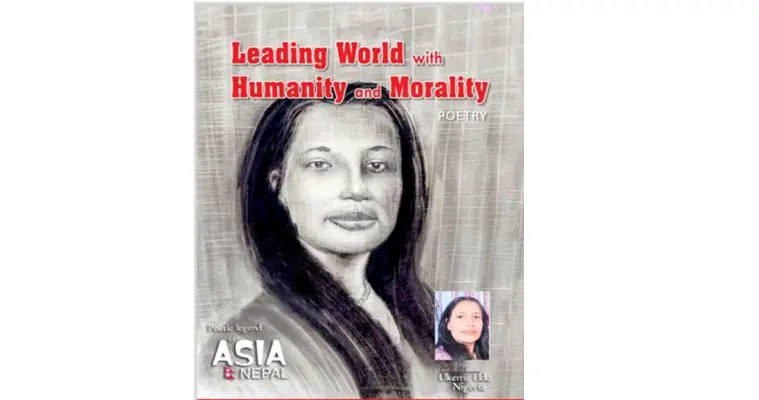


Celebrated Nepalese poetess crafts 250 evocative poems exploring themes from nature and society to ethics and love, inspiring readers worldwide with her lyrical mastery and moral vision
Shafkat Aziz Hajam
Til Kumari Sharma is an internationally renowned, multi-award-winning, and prolific poetess and author, born in Paiyun-7 Hile Parbat, Nepal. She is a bestselling co-author across the USA, England, Russia, Trinidad and Tobago, France, and numerous other nations. Featured in the world record book *Hyperpoems*, she is among the few artists to have set a participation record by composing a poem dedicated to the Eiffel Tower in France. Her persona is profiled in *Multi Art Magazine* of Argentina. Primarily a feminist poet and mentor, she was granted the privilege by Dr Esther Mala from Malaysia to conduct a Masterclass on Women’s Existence. Her biography is documented in a comprehensive Mexican encyclopedia.
Her literary corpus includes:
- Philosophy: Tilaism/Pushpaism
- Pushpal Lakshaya
- Priyanka and Nanda
- A Letter to Father
- Creation within Nature
- Humanity and Morality in Essence, among others.
This latest poetry collection, “Leading the World with Humanity and Morality”, is available in print in Nepal, with international access via worldleadingwriting.blogspot.com and pushpaismtilaism.blogspot.com. The collection boasts an aesthetically compelling cover and comprises 250 poems spanning 96 pages, exploring diverse themes such as science, culture, politics, education, flora and fauna, child exploitation, nature, ethics, ego, and more.
The volume attests to the poet’s innate literary genius, voracious reading habits, and prolificacy. Poetry appears embedded in her very being, even permeating her dreams.
Although the poems eschew rhyme, they are meticulously crafted with varied thematic content. Each composition serves as an inspiration to both readers and fellow writers. The verses eloquently convey profound thoughts, emotions, and struggles, imparting enduring inspiration.
This collection of poetry is an invaluable resource for literary students, especially those aspiring to master poetic expression, as it adeptly guides the concise and appealing articulation of deep sentiments. The poet’s masterful use of poetic diction and devices stands out, particularly the vivid auditory and visual imagery. As a reviewer (not a critic), I observed that the majority of poems are prose poems—lacking line breaks and rhyme—but they maintain rhythm, poetic language, and imagery to full poetic effect. The emphasis lies on meaningful content and moral guidance rather than rigid poetic form.
Let us shed light on some beautifully crafted poems in this collection.
On page 2, the poem “Harmony in Nature” eloquently describes the harmony among beings in the natural world and its significance for existence. Poem no. 9 on page 4, titled
“Green Woods”, beautifully highlights the importance of trees for our survival. On page 7, poem no. 24, “Woman Authority”, reflects on the value, power, and reverence of women worldwide. On page 9, poem no. 24, “Female’s Insecurity”, exposes the harsh reality of women’s vulnerability and why they are ruthlessly attacked.
The poem “Power of Woman” on page 11 explains how women can bring peace to family and society, but also how they can disrupt it if they violate societal norms. On page 17, “Educational Corruption” sheds light on the detrimental effects of corruption in Nepal’s education sector on the youth’s future. Page 18’s “My Pen, My Weapon Is a Poem” is a finely crafted piece revealing how the poet uses her art to express powerful emotions and thoughts, helping her secure a place among celebrated world poets.
On page 44, poem no. 16, “My Poetic Creation” likens poetic creation to a necklace that adorns a person, just as the poetess embellishes her emotions through verse. The poem
“One God with One Belief” on page 67 reveals the poet’s firm faith in the unity of God and its reasons. On page 62, “Facility of Technology” highlights the benefits of technology in the modern era. Poem “Politics” on page 69 describes Nepal’s political climate and its impact on the lives of its people.
Finally, page 91’s “Fake Love as the Incurable Wound of Life” depicts how fake love deeply wounds and destroys a person’s life. Another poem, “Value of Parents,” beautifully captures the importance of parents in one’s life.
In conclusion, I highly recommend this inspirational poetry collection to all those interested in literature.
The writer is a poet and book reviewer
sh************@***il.com