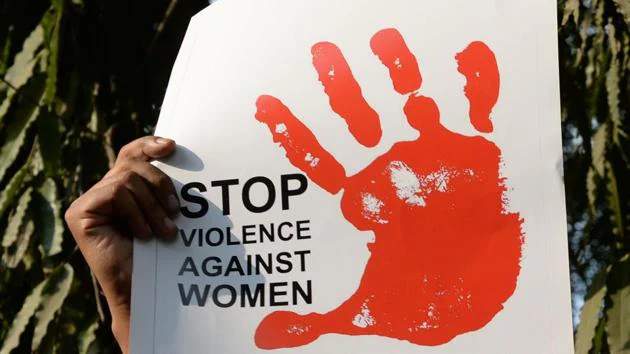


There was a time when such news would shake the conscience of society. Voices would rise in collective anger. Today, something even more frightening is happening: perhaps we are becoming used to it. A society does not decline only when crimes increase. It declines when people stop reacting.
Sheikh Shakir Hussain
This is a sentence that should never become normal in any society, least of all in Kashmir, a land once lovingly referred to as Peer Waer, a place associated with spirituality, dignity, and humanity.
And yet, somewhere along the way, horrifying headlines have become disturbingly familiar.
A girl raped. A child assaulted. A woman attacked.
There was a time when such news would shake the conscience of society. Streets would fill with protest. Voices would rise in collective anger. Communities would demand justice, loudly and without hesitation.
But today, something even more frightening is happening.
The outrage is fading. The protests are fewer. The silence is growing.
And the most uncomfortable truth of all is this: perhaps we are becoming used to it.
A twelve-year-old girl from Budgam left her home on a Saturday evening to attend a religious class. She never returned. The following morning, her body was found partially submerged in water, just a short distance from her own home. She had reportedly been kidnapped, sexually assaulted, and murdered.
One accused was arrested quickly. An investigation was launched.
But arrests alone cannot answer the larger question.
What kind of society keeps producing such horrors?
It is easy to point fingers at an individual and label him a monster. Harder, but necessary, is asking what shapes such monsters in the first place.
Violence against women does not emerge in isolation. It grows in cultures where women are constantly judged, controlled, and reduced to their bodies.
It grows in homes where boys are taught authority but not accountability.
In social spaces where sexist jokes are dismissed as harmless humour.
In online platforms, women are routinely abused for their clothing, appearance, opinions, careers, and visibility.
A Kashmiri woman posts a video, and strangers dissect her morality.
She speaks confidently, and she is mocked.
She chooses independence, and she becomes a target.
What begins as online harassment often reflects a much deeper societal sickness: the belief that women exist under constant public scrutiny.
And when such thinking becomes normalised, violence becomes easier to justify, excuse, or ignore.
Perhaps the most alarming transformation is not the crime itself, but society’s changing response to it.
When repeated violence no longer shocks us into action, when another assault becomes just another headline, we must ask whether we are losing something fundamental: our collective conscience.
A society does not decline only when crimes increase.
It declines when people stop reacting.
Kashmir must confront this reality honestly.
Justice is not merely about arresting perpetrators after tragedy strikes.
Justice begins much earlier in how we raise boys, how we speak about women, how we challenge misogyny in our homes, and how firmly we reject harassment in both public and digital spaces.
Because if a child can leave for a religious class and never return safely, then this is not just a law-and-order issue.
It is a societal failure.
And silence, in such times, is not neutrality.
It is complicity.
sh********@***il.com