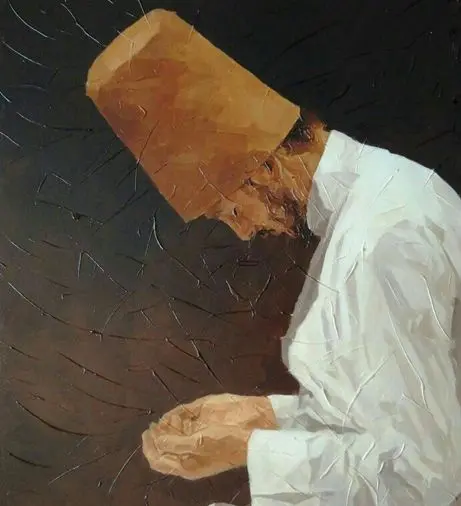


In the contemporary world, Islam is commonly defined by its outer obligations, laws, rituals, and jurisprudence. However, beneath them lies a profound depth of meaning that speaks to the soul – that is al-Ihsan. In the rich tapestry of the Islamic faith, Ihsan represents the highest standard of excellence a believer can aspire to. It is the embodiment of perfection in worship, character, and deeds, as reflected in the Quranic verse: ‘Do excellent deeds deserve anything except the most excellent rewards?’ (55:60).
Tallat ul Sideeqa
In the contemporary world, Islam is commonly defined by its outer obligations, laws, rituals, and jurisprudence. However, beneath them lies a profound depth of meaning that speaks to the soul—that is al-Ihsan. In the rich tapestry of the Islamic faith, Ihsan represents the highest standard of excellence a believer can aspire to. It is the embodiment of perfection in worship, character, and deeds, as reflected in the Qur’anic verse: “Do excellent deeds deserve anything except the most excellent rewards?” (55:60). Ihsan, as described by the angel Jibreel in the famous Hadith of Jibreel, is “to worship Allah as though you see Him; and if you cannot see Him, then indeed He sees you.” The concept of Ihsan shaped Muslim spirituality for centuries, encouraging believers to seek sincerity, inner purification, and closeness to Allah; over time, this spiritual ethos developed into what became known as Sufism.
During the era of Prophet Muhammad (SAW) and his companions, Islam was not separate from Ihsan; it was the lived spiritual reality. The Prophet (SAW) practised and preached worshipping Allah with sincerity, mindfulness, and God-consciousness; humility towards Allah; and the remembrance of Allah. He and his companions lived in this inner dimension as well.
Prophet Muhammad (SAW) practised zuhd—not by rejecting the world but by detaching from it. He lived simply yet contentedly, keeping his focus on Allah and not on materialistic things. Even when wealth came to him later, he did not prefer to live luxuriously. His house was small with limited space, and many days would pass without he and his family cooking a meal. Aisha bint Abi Bakr (RA) reported that sometimes months passed and no fire was lit in their house for cooking; they survived on dates and water. He famously said: “What have I to do with this world?” comparing himself to a traveller resting briefly under a tree before moving on.
During the Umayyad caliphate and later periods, Islam spread widely and Muslim communities comparatively started gaining more wealth and luxury. Some people chose to remain detached from materialistic things and remain devoted sincerely to Allah. One of the known figures of that time is Hasan al-Basri. He viewed the world as a transitory marketplace. He famously declined free land grants and wealth, teaching that excessive attachment to dunya spiritually poisons the heart. He emphasised that public actions must exactly match private life, warning heavily against the creeping hypocrisy in the community.
By the tenth century, some scholars began introducing new and objectionable practices to Sufism, such as dancing, music, seeking aid from graves, and cult-like submission to spiritual guides. These practices were criticised by the majority of scholars and some Sufis themselves, as they were contrary to Islamic teachings and Shariah. The legal objection was also framed as bid’ah (religious innovation), since music-based worship had no direct precedent in the Prophet’s practice. While Muslim fundamentalist legalists reproved samā’ (a spiritual concert or gathering where devotees listen to devotional music, chanting, and mystical poetry) as an innovation, some Muslim scholars held that it was a useful innovation since it might bring souls nearer to God.
Nevertheless, there were some scholars who tried to preserve the core teachings of Tasawwuf. One of the most notable figures is Abu Hamid Muhammad ibn Muhammad al-Ghazali (RA), widely known as Al-Ghazali. Before al-Ghazali, some scholars were sceptical about certain mystical practices, but he argued that true Sufism is the purification of the heart according to the Qur’an and Sunnah. This helped many scholars to view Tasawwuf as part of Islam and not something separate from it. He also taught that Shariah without spirituality can become empty formalism. Although he did not advocate all the practices of Tasawwuf, he insisted that spiritual experiences must remain within the boundaries of Islam.
Despite the differing opinions surrounding certain Sufi practices throughout history, the central objective of Tasawwuf has always been the pursuit of Ihsan: to worship Allah with sincerity, humility, and constant awareness of His presence. While scholars have differed over methods and innovations, there has been broad agreement that the purification of the heart (tazkiyat al-nafs) is an essential part of Islamic life. The Qur’an repeatedly emphasises the importance of a sound heart, sincere intentions, and righteous character alongside outward acts of worship.
The legacy of Sufism cannot be understood merely through the lens of its later controversies. It sought to revive the inner dimension of Islam by cultivating love of Allah, remembrance, repentance, patience, gratitude, and self-discipline. True scholars reminded Muslims that true spirituality is inseparable from the Qur’an and the Sunnah, and that authentic devotion must always remain within the framework of Islamic teachings.
Ultimately, Ihsan remains the highest aspiration of every believer. Whether expressed through the language of Tasawwuf or simply through sincere worship and righteous conduct, its essence is the same: to draw nearer to Allah by perfecting one’s faith, actions, and character. In a world increasingly concerned with outward appearances, the enduring message of Ihsan serves as a reminder that the heart is the true foundation of faith, and that excellence before Allah begins with inner sincerity.
The writer is a Jurisprudence student at the International Islamic University Malaysia (IIUM). Her research interests include Islamic spirituality, intellectual history, classical Islamic thought, and civilisations.
ta*************@***il.com