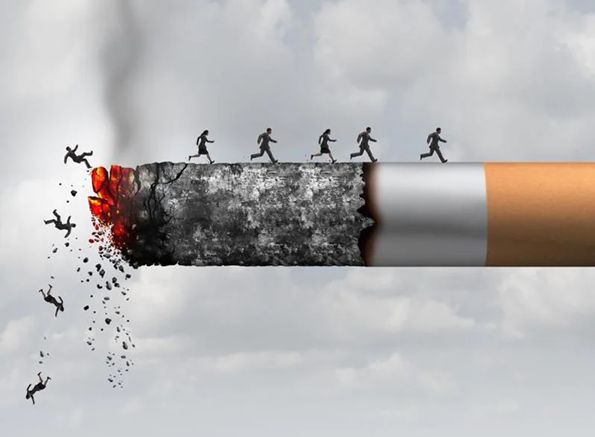


Roughly 267 million adults use tobacco in India. The country loses about 1.35 million lives each year to tobacco-related disease. Overall adult use rate is 28.6%, with 42.4% of adult men using tobacco. Smokeless tobacco use (21.4%) is even larger than smoking (10.7%). India’s tobacco pattern is different from many countries. Much of the damage comes from smokeless products that are easy to hide and hard to police.
Surjit Singh Flora
India’s tobacco burden is still vast. Roughly 267 million adults use tobacco, and the country loses about 1.35 million lives each year to tobacco-related disease. That makes May 31 more than a global health date on the calendar. In India, it is a reminder of a local crisis that shows up in clinics, schools, workplaces, and homes.
Awareness has grown, but daily use has not disappeared. Smoking remains visible, yet much of the damage comes from smokeless products that are easy to hide and hard to police. The public health problem is tied to disease, but it also reaches families, public spaces, and the economy.
Why Tobacco Use In India Still Sits AtThe CentreOf Public Health
India’s tobacco pattern is different from that of many countries. The overall adult use rate is 28.6%, but the split is uneven. About 42.4% of adult men use tobacco, compared with 14.2% of adult women. Smoking is a major part of the picture, but smokeless use is even larger, which changes how the problem looks on the ground.
The WHO’s tobacco profile for India places tobacco among the country’s biggest causes of death and disease. It also shows why the issue is not limited to one product. Bidis, cigarettes, and chewing forms all sit inside the same national burden, even if they are used in different settings.About 100 million people smoke in India, but the number of smokeless tobacco users is even higher. That matters because smokeless use often escapes the kind of public attention that cigarettes receive. In towns and cities, it can look ordinary, which makes it harder to challenge.
The Numbers Behind India’s Tobacco Burden
The age data is sobering. Among youth ages 13 to 15, about 8.5% currently use some form of tobacco. Another youth figure puts smoking prevalence among ages 10 to 14 at 1.37%. Even among school-going children, the habit is already visible, with about 8.5% using tobacco in some form.
Adult figures tell the same story in a wider frame. Overall tobacco use is 28.6%, smoking is about 10.7%, and smokeless tobacco use is about 21.4%. In simple terms, millions of people are not only using tobacco, they are using it in ways that can seem ordinary until disease appears years later.
Why Smokeless Tobacco Matters So Much In India
Public debate often centers on cigarettes, but India’s biggest burden is broader than smoke. Khaini, gutkha, betel quid with tobacco, and zarda are deeply embedded in many places and routines. They are carried in pockets, sold at roadside counters, and used in public without much notice.
In India, much of the tobacco crisis is hidden in plain sight.
That makes the health risk harder to see and the enforcement problem harder to solve. A cigarette ban in one setting does not address chewing tobacco in another. The result is a pattern that reaches into homes, buses, shops, and work sites at once.
What Tobacco Is Doing To Health, Families, And The Economy
Tobacco damages more than lungs. It raises the risk of cancer, heart disease, stroke, and respiratory illness, and it is closely tied to oral cancer in India. State-level studies in a recent Indian analysis show that the burden is not evenly spread, which means some regions carry far heavier losses than others.
The human cost is plain. Families lose breadwinners, caregivers, and income earners. Patients lose time, strength, and money long before the final diagnosis. The disease may begin in one mouth, one lung, or one artery, but the damage spreads much farther.
The Diseases Most Often Linked To Tobacco Use
Oral cancer is one of the clearest tobacco-linked diseases in India. Chewing products keep carcinogens in contact with the mouth for long periods, which is why the country carries such a heavy burden. Lung disease, high blood pressure, and heart disease follow the same pattern of long-term harm.
Tobacco also strains the heart in direct ways. Nicotine raises blood pressure and heart rate, while smoke and other toxins damage blood vessels. Over time, that can mean heart attacks, blocked arteries, and chronic breathing trouble.
The Hidden Cost Beyond Hospitals And Clinics
The damage does not stop at treatment bills. Tobacco drains household budgets, takes away work time, and adds pressure to already tight family finances. A 2017 to 18 estimate put India’s economic burden at INR 177,341 crore, a figure that shows how tobacco belongs in development debates as much as in medical ones.
The costs also fall on people who never use tobacco themselves. Second-hand smoke harms children, older adults, and workers in crowded public places. The loss is spread across ordinary life, not sealed inside a hospital ward.
The economic bill has been visible for years, as earlier economic cost analysis of tobacco use in India showed. The newer estimates only make the point sharper.
How India Marks World No Tobacco Day With Action, Not Just Slogans
World No Tobacco Day in India usually brings more than speeches. The Ministry of Health, state health departments, schools, and colleges often use May 31 for rallies, seminars, pledge drives, and classroom programs. The aim is simple enough. Tobacco use has to be kept in public view, because normal social habits keep pulling it back into the background.
The day also pushes a broader message about access. Public campaigns often stress the sale of tobacco near schools, the risk to minors, and the need to keep tobacco-free spaces from turning into paperwork exercises. That tension between policy and practice is part of the Indian story.
COTPA And The Rules Meant To Limit Tobacco Access
COTPA, the Cigarettes and Other Tobacco Products Act, is the main law behind India’s tobacco control framework. It covers warning labels, restrictions on advertising, limits on sale to minors, and rules meant to keep tobacco away from schools.
The problem is enforcement. A law can ban a practice on paper, but a roadside kiosk can still sell to a student, and a small shop can still place products in easy reach. That gap explains why public health messaging keeps returning to the same themes year after year.
Why Public Campaigns Still Matter Despite Years Of Warnings
Awareness work in India keeps reaching students, parents, workers, and neighborhood groups because tobacco is still normalized in many places. A child who sees chewing tobacco sold at a corner store learns that it belongs in daily life. A worker who sees smoke in a shared space gets the same message.
Public campaigns cannot erase that pattern overnight, but they can make it harder for tobacco to pass as harmless. Repeated reminders matter when the habit is woven into routine, commerce, and social behavior.
Quitting Tobacco In India, And The Support That Already Exists
Quitting tobacco is a public health process, not only a personal decision. Nicotine creates dependence, and dependence shapes how people use, stop, and start again. That is why cessation needs structure, support, and follow-up instead of blame.
The Government of India and the World Health Organization both back cessation efforts. The National Tobacco Cessation Quitline Services is one official channel in that system, alongside counseling and medical advice. The point is not to turn quitting into a slogan. It is to make the process less isolated.
What Makes Quitting Difficult For Many Users
Withdrawal is often physical as much as emotional. People can face irritability, sleep trouble, hunger changes, restlessness, and strong urges to use again. Stress makes those symptoms worse, especially when tobacco has become part of a daily rhythm.
Relapse is common, and that does not mean failure. It usually means the habit is more entrenched than it first appeared. Tobacco dependence can survive good intentions for a long time.
Where Official Help Fits IntoThe Quitting Process
Quitline’s and counseling give users a place to start with some structure. Medical advice can also help when withdrawal symptoms or other health conditions make stopping harder. In practice, structured support gives quitting a better chance than willpower alone.
World No Tobacco Day in India is not only about awareness. It is about a burden that stays large even after decades of warnings, laws, and public campaigns. The numbers show a country where smoking remains serious, smokeless tobacco is widespread, and youth use is already established.
The damage reaches far beyond the user. It lands in families, public spaces, workdays, and health budgets, then shows up again in disease wards years later. India’s tobacco problem is old, but it is still unfinished, and the heaviest cost continues to fall on ordinary people.
The writer is a veteran journalist and freelance writer based in Brampton Canada
fl*****@*ol.com