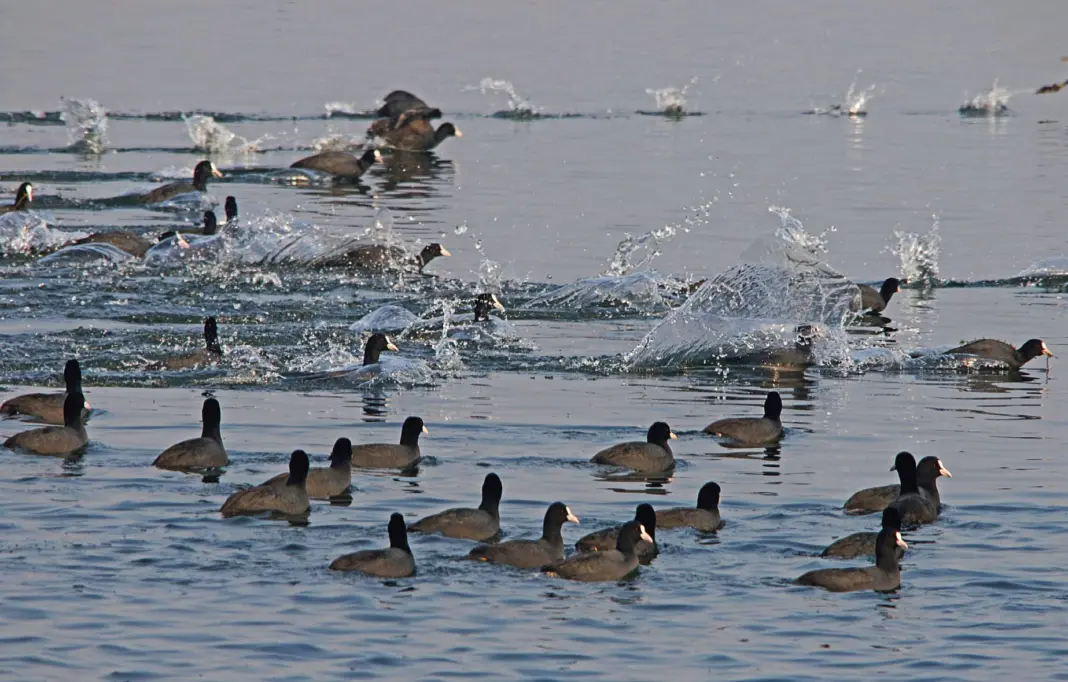


In addition to being a breeding habitat for several avian species, Chatlam sustains rich aquatic biodiversity and plays an essential role in groundwater recharge, flood control, and climate regulation
By John Mohamad Mir
Chatlam Wetland, located in Pampore, is one of the ecologically significant wetlands of the Kashmir Valley and forms part of the Wildlife Protected Areas network in the Union Territory of Jammu & Kashmir. This wetland possesses outstanding ecological, scientific, and conservation value, being home to diverse flora and fauna.
It serves as a crucial wintering and staging ground for thousands of migratory birds arriving from Central Asia and beyond. In addition to being a breeding habitat for several avian species, Chatlam sustains rich aquatic biodiversity and plays an essential role in groundwater recharge, flood control, and climate regulation.
The Department of Wildlife Protection, J&K, through the Wetlands Division, Pampore, has been consistently making noteworthy efforts for the conservation and sustainable management of Chatlam Wetland. This includes the preparation and implementation of management plans, undertaking habitat improvement works, and carrying out continuous monitoring to safeguard its ecological character.
While these efforts are commendable, there is a pressing need to enhance scientific engagement, national outreach, and international recognition of this wetland. In this context, it is imperative to strive towards making Chatlam Wetland eligible for designation as a Ramsar site (Wetland of International Importance under the Ramsar Convention, 1971).
To achieve this, there is a strong requirement for interdisciplinary research, ecological documentation, and awareness-building. Accordingly, this circular appeals to environmental experts and wetland scientists to undertake detailed studies on biodiversity, hydrology, ecosystem services, and conservation challenges of Chatlam Wetland; heads of departments of universities/colleges (Zoology, Botany, Environmental Science, Wildlife Studies, Geography, etc.) to promote academic projects, dissertations, and research work centered around this wetland; research scholars and students to generate field-based data, contribute to scientific publications, and support Ramsar nomination processes through evidence-based findings; and wildlife specialists and conservation organizations to provide technical expertise, policy advice, and advocacy for elevating Chatlam Wetland to the Ramsar framework.
Such collaborative engagement, when combined with the department’s ongoing conservation initiatives, will help in creating a robust scientific and ecological case for Ramsar site designation, bringing Chatlam Wetland into international focus as a habitat of global biodiversity significance, strengthening long-term conservation and wise-use strategies under national and international frameworks, and enhancing the visibility of Jammu & Kashmir’s wetlands as critical ecosystems of South Asia.
All concerned stakeholders are urged to extend their cooperation, knowledge, and expertise to help transform Chatlam Wetland, Pampore, into a Ramsar site, thereby ensuring its recognition, protection, and conservation at a global scale.
For facilitation of visits, research permissions, and coordination in this regard, interested institutions, organizations, researchers, and scholars are encouraged to approach the Office of the Wetlands Division, Srinagar.
Together, through our collective commitment, we can ensure that Chatlam Wetland, an asset of Kashmir, achieves its rightful place among the world’s wetlands of international importance.
The writer is a Block Officer, Pampore Wetlands Division
jo*************@***il.com