

This is no longer a natural disaster. It is a man-made failure. And it will stay that way until leaders stop delivering the same speeches and start building the protection that people need.
By Imran Gani Mugloo
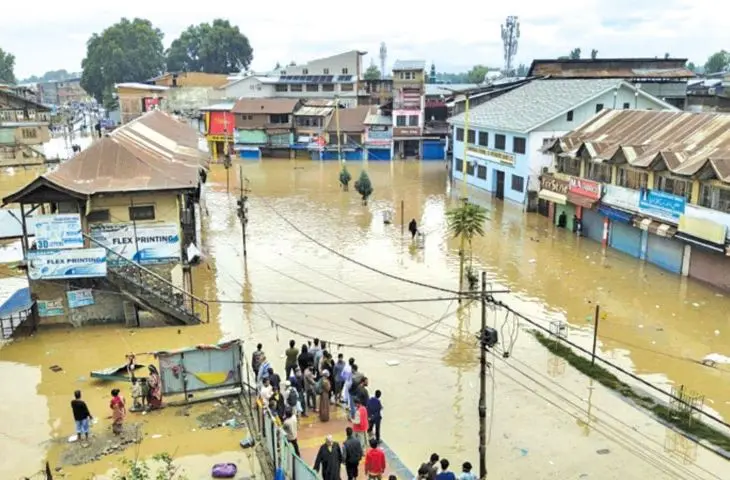
September 4, 2014, should have been a turning point for Kashmir. On that day, the Jhelum overflowed and flooded Srinagar and nearby areas. Hospitals were cut off, leaving newborns and patients without oxygen. Families huddled on rooftops, frantically signalling for help that never arrived. Shops were ruined by muddy water, and entire harvests were buried under silt. More than 200 lives were lost, and damage worth billions was recorded. For ordinary people, the emotional scars remain.
Eleven years later, the same date has returned as a harsh reminder. Heavy rains, sudden floods, and rising river levels once again threaten Kashmir. People are watching the sky and river with the same dread. The state has had over a decade to prepare, yet nothing has changed. This is not just nature’s doing. This is a failure.
Promises That Went Nowhere
After 2014, leaders made grand promises. They pledged to dredge the Jhelum, strengthen embankments, restore wetlands like Hokersar and Wular to serve as natural buffers, modernise urban drainage systems, and install a real-time flood warning network. They promised fair compensation for families and long-term rehabilitation plans.
But reality tells a different story. Embankments remain weak, repaired only when they fail. Dredging started with great enthusiasm but soon ground to a halt. Wetlands have shrunk even more due to construction and landfill. Srinagar still floods with every heavy rain. Warning systems are unreliable, and many residents learn about rising waters from neighbors rather than officials. Efforts for rehabilitation have been slow, inconsistent, and, in some cases, did not happen at all.
Current Chief Minister Omar Abdullah acknowledged this week: “It seems that 11 years have been wasted by previous governments. Questions need to be asked about what has been done in the last 11 years.” The people already know the answer: very little.
Ignored Warnings
This neglect is not due to ignorance. Experts have been raising alarms for years. In 2014, environmentalist Sunita Narain bluntly asked: “Was this a natural disaster—or could better planning have prevented it? The lakes that once buffered floods are now built over, and waterways are blocked.” Her warning was just one among many that went unheeded.
The Associated Press provided a global perspective this year: “Human factors like rapid urbanisation, deforestation, and poor infrastructure worsen the damage. The South Asian region needs to better prepare for rain-related disasters.” Yet in Kashmir, “preparation” seems to involve more paperwork than actual progress.
The Human Cost
Statistics mask the real suffering. Reuters recently reported on a survivor of a cloudburst in Chasoti: “We heard a huge sound followed by a flash flood and mud.” Al Jazeera quoted Ruksana, whose home was destroyed: “My husband is handicapped. Everything else, including clothes, books, and food, has been lost.”
These voices reflect the cries from 2014, when hospitals like Lal Ded and SMHS were isolated. Patients pleaded for evacuation. Families made rafts from doors. Young volunteers risked their lives in waist-deep water to save neighbors. Relief camps were chaotic, lacking medicine, lists, and facing a growing fear of disease.
Even now, health experts warn of a second wave of crises after the waters subside. Health Policy Watch noted: “Disrupted medical care, contaminated water, and rises in mosquito-borne diseases turn floods into months-long disasters, not just days.” Mental health is another hidden toll. A young student in Srinagar shared: “My mental health medications were delayed. Without them, the flooding felt even more suffocating.”
Studies Without Action
Officials often cite new studies. The National Disaster Management Authority and the J&K State Disaster Management Authority, with support from ISRO, have launched surveys to map cloudbursts, glacial lakes, and flood paths. These efforts are important but do not replace the work that should have been done over the last eleven years. Science is ineffective if politics continues to delay action.
Breaking the Cycle
• It is no longer enough to blame nature. Kashmir deserves more than condolences and photo opportunities. It deserves:
• A solid flood management plan with strict timelines and transparency.
• Regular dredging and proper strengthening of embankments.
• Legal protection for wetlands and floodplains, with penalties for encroachment.
• Reliable urban drainage systems.
• A real-time flood warning system that actually informs people.
• Transparent, fast, and fair rehabilitation policies.
• Community involvement in planning and monitoring.
Eleven Years Wasted
The fact that we are writing these words on September 4 again, eleven years later, is an indictment. Every year wasted has increased the risk. Every encroachment on wetlands, every neglected dredging plan, and every half-finished embankment has brought the valley closer to disaster.
September 4 should have marked progress. Instead, it is a reminder of promises drowned in floodwaters. Eleven years have passed, yet Kashmir remains just as vulnerable, ignored, and exposed.
This is no longer a natural disaster. It is a man-made failure. And it will stay that way until leaders stop delivering the same speeches and start building the protection that people need.