

One day, I will leave this campus, but this campus will never leave me. It will live in my memories, in my heart, and in the person I continue to become.
By Pala Umer Sultan
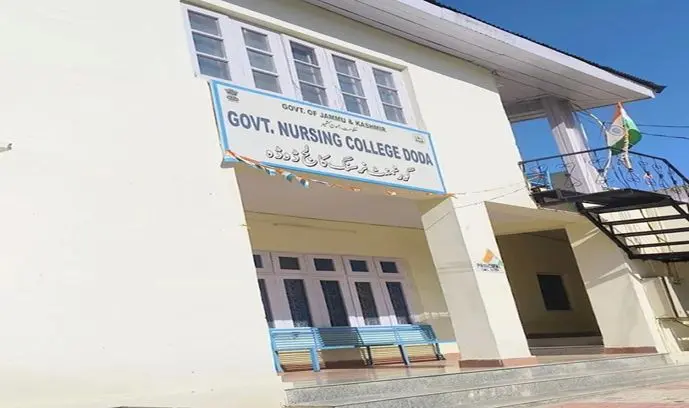
Going back to December 2022, when I got admitted to the Government Nursing College, Doda. I didn’t walk in with excitement but with doubt. The first day is still fresh in my mind—the gate, the strange faces, the buildings that felt too new to belong to me. I remember just standing there, not knowing where to go or whom to talk to. I couldn’t even picture myself as a nursing student. All I could think was, “How am I going to survive here?”
By the time I was on my way back home that day, one thought kept circling in my head—Is there any way I can avoid going back? I had no idea that the same place would one day feel like mine.
The beginning wasn’t easy at all. The first semester felt like a storm. I used to enter the classroom with more confusion than courage. I tried paying attention, but nothing stuck. Anatomy, fundamentals, medical terms, procedures—it all sounded like noise. Even the board’s diagrams appeared to be coded messages. Some days, I would stare at the pages and wonder if my brain had stopped working.
The routine felt exhausting, expectations seemed too high, and I often thought, How will I even complete one semester? At that point, finishing the whole degree looked impossible. The fear of viva, the weight of assignments, and the endless practical files made everything feel worse. Every time someone said “submission”, my heart rate jumped. The word “internal marks” felt like a threat.
But nothing changes in a single moment. Life shifts gradually, quietly.
With time, I started talking to my batchmates. At first, it was only for notes, attendance, or assignments. Slowly, those small conversations turned into inside jokes, shared stress, and real friendships. We messed up together, got confused together, and even got punished together. The things that once felt embarrassing—standing outside the class, getting scolded, group warnings—are now the moments that make us laugh the most. The same strangers I didn’t know on day one became the people I looked forward to seeing every morning.
We shared everything—pens, notes, tiffins, fear, and even last-minute prayers before vivas. Half the time, we didn’t know the answer, but we stood confidently in viva like we had written the textbook ourselves. Their presence made everything easier. I stopped feeling alone. I slowly started believing that maybe I did belong here.
My opinion about the teachers changed, too. In the beginning, they seemed strict and serious, and I used to feel scared of even making eye contact. But as time passed, I realised how much they actually cared. Some were patient and calm, making even the hardest topics feel understandable. Others guided us with the perfect mix of warmth and discipline. They taught us lessons beyond our textbooks—confidence, responsibility, and the value of effort. They didn’t just prepare us for exams; they shaped us as individuals.
We had teachers who warned us strictly, but later helped us finish case studies. Some would scold us for being late and then sit with us to explain procedures in the simplest way possible. We saw them beyond the lectures—they were mentors, and sometimes, silent support systems.
As we moved ahead, the college changed with us. The classrooms became better, the campus felt more organised, and watching the infrastructure grow made us feel like we were part of something that was improving with time.
But college life wasn’t only about lectures and practical files. Whenever we got a break, someone would pick up a bat and a ball, and suddenly a cricket match would begin in the campus ground. Badminton became another escape. Some of us played seriously, others played just for fun, but the laughter was the same. Even those who didn’t play would sit around cheering, joking, and enjoying the moment. The stress of pharmacology or microbiology didn’t disappear—but for that one hour, it felt lighter.
With time, practicals began to make sense too. The labs that once felt confusing slowly became more familiar. But in that practical chaos, we learned teamwork, patience, and how to handle pressure. We learned how to manage with whatever resources we had, and how to pretend we knew what we were doing even when we didn’t.
Clinical postings were a completely different world. The first time we entered the hospital as students, everything felt overwhelming—the equipment, the staff, the patients, the responsibilities. We walked in with files and fear. Even wearing the uniform felt heavy. The first time we touched a patient’s hand, it didn’t feel like a task—it felt like responsibility.
Some days were so chaotic that everything happened at once—checking vitals, dressing wounds, handling patient files, and remembering drug dosages. We stood at the medicine trolley like it was a battlefield. There were times when we pretended to look “professional” but were silently praying we wouldn’t mess up.
We learned how to deal with patients and their families, how to stay calm when things got stressful, and how important even a small act of care could be. Nursing stopped being just about injections and reports—it became about listening to someone’s fear, speaking gently to someone in pain, or giving comfort through presence alone.
We saw death, birth, emergencies, and breakdowns. And in all that, we understood why nursing is called a profession of heart and hands.
Then there were the picnics. Planned or unplanned, those outings felt like a breath of fresh air. We ate together, took photos, sang songs, played antakshari, roasted each other, and forgot about assignments and exams for a while. Some of us clicked 200 photos in one hour, others just sat and soaked in the peace. Those days felt like tiny vacations inside our chaotic routine.
Our learning was also enhanced by community visits. We went to local communities and villages with low levels of health facilities and awareness. We conducted surveys, spoke with families, checked vital signs, and discussed topics such as nutrition, hygiene, immunisations, and maternal health. We saw healthcare outside of hospital walls during those times when some homes lacked even a functional water supply. We learned from those visits that nursing touches people’s homes and lives outside of hospitals. We lived community health, not just studied it.
Now I’m in my third year, and the final year is coming faster than I expected. Sometimes I think about the version of me who wanted to run away on day one, and I feel proud of how far I’ve come. But there’s also a quiet fear.
It’s not about exams anymore. It’s about the idea of leaving behind the life I built here. The thought that one day I won’t walk into the same classrooms, laugh with the same people, or be guided by the same teachers—it feels heavy in a way I can’t explain.
It’s strange how people who were once strangers are now so deeply connected to my everyday life. The friends who stood by me, the teachers who shaped me, the memories spread across the campus—how does someone just walk away from all of that?
Government Nursing College Doda hasn’t just given me knowledge—it has become a second home. It gave me friends who became family, mentors who guided me, experiences that shaped me, and a version of myself I didn’t know existed before.
Now the final year is near. A part of me is excited to see what comes next, and another part is scared of letting go. The lunches we shared, the cricket and badminton matches, the picnics, group studies, punishments, clinical rotations, practical rush, viva panic, community visits, exam fear, laughter, deadlines—all of it has become part of me.
One day, I will leave this campus, but this campus will never leave me. It will live in my memories, in my heart, and in the person I continue to become.
We came as strangers, unsure and new,
Now every corner holds a view.
From morning rounds to evening cheer,
We built a world of meaning here.
Goodbyes may come and chapters close,
But in my soul, this story glows.
The writer is a student at the College of Nursing, Government Medical College, Doda
pa********@***il.com