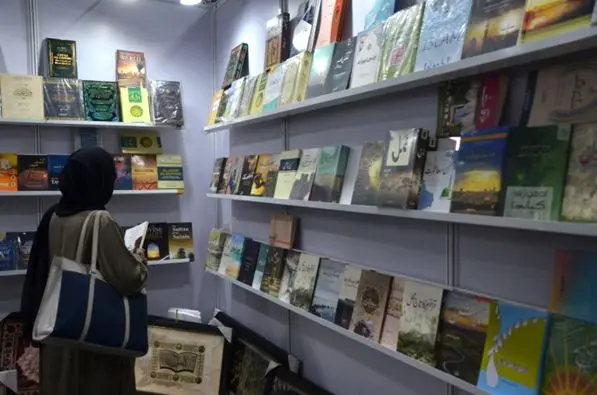


Amidst digital distractions, events like the Chinar Book Festival serve as vital reminders of our rich Islamic and global legacy of knowledge, reflection, and intellectual pursuit
Nowadays, our mobile and computer screens are dominated by useless reels and algorithm-based content. We don’t read or indulge in knowledge-oriented discourses. In this time of intellectual melancholy, book festivals act as a gentle reminder of our legacy of learning and reading culture. The Muslim Ummah is an Ummah of knowledge and Prophetic ‘Nur.’ Reading books is its defining characteristic. The word Iqra (read) is the cosmic symbol of divine guidance, bestowed by Allah upon the last prophet Muhammad (peace be upon him). The echo of this Iqra (read) is reverberating across the sacred texts of Islam.
Past Muslim societies regarded books as sacred vessels of wisdom, knowledge, and truth. In Muslim Spain, for example, youth competed with each other in collecting important books. Reinhart Dozy, a famous orientalist, notes in his book Spanish Islam that in Muslim Spain, everyone could read and write. Caliph Al-Hakam II possessed over 400,000 books in his personal library, most of which he had annotated himself. Even Allama Ibn Jawzi, a great Hanbali scholar, states, as he quotes in his book “Sayd al-Khatir”, that he had read 20,000 books and tracts during his student days. This shows the centrality of knowledge in Muslim societies.
Muslim scholars and students of knowledge would organise study circles (halaqa) to deliberate upon religious discourses, philosophy, and sciences. They celebrated the culmination of reading important books and distributed gifts and alms as a mark of happiness in learning new things. Ibn Sina, famously known as Shaykh al-Rais, said that he kept fasting and offered two rak’ah prayers as a token of thanks to Allah when he found Al-Farabi’s book on the metaphysics of Aristotle. But, unfortunately, we have lost that spirit somewhere. We are no longer book lovers but slaves of the digital industry of capitalism, which is antagonistic to the soul and heart.
However, occasions like the ongoing Chinar Book Festival at SKICC, Srinagar, give us hope and a chance to reconnect with books and knowledge once again. These festivals are not just events but experiences. They bring authors and readers together under one umbrella to develop and nourish interaction and intellectual engagement. Book festivals don’t just showcase books—they celebrate them with us. From the unique scent of fresh pages to the happiness of discovering hidden Lulu wal-Marjan (pearls and gems), they bridge us with the written cosmos.
In visiting such festivals, we are not just buying books and literature; we rediscover the aura of knowledge and wisdom. We explore new genres and encounter new thoughts and ideas. These festivals are places of solace and provide food for the realm of intellectual imagination. We should attend book festivals and cherish them, for we are the heirs of divine knowledge and a rich intellectual legacy and culture.
The writer is an Assistant Professor in Islamic Studies at the Department of Higher Education, J&K
Tahir Iqbal
ti*******@***il.com