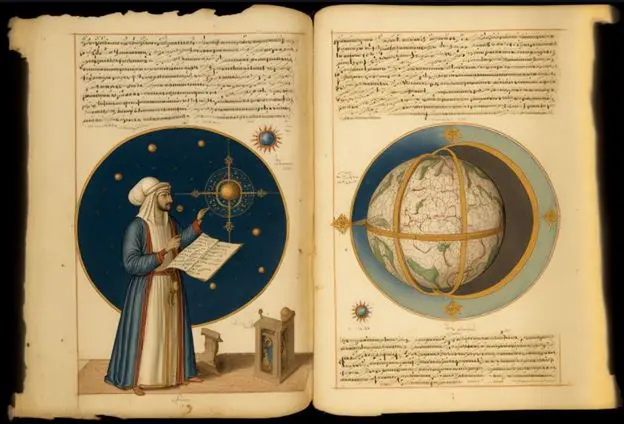


This article explores the divergent and convergent views on knowledge, and highlights how Islam integrates divine revelation with rational inquiry to foster a holistic understanding of science and reality
This write-up offers a comparative analysis of Western and Islamic perspectives on science. The Western view emphasises empirical methods, objectivity, and rational inquiry as the primary means of acquiring knowledge. In contrast, the Islamic perspective integrates scientific methodology with spiritual insight and divine revelation, viewing knowledge as both rational and transcendent. Drawing on literature and religious texts, the study highlights both divergences and points of convergence, particularly their shared commitment to the pursuit of truth and understanding. While the Western approach leans towards secular empiricism, the Islamic view embraces a holistic epistemology that unites reason and revelation.
The Western perspective largely views science through objective methods, empirical research, and rational inquiry, rooted in a materialistic and secular outlook that emphasises scientific neutrality. In contrast, the Islamic view, while valuing empirical investigation, integrates spiritual insight and divine revelation as essential to understanding reality. This research highlights significant contrasts but also points of convergence. Both traditions, nevertheless, affirm the value of scientific methodology, ethical responsibility, and the quest for verifiable knowledge. These insights help promote dialogue and foster a more holistic and inclusive understanding of science across cultural and faith-based frameworks.
Throughout history, the rise and fall of civilisations have often been linked to changes in knowledge. In modern Western thought, science is frequently viewed as a substitute for divine revelation and regarded as the highest authority in understanding reality. In contrast, Islam considers revelation as the primary source of knowledge, guiding the use of reason to understand both the universe (āyāt kauniyah) and religious commandments (āyāt shar‘iyyah). In this view, science and revelation are not opposing forces but complementary paths to truth.
The Islamic perspective sees knowledge as originating from Allah, with revelation—such as the Quran—serving as a divine guide for intellectual exploration. Unlike the Western approach, which often separates science and religion, Islam integrates both within a unified worldview. According to Syed Muhammad Naquib Al-Attas, knowledge is the product of human reasoning shaped by a worldview. He emphasises that knowledge should serve as a means to fulfil one’s duties to Allah and humanity. Thus, in Islam, the development of science is not merely for progress but is a form of worship and obedience to the Creator.
The Concept of Knowledge in the Quran
In Arabic, the term al-‘ilm—translated as “knowledge”—refers to a true understanding of something’s essence. It appears 105 times in the Quran, reflecting its central role in Islamic teachings. Expressed gratitude to Allah by saying, “We have no knowledge except what You have taught us. Surely, You are the All-Knowing, the All-Wise.” Two related terms are al-‘ilm (knowledge of natural and social sciences) and al-ma‘rifah (specialised, often spiritual knowledge gained through experience).
The Quran categorises knowledge into two types: – Divine Knowledge (al-‘ilm al-ladunni)—directly taught by Allah, such as revelation to the prophets. For example, Allah taught Adam the names of all things, then presented them to the angels and said, “Tell Me the names of these if you are truthful.” They replied, “Glory be to You! We have no knowledge except what You have taught us. Surely, You are the All-Knowing, the All-Wise.” (Quran 2:31–32).
– Knowledge gained through inquiry, observation, and reasoning, such as the creation of Prophet Adam, illustrating that knowledge comes from Allah. This includes understanding the existence of a Creator, the materials used in creation, the methods of creation, and transformation processes.
Allah functions as the Creator (Al-Rahman, Al-Rabb Al-‘Alamin), demonstrating His existence through signs in creation. Everything Allah creates is beneficial (Al-Anbiya 21:16; Al-Dukhan 44:38; Ali Imran 3:191) and true (Al-Dukhan 44:39). All creations are important for mankind (Al-Baqarah 2:164; Ali Imran 3:190). Islam promotes the use of both revelation (wahy) and reason (‘aql) in the pursuit of knowledge. The Quran encourages studying the natural world, recognising its signs as a path to understanding and drawing closer to Allah.
In Islam, knowledge is both spiritual and rational, with the Quran serving as a primary source that unites faith with intellectual exploration.
In Western thought, science is a systematic and rational effort to explain natural phenomena. While human reasoning is finite, science relies on both logic and imagination in the pursuit of knowledge (Hindersah, 2005). The rise of modern science in the West began during the Renaissance. A key figure, Nicolaus Copernicus (1473–1543), challenged Church doctrine by proposing a heliocentric model of the solar system—placing the Sun, not the Earth, at the centre—marking a major shift in scientific understanding.
Islamic views on reality treat the seen and unseen as inseparable. Revelation (wahy) and the Quran are the highest sources of knowledge, guiding thought and action, unlike Western epistemology, which often excludes the divine (Kuntowijoyo, 2007). Islamic science sees nature as a creation of Allah, and scientific inquiry as a means to understand and responsibly utilise His creation (Nasr, 1997). While some Muslim thinkers critique Western science for its secularism, others see it as compatible with Islamic principles.
Modern Western science emphasises materialism, secularism, empirical observation, and value-neutral inquiry. It often separates science from spirituality and prioritises utility, innovation, and technological advancement over metaphysical or moral concerns. Conversely, Islam promotes a sacred, integrated, and ethical vision of science, aimed not only at understanding the world but also at fulfilling humanity’s moral and spiritual purpose.
Responses among Muslims to this intellectual gap with the West have been diverse:
– Affirmative Apologetic Group: Views Islam as a complete system encompassing all knowledge, citing the Quran as containing signs of modern scientific discoveries. Thinkers like Maurice Bucaille support this through “Bucailleism”, aligning science with Quranic verses. Critics like Pervez Hoodbhoy argue this is flawed—revelation is absolute, while science is ever-evolving, and linking the two risks undermining the sacred.
– Instrumentalist Group: Sees science as a neutral tool, its value depending on the user’s intent. Advocates like Jamal al-Din al-Afghani, Muhammad Abduh, and Fazlur Rahman support adopting Western science, emphasising its ethical application within an Islamic framework. Rahman argues Muslims should engage with existing science, not create a separate “Islamic science.”
– Critical Group: Rejects the idea of neutral science, viewing Western science as secular, materialistic, and oppressive. Thinkers like Seyyed Hossein Nasr and Syed Naquib al-Attas promote the Islamisation of knowledge, a movement to reframe modern knowledge through an Islamic worldview. Initiated in the 1970s, it argues that Muslims must filter Western knowledge through religious values to preserve Islamic integrity.
Different viewpoints exist: some advocate fully adopting global civilisation and secular or communist models; others call for abandoning outdated traditions and applying Western social science methods for renewal; a third group believes revival lies in reconnecting with Islam’s rich scientific heritage.
A key concern among Muslim intellectuals is the underdevelopment of the Islamic world. This raises critical questions: Does humanity still need religion in the 21st century? Can Muslims adapt to modern scientific and technological challenges?
The writer works in the Department of Education
Rayeesul Islam
ra************@***il.com