

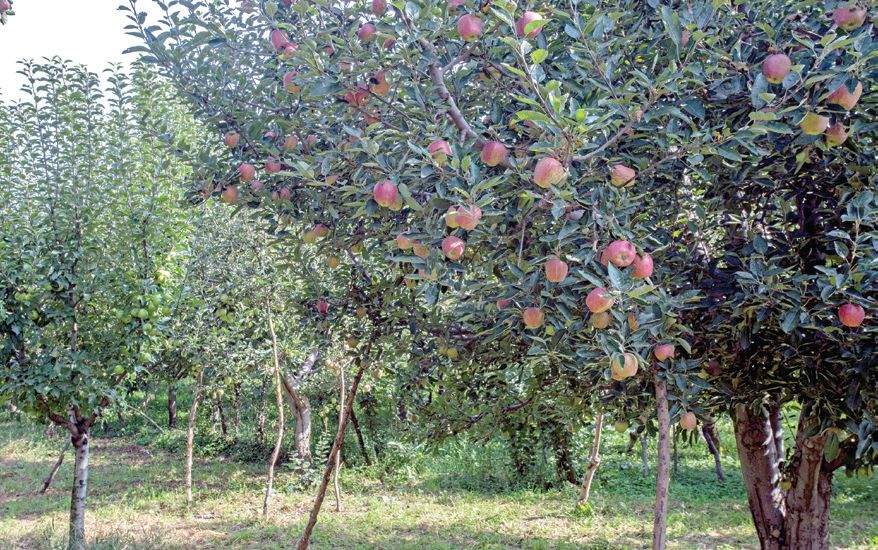
Kashmir’s apple industry was once a story of survival. It wasn’t just a part of the economy; it was the beating heart of rural Kashmir. In a place where people often had nothing else, apples paid for school fees, built homes, fed generations, and made people proud. But that heart is failing now. The orchards are dying. Prices have fallen apart. Farmers are getting deeper and deeper in debt. Young people are leaving farming. The apple industry, which is Kashmir’s pride, is now being buried under the weight of betrayal, greed, and criminal neglect. This is not a failure of the market. This is a collapse that people caused. It’s time to say it out loud: this industry is dying, and we know who is doing it. The government, both at the national and the local levels, is at the top of this chain of destruction.
For years, the farmers of Kashmir have asked for a minimum support price, rules against dumping imports, help after losses, and dependable storage and transportation systems. The government responded with speeches and plans every year, but never with action. There is no minimum support price. There are no rules about the flood of imported apples that crashes local markets. When the Srinagar-Jammu highway closes for days during the harvest season, there is no protection for farmers. No rush, no responsibility, and no shame. People in power seem not to see or care about the suffering of Kashmiri farmers.
The pesticide and agrochemical industry was wide awake while the government slept, selling poison in the name of progress. Pesticide dealers, who often don’t have to follow strict rules, sold growers low-quality, old, or even banned chemicals because they were desperate for answers. These chemicals have destroyed the fruit, made the trees weaker, and ruined the soil without any help or scientific knowledge. Kashmiri apples are being turned down by export markets because they have too many chemicals in them. Farmers are being blamed for a problem caused by greed. These dealers, backed by powerful associations, continue to profit from this exploitation. They provide no training, no transparency, and no liability, just quick sales and quiet damage.
Then there are the mandis, which have turned into open-air crime scenes where Kashmiri farmers are robbed in broad daylight. Commission agents and traders, protected by their own powerful associations, manipulate rates, deduct arbitrary charges, and delay payments for months or years. Farmers are often forced to accept whatever they are offered, which is usually less than what they spent on producing and transporting the fruit. The mandi system, which should be the bridge between farmer and market, has become a trap, a cartel where the grower is always the loser. And all this happens under the watchful silence of mandi associations, who refuse reforms, fear transparency, and thrive on the farmer’s helplessness.
Cold storage was supposed to help with these problems, but it has turned into another weapon used against the farmer. Most cold storage units are owned by individuals and charge too much during the harvest season. Small and marginal farmers often can’t get space because big traders and middlemen book up whole facilities in advance. There are no rules from the government about prices, quality, or safety. People who own cold storage act like private monopolies, taking advantage of a crisis instead of fixing it. Once again, the government turns a blind eye. The lack of action and silence from local grower associations is one of the most shameful parts of this whole collapse. These associations were made to protect the rights of farmers. But where were these leaders when prices fell, the pesticide crisis got worse, and mandis stole from farmers? They didn’t fight back; instead, they sent out press releases. They didn’t mobilise; instead, they held workshops. Some people have gotten so close to political parties and bureaucrats that they now act as middlemen instead of protectors. They didn’t just fail because they weren’t good at their jobs; they betrayed us. They were in meetings when the orchard caught fire.
A new and dangerous force is making things worse: the rise of social media influencers and social media journalists, who have turned the pain of farmers into content for likes, views, and fame. Instead of doing real reporting or holding systems accountable, a lot of these people walk through orchards with cameras, take dramatic thumbnails, and post sensational videos that oversimplify the crisis or spread false information. Some people say they speak for farmers, but they have never lifted a box of apples or understood the market. Others, on the other hand, are backed by powerful groups and try to distract people from real problems by making imported apples look safe or promoting companies that sell harmful sprays. They don’t talk about mandi corruption, pesticide fraud, or failed policies in their videos. Their coverage is empty, showy, and often wrong. In the end, they make things worse by distracting people with drama while the real criminals go about their business without being caught.
And what about the people who grow them? They are the ones who are hurt by all of this, but they also have to face the truth. Most Kashmiri apple growers are still divided, disorganised, and weak, even though they have been suffering for decades. There isn’t much unity. A small number of people have come together to form cooperatives. Even fewer have adopted direct marketing, digital access, or contemporary methodologies. Not just their fault; the system was set up to keep them weak. But if they don’t work together and support each other, they will stay stuck in a cycle of exploitation where everyone else benefits from their pain.
The apple business in Kashmir is on life support right now. Prices are lower than the cost of production. Road closures or too many apples on the market cause whole truckloads of apples to rot. There are more and more mental health problems in rural areas, and this isn’t just a problem with farming; it’s a problem with society as a whole. And still, no one is responsible. Not the government workers. Not the agents in the mandi. Not the mafia that sells pesticides. Not the associations. Not even the social media idiots who make fun of farmers’ problems to get clicks.
People act like this disaster is normal, like the death of an entire industry is something that can be quietly accepted. But it’s not normal. It is a shame. A sad event. A crime. And everyone who could have done something but didn’t has blood on their hands. The apple farmer in Kashmir is not asking for charity. He doesn’t want pity. He wants justice, and he deserves it. He should have a government that protects his market instead of letting it be dumped. He deserves a fair mandi, not one that is set up to fail. He should have access to real chemicals, not poison. He needs cold storage that helps him, not exploits him. He deserves leaders who will stand up for him, not betray him. And he deserves news that informs, not distracts.
If this destruction keeps happening, if the government keeps ignoring it, if the associations stay quiet, and if the mafias continue to rule the system, then the death of the apple industry will not just be a loss for Kashmir. It will be a moral failure for all of us. And when the orchards fall silent, when the fruit stops coming, and the land lies empty, we must remember this truth:
It didn’t die on its own.
It was killed.
Who Killed Kashmir’s Apple Industry?
It was betrayed by those who were meant to protect it
Dr Syed Irfan Shafi
dr**************@***il.com