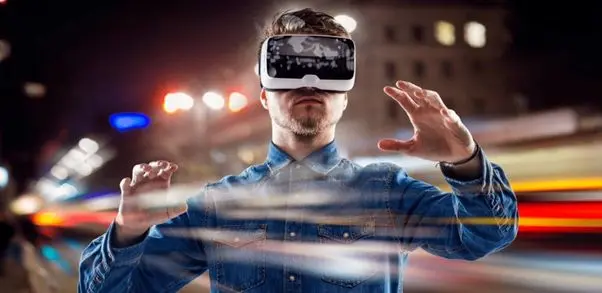


AI-generated identities have become indistinguishable from real humans. We face urgent questions about authenticity, creativity, and what it truly means to be human in a rapidly evolving digital age.
By Bilal Ahmad Shah Qureshi
In today’s world, it has become increasingly difficult to differentiate between what is real and what is virtual. Artificial Intelligence has reached a stage where it can simulate human creativity, expression, and emotions with remarkable precision. We now have AI-generated singers, dancers, and even YouTubers who perform, speak, and entertain just like real people. As these virtual identities become more convincing, the boundaries separating the real and digital worlds are fading rapidly.
In the near future, people may trust and believe more in the virtual world than in the physical one. Human perception itself is being reprogrammed; the brain is slowly adapting to a reality dominated by digital illusions. This manipulation is subtle yet powerful, making the human mind more “eco-friendly” to virtual existence. What once served as a tool of convenience is now evolving into an alternate universe that feels more comfortable, controllable, and emotionally satisfying than real life.
While this transformation showcases human innovation at its peak, it also raises profound questions about identity, authenticity, and consciousness. If the virtual becomes more believable than the real, what will it mean to be human? The challenge ahead is not to reject technology, but to balance it, ensuring that AI enhances our humanity rather than erases it.
One of the most worrying trends I have observed is the erosion of human creativity. Our creativity seems to be fading at an alarming pace. The human brain, once celebrated for its originality and problem-solving, is losing both its usability and its instinct to innovate. Slowly but surely, people are beginning to believe that AI is more intelligent than they are. This is a strange paradox (a hidden reality): The human brain created AI, yet AI is now shaping and manipulating the human brain in return. If this continues unchecked, we risk entering a future where the very capacity that made this human imagination could be outsourced to machines.
Yet, despite its risks, AI also carries unique advantages. Among its most remarkable traits is its emotional neutrality: unlike humans, AI does not harm or insult others by its own perceptions or biases. It can be programmed to act with fairness, empathy, and consistency, qualities that humans often struggle to maintain. This alone sets AI apart from the human brain.
Though AI brings countless benefits, this one positive quality is its ability to act without malice or prejudice makes it fundamentally different from us. And yet, the same technology also holds the potential to distort our thinking, making us question our own intelligence and creativity. This contradiction should make us pause and reflect.
We are entering an era where the creator and the creation are locked in a feedback loop. The human brain created AI, and now AI is beginning to manipulate human thought, perception, and imagination. This is both fascinating and unsettling. Unless we develop a conscious framework to guide our use of AI, the near future could bring not just innovation, but a quiet erosion of what makes us uniquely human.
It is time to imagine the worst-case scenarios now, while we still can, so that we shape AI to support our creativity instead of replacing it.
The writer holds an MSc, MPhil, GATE in Physics
km*****@***il.com