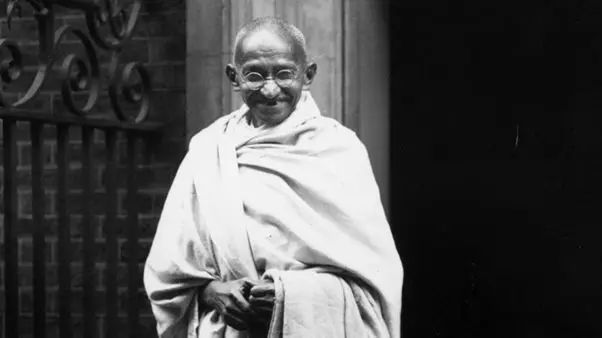


Beyond his famed nonviolence, Mohandas Karamchand Gandhi’s profound respect for Islam and its teachings shaped his vision of moral unity, compassion, and shared humanity across faiths
By Prof Hamid Naseem Rafiabadi
Mohandas Karamchand Gandhi, the “Father of the Nation”, is often remembered as the ascetic who walked barefoot across India’s villages, spinning his own cloth, and preaching a philosophy of nonviolence that shook the foundations of empire. Yet behind the familiar imagery of the spinning wheel and salt march lies another dimension of Gandhi’s spiritual and moral universe—his profound engagement with Islam. For Gandhi, the study of Islam was not merely an academic exercise or political strategy; it was a pathway to understanding humanity, ethics, and the universality of truth (Alam, 2024).
Gandhi’s fascination with Islam began early. Growing up in Rajkot, Gujarat, he was immersed in a community where Hindu and Muslim households coexisted, sometimes in harmony, sometimes in tension (Alam, 2024). His mother, Kasturba, hailed from the Pranami tradition, which emphasised devotion to Lord Krishna while drawing teachings from the Bhagavad Gita, Vedas, Quran, and Bible alike. This early exposure to multiple religious texts instilled in Gandhi a reverence for truth (satya) that transcended sectarian boundaries. It also laid the groundwork for his lifelong practice of engaging with the spiritual wisdom of others while remaining rooted in his own Hindu faith (Gandhi, 1949, 94).
Gandhi’s respect for Islam was deeply personal. He read the Quran repeatedly, studied the sayings of the Prophet Muhammad (PBUH), and reflected on the lives of early Muslims who exemplified devotion, selflessness, and service to the underprivileged (Gandhi, 1949, 235; Alam, 2024). He was particularly struck by the Prophet’s humility, courage, and unwavering commitment to truth. Gandhi wrote with admiration:
“Muhammad was a magnificent prophet. He had no fear except for God and was quite brave… A truth-seeker like me can’t help but respect one who walked with God’s fear, was constantly focused on God, and had boundless compassion for the human race” (Alam, 2024).
He also noted the Prophet’s simplicity and rigorous self-effacement, qualities that resonated with his own ascetic lifestyle. Gandhi saw in Muhammad a kindred spirit: a man whose life was a seamless alignment of belief and action (Gandhi, 1949, 500).
Yet Gandhi’s engagement with Islam was not merely devotional. He grappled with the political and social realities of Muslims in India, particularly during the volatile years of British rule and Partition. He distinguished sharply between the moral teachings of Islam and the lived practices of Muslims (Ahmed, 2020). While he acknowledged that some Muslims behaved aggressively, he attributed such behaviour not to Islam itself but to historical contingencies—the legacy of imperial expansion and the distorted interpretations of Islamic history (Gandhi, 1949, 66, 134). In Gandhi’s view, a faithful reading of the Quran revealed a religion of peace and nonviolence, where compulsion had no place (Gandhi, 1949, 19, 236).
In Hind Swaraj (1938), Gandhi famously wrote: “Should we not remember that many Hindus and Mahomedans own the same ancestors and the same blood runs through their veins? Religions are different roads converging to the same point. What does it matter that we take different roads so long as we reach the same goal?” (Gandhi, 1938, p. 46)
He highlighted that the Quran contains passages harmonious with Hindu philosophy and that the Bhagavad Gita contains teachings that no Muslim could reasonably contest (Gandhi, 1938, p. 48). For Gandhi, the universality of ethical principles mattered more than sectarian boundaries.
During the Partition riots, Gandhi’s commitment to Muslim safety was extraordinary. When Muslims expressed fear about remaining in India amid escalating violence, he assured them:
“If anyone of you is killed, the Hindus may have to pay the price for it with Gandhi’s life” (Alam, 2024).
This was not mere rhetoric. Gandhi repeatedly placed himself between communities and violence, seeking to protect life through moral persuasion rather than force. He believed that the true measure of Islam, or any religion, lay not in ritual or dogma but in the conduct of its followers—the purity, selflessness, and adherence to moral principles that the faith enjoins (Gandhi, 1949, 78).
Gandhi’s engagement with Islam also extended to political activism. He actively supported the Khilafat Movement in 1919, which aimed to preserve the Ottoman Caliphate after World War I and unify Hindus and Muslims against British colonial policies. Gandhi became president of the Khilafat conference, working alongside the Ali Brothers, and viewed the movement as a vehicle for intercommunal solidarity (Alam, 2024). His involvement was not uncritical: he continuously urged Indian Muslims to rise above historical grievances and embrace nonviolent action (Gandhi, 1949, 301).
Equally revealing are Gandhi’s personal relationships. From childhood friendships with Sheikh Mehtab, who introduced him to beef—a dish he curiously enjoyed despite his Hindu upbringing—to adult alliances with Dada Abdullah, Abbas Tayyib Ji, Khan Abdul Ghaffar Khan (“Frontier Gandhi”), and Abul Kalam Azad, Gandhi’s interactions with Muslims were marked by mutual respect, trust, and ethical concern (Alam, 2024). He encouraged interfaith dialogue, reading from the Quran, Bhagavad Gita, and Bible during prayer meetings, often integrating verses from Surah Fatiha into his daily prayers (Alam, 2024; Gandhi, 1949, 585).
Gandhi’s reflections on Islam reveal an extraordinary capacity for moral imagination. He saw the possibility of practising Islam in ways that honoured its universal ethical principles while rejecting the historical narrative of violence and conquest often associated with the faith (Ahmed, 2020). He challenged Muslims to distinguish between the moral ideals of their religion and the failings of its adherents, urging them to return to the principles of compassion, justice, and nonviolence that the Quran enshrines (Gandhi, 1949, 131, 134).
In this sense, Gandhi’s approach to Islam remains strikingly contemporary. In a world where religious identity is often conflated with political allegiance, he envisioned a plurality of Muslim identities—ethical, spiritual, and culturally diverse—that could coexist harmoniously with others (Ahmed, 2020). He refused to reduce Muslims to a political monolith or to define them solely by acts of aggression attributed to historical circumstances. Instead, he recognised the dynamic interplay between religious teachings and human interpretation, advocating for moral reflection, self-restraint, and nonviolent action (Gandhi, 1949, 134, 263).
Ultimately, Gandhi’s engagement with Islam illustrates his broader philosophy: that religious principles, when sincerely practised, are a force for moral clarity, social justice, and communal harmony. His admiration for the Prophet Muhammad, his study of the Quran, and his tireless work to protect Muslims during moments of political crisis demonstrate a commitment to a shared humanity that transcends doctrinal differences (Gandhi, 1949, 236, 310).
In revisiting Gandhi’s writings and actions, one sees a figure whose moral imagination embraced the plurality of faith, the complexity of history, and the possibility of ethical transformation. Gandhi did not merely admire Islam; he engaged with it critically, reverently, and creatively. In doing so, he offered a vision of interfaith coexistence that continues to resonate in contemporary India and beyond.
Gandhi’s legacy, in relation to Islam, is not a relic of history but a living lesson: that peace, justice, and ethical consistency are attainable not through coercion or dogma but through empathy, courage, and the unwavering commitment to moral truth. In the story of Gandhi and Islam, one finds a call to imagine a world where religions converge not in conflict, but in the shared pursuit of human dignity and spiritual integrity.
References:
Ahmed, H. (2020). Gandhi’s Imagination of Muslims. In Gandhi in Contemporary Times. Routledge.
Alam, M. (2024). “Gandhiji’s Bonding with Islam.” Know Islam. Retrieved from https://www.livemint.com/news/india/in-search-of-the-muslim-gandhi-11569831643651.html
Gandhi, M. K. (1938). Hind Swaraj. Ahmedabad.
Gandhi, M. K. (1949). Communal Unity. Ahmedabad: Navjeevan.
The Collected Works of Mahatma Gandhi, Vol. 29. Publication Division, 2014.
ha**********@***il.com