

A public health emergency rooted in systemic failures calls for forensic intervention to protect cultural identity, prevent cancer, and restore consumer trust in Kashmir’s food safety system
By Dr Sami Ullah
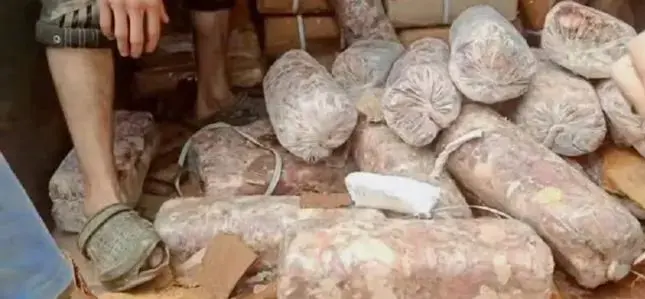
In a series of shocking inspections led by the Food Safety Department of Jammu & Kashmir in the recent past and continuing to date, meat intended for human consumption was found in an advanced state of putrefaction. These inspections, conducted across markets, cold storages, eateries, and food outlets throughout the region, uncovered a grave public health hazard when a large consignment of decayed, unfit-for-consumption meat was seized. Alarmingly, traditional meat-based products such as Ristas, Kababs, and Goshtaba etc., were also found to be prepared and sold under unhygienic, rotten, and putrefied conditions, exposing consumers to serious health risks. This crisis, while transcending the immediate threat of foodborne illness, reflects a deeper erosion of consumer trust, escalation of healthcare burdens, and a systemic strain on both public health infrastructure and the household economy. The issue, therefore, is not merely one of regulatory compliance but of safeguarding human health, restoring economic confidence, and ensuring that cultural foods, particularly those that are central to Kashmiri identity, remain pure, intact, safe, and hygienic for public consumption.
At the very outset, the foul odour emanating from these seizures was not perceived by the public as a mere sensory affront but was rather instinctively recognised as the olfactory symptom of a deeper institutional decay in food regulation and public health accountability. This reckoning arrives at a dangerous inflexion point for Jammu & Kashmir, particularly when the cancer-based registry has recorded 67,000 new cancer cases between 2018 and 2024, with a continuous case rise. Such statistics do not necessarily mean the numbers, but rather signal a public health emergency that has also been echoed in reports from SKIMS, GMC Srinagar, and other referral centres, thereby underscoring the urgency of intervening before this tragic trend accelerates further.
While experts cite shifting dietary patterns, food adulteration, and environmental pollutants as potential contributors, the spectre of contaminated meat consumption injects a new sense of urgency into this crisis. In the food cultures of Kashmir, where beef, mutton, chicken, and fish form the nexus of dietary and cultural identity, discoveries of decomposed, foul-smelling meat are not just health violations but are more of cultural betrayals. What has been more alarming is the breadth of systemic failure these findings betray: prolonged storage under unsafe conditions, cold-chain collapse, intentional use of illicit preservatives, and the surreptitious circulation of tainted meat long past safe consumption thresholds.
In light of this, there is absolute dereliction in official duties to inspect such malpractices routinely. It is worth recalling that such unchecked and unhygienic practices create ideal environments for the proliferation of dangerous pathogens like Salmonella, Listeria monocytogenes, and toxin-producing Clostridium species, each capable of triggering foodborne outbreaks, sepsis, or even deaths.
Within this context, adherence to halal/haram dietary criteria assumes scientific significance. These standards transcend religious compliance, where they embody authentic purity, legitimate species identification, hygienic slaughter, unadulterated materials, and contaminant-free processing. While Islamic tradition elevates such dietary laws as a moral imperative for preserving life’s sanctity, they also serve as scientifically relevant markers for food safety. The neglect of purity standards in this matter is not a trivial lapse but a direct violation of what is both a cultural imperative and a scientific safeguard for human health.
In the Kashmiri context, where food is deeply intertwined with identity, heritage, and community well-being, overlooking these standards erodes not only regulatory credibility but also public trust in the very systems tasked with ensuring safety. Enforcement, therefore, should never have been limited to perfunctory confiscation and disposal. It ought to have extended to systematic source attribution, meticulous chain-of-custody preservation, and scientifically verifiable proof of adulteration.
Crucially, the crime and criminality underpinning this illicit meat trade cannot be meaningfully addressed without the deployment of forensic science, particularly for acts involving deliberate and intentional substitution, addition, tampering, or misrepresentation of meat or its products, ingredients, and packaging made for economic gain. The criminal economy behind this adulterated meat cannot be dismantled with raids and routine inspections alone. Instead, it is argued that only rigorous forensic characterisation can authenticate, quantify, and legally substantiate the crime, thereby aiding in revealing the true extent of foodborne hazards and their impact on public health.
Key risk dimensions that demand forensic evaluation:
- Zoonotic disease threats:
Rotten or contaminated meat is not just an issue of spoilage or fraud but is a potential breeding ground for zoonotic infections such as Salmonella, E. coli O157:H7 (a dangerous strain of E. coli), Brucella, and Listeria that can cause outbreaks, particularly in a region like J&K where meat is largely consumed and public health infrastructure is already strained. As such, forensic-driven early detection is the first line of defence.
- Antimicrobial Resistance (AMR) link:
Studies show that unhygienic meat or dirty supply chains become hotspots for drug-resistant bacteria like MRSA and ESBL-producing E. coli, which silently fuel the AMR crisis. WHO has declared AMR a “silent pandemic.” Therefore, integrating routine forensic microbiology into J&K’s food safety efforts could directly contribute to national AMR containment strategies.
- Cultural and religious significance (Halal integrity):
For J&K, where Halal food authenticity is tied to cultural dignity and religious adherence, meat fraud is not only a health threat but also a faith violation. Forensic authentication of species ensures both public trust and religious compliance, thereby strengthening social harmony and marketplace confidence.
- Economic and tourism impact:
Unsafe food supply chains damage Kashmir’s agrarian economy and hospitality sector. As tourism, especially culinary tourism, thrives on trust in food safety, forensic-backed supply chain safeguards consumer confidence and market competitiveness, making it a non-negotiable instrument.
- International best practices:
Leading global systems incorporate DNA barcoding, real-time traceability, microbial profiling, and isotope-ratio mass spectrometry for origin and species verification. Pertinently, the EU mandates forensic-level species authentication in meat labelling after the 2013 ‘Horsemeat Scandal,’ making Jammu & Kashmir conversant with aligning with global models for credibility and protection.
- Environmental spillover: Rotten meat disposal, if unregulated, contaminates water sources and spreads pathogens to livestock and wildlife, worsening ecological degradation. Forensic environmental toxicology could monitor these spillovers.
- Forensic public health surveillance:
Routine forensic food testing data can be integrated with hospital morbidity records, cancer registries, and veterinary health reports to build an early-warning system for foodborne epidemics. This will, in turn, help forensic science enter into a preventive health infrastructure and not just an enforcement tool.
- Legal accountability gap:
While the Food Safety and Standards Act, 2006, provides for penalties, the implementation gap in J&K shows that seizures are reactive and sporadic. Establishing a Food Forensic Tribunal Wing under High Court oversight could ensure fast-track adjudication of adulteration crimes.
Given these converging risks, including a trust deficit scenario, advanced forensic testing—particularly microbial profiling, chemical-residue analysis, and authenticity verification—can no longer be treated as optional. Instead, it must be recognised as an indispensable safeguard for establishing the factual integrity of meat consignments and in determining not only whether they deviate from statutory prohibitions but also how far they compromise cultural sensitivities and freshness standards.
In this light, forensic intervention transcends the realm of mere technicality by becoming a public health imperative and a moral covenant. Forensic science, in this context, is not just about generating evidence but about protecting life, preserving culture, and sustaining community trust in what people consume.
Pillars of a scientifically credible framework for a forensic meat testing regime will be:
- Species authentication for detecting illegal substitutions or prohibited meats, as this is fundamental for upholding statutory mandates (halal standards) as well as cultural and religious safeguards. Fraudulent practices such as chicken-based cuisines being passed off as mutton-based culinary or beef mislabelled as another meat carry not only economic and public health risks but also profound cultural, religious, and legal consequences.
- Purity and adulteration profiling through forensic-based approaches will help identify harmful additives, illicit preservatives, or non-meat fillers that compromise nutritional integrity and human health. Such adulteration does not merely reduce quality but potentially erodes consumer confidence, corrodes market integrity, and subjects the consumer population to toxic risks under the guise of affordability and convenience.
- Pathogen and toxin mapping via scientific profiling of microbial loads and toxigenic agents in seized materials is essential to intercept foodborne threats before they infiltrate consumer supply chains. This aspect will transform enforcement from reactive confiscations after harm into proactive protection of public health, thereby cutting the chain of exposure before it reaches households.
- Chemical residue analytics for the detection of carcinogen-linked compounds such as nitrosamines, reactive aldehydes, and banned industrial dyes through forensic testing provides the only reliable means of quantifying silent hazards embedded in contaminated diets. Here, forensic laboratories become life-saving filters against chronic disease burdens that silently accumulate within food systems.
- Freshness and decomposition indexing by validating spoilage contents through biochemical and microbiological marker sets objective, reproducible thresholds that move decisively beyond subjective sensory inspection. Freshness criteria thus cease to be a matter of visual impression and become an evidence-backed standard of consumer protection.
- Source tracing and accountability through forensic traceability enable adulterated consignments to be linked back to their precise origins, empowering regulators to contain outbreaks, enforce targeted recalls, and establish criminal liability with evidentiary robustness. This accountability mechanism is central to deterrence, ensuring violations are not repeated with impunity.
Notably, these frameworks do not represent a technical checklist but the decisive frontline of food justice, marking a shift from passive confiscation after damage to anticipatory interception that prevents harm altogether. The Food Safety and Standards Act, 2006, already grants statutory authority for such forensic interventions. The disquieting question, therefore, is not legislative absence but institutional reluctance and administrative sidelining that obstruct the full realisation of these safeguards.
For Jammu & Kashmir, the stakes are uniquely acute. Episodic drives or symbolic raids may generate headlines, but they cannot substitute for what is truly required—sustained funding, advanced forensic laboratories, systematic capacity-building, consistent enforcement, and transparent public reporting commensurate with the scale of the risk. Without these, enforcement remains locked in a shallow cycle of confiscation and disposal, while deeper and more insidious threats to health and culture remain unaddressed.
It is in this light that an integrated forensic-scientific enforcement model emerges as indispensable—not simply to detect violations but to ensure that interventions carry evidentiary weight and align public health imperatives with the region’s cultural and religious food quality standards. Such a model would transform food regulation from a symbolic exercise into a substantive shield protecting both life and identity. Anything less keeps communities exposed, institutions reactive, and the regulatory system vulnerable to recurring crises that steadily erode public trust and cultural integrity.
Why forensics must lead the response:
Forensic science in contemporary times will provide far more than the blunt binaries of ‘rotten’ or ‘safe’ standards. It offers a multi-dimensional toolkit capable of tracing authenticity, legality, and health risks across the entire food chain. Studies have shown that DNA barcoding has reliably authenticated species origin, thereby exposing fraudulent substitutions like dog or donkey meat sold as mutton or beef. Alongside, high-throughput sequencing techniques have further enabled microbiome profiling, uncovering spoilage organisms, antibiotic-resistant bacteria, and pathogens that not only cause acute illness but may also contribute to long-term carcinogenic exposures through chronic inflammation.
Stable isotope ratio analysis is increasingly deployed to determine geographic origin and production systems, distinguishing between legally sourced livestock and illicitly trafficked consignments. Elemental fingerprinting can reveal heavy metal contamination and chemical preservatives deliberately introduced to mask spoilage. Advances in chromatographic and spectrometric methods allow detection of formaldehyde, boric acid, and sulphites, as substances that have been documented in food adulteration cases worldwide. Such compounds, though effective in disguising decay, are tied to carcinogenesis, organ toxicity, and immune disruption.
By embedding these forensic protocols into routine inspection regimes, authorities can move beyond episodic confiscations and instead create a system of traceable accountability. Every claim of origin, quality, or compliance can be subjected to independent scientific verification. Recent reviews in Food Control emphasise that forensic methods are not only vital in securing consumer safety but also essential to dismantle illicit trafficking networks by generating admissible, court-ready evidence.
Thus, if incorporated into food safety enforcement, forensics will help transform food safety from guesswork into verifiable science. It does not merely detect adulteration but will determine whether meat was sourced legally, processed hygienically, and delivered safely. In contexts like Kashmir, where public trust is fragile and health burdens are mounting, forensic-led oversight is not an optional activity but the only pathway to sustainable accountability and cancer-preventive public health.
The cancer connection:
The public outrage in Kashmir is not merely about the spoiled meat that was deliberately served to customers but also about the long-term biological consequences of having consumed such products. When populations are chronically exposed to degraded proteins, microbial toxins, and chemical preservatives, the effects extend far beyond immediate gastrointestinal illness. The body’s immune defences weaken, systemic inflammation becomes sustained, and molecular damage quietly accumulates. Over the years, this damage lays the groundwork for metabolic dysfunction and carcinogenesis.
A particularly alarming dimension is the suspected use of formaldehyde, a compound historically deployed in mortuaries, pathologies, and anatomical laboratories to arrest the decomposition process across time and space. Evidence from other jurisdictions shows its illicit diversion into the food chain to extend the apparent freshness of perishable products. It is important to note that ingestion of formaldehyde, even at low but chronic exposure levels, poses significant health risks. The International Agency for Research on Cancer (IARC) has classified formaldehyde as a Group 1 human carcinogen, with established associations to nasopharyngeal carcinoma and hematolymphoid malignancies, including certain leukaemias.
In the Kashmiri context, where a confluence of genetic predispositions, heightened environmental exposures, and dietary vulnerabilities has already elevated the baseline cancer risk, such an adulteration acts as a potent risk amplifier. This convergence of factors may accelerate what many experts now regard as an incipient cancer epidemic in the Valley, transforming a regulatory lapse into a long-term public health emergency.
Thus, the ‘rotten meat scandal’ cannot be treated as a discrete violation of food hygiene standards. It is a public health emergency with oncological consequences, demanding forensic scrutiny, epidemiological tracking, and urgent regulatory reform. Failure to address this nexus not only perpetuates food fraud but also entrenches a silent, preventable contributor to Kashmir’s escalating cancer burden.
Policy and enforcement gaps
The ongoing crackdown, while commendable, remains fundamentally reactive—punishing only after compromised meat has already entered kitchens and bodies. Pertinently, the Food Safety and Standards Act (FSSA), 2006, empowers regulators with a robust preventive mandate such as risk-based inspections, surveillance, and scientifically validated enforcement mechanisms. The weakness, therefore, lies not in statutory design but in execution.
In Jammu & Kashmir, enforcement is routinely undercut by bureaucratic inertia, corruption, and acute resource scarcity. Food Safety Officers remain chronically overburdened; inspections are irregular and often perfunctory; and the region’s laboratory capacity is both technically and logistically inadequate. A deeper structural flaw lies in the fragmentation of institutional roles, as the forensic science services and food safety authorities function in isolation despite their natural complementarity. Food inspectors are empowered to seize and collect suspect samples, but without the corroborative rigour of forensic laboratories, which have the capability of authenticating, quantifying, and establishing admissible toxicological evidence.
In light of this isolated functionary domain, such seizures rarely translate into sustainable prosecutions. This disconnect effectively strips enforcement of its evidentiary backbone, reducing food safety law from a preventive shield into a reactive formality and allowing systemic adulteration to persist with impunity.
Updated literature underscores this implementation gap. Studies on India’s food regulatory system highlight the persistent challenge of fragmented institutional coordination and weak laboratory infrastructure. However, the global best practices, evidenced by the EU’s Rapid Alert System for Food and Feed (RASFF) and the U.S. FDA’s Forensic Chemistry Centre, demonstrate how integrating forensic testing into frontline inspections creates accountability loops where every consignment is traceable, verifiable, and prosecutable.
Without such systemic embedding of forensics in the inspection, seizure, and sampling process, the entire enforcement in J&K risks being an episodic spectacle rather than a sustained safeguard. The absence of forensic scrutiny will allow the cycle of illegality to thrive not in isolation but at the expense of public health, culture, and economy.
Therefore, the future roadmap demands embedding forensics as the uncompromising core of food safety in Jammu & Kashmir. Without this systemic transformation, enforcement will remain perilously reactive, arriving only after damage is done, and importantly, when lives are already imperilled.
Based on these three vital aspects, key recommendations that crystallise this shift include:
- Mandatory forensic screening: Every bulk meat consignment, especially processed imports, must undergo accredited testing for species authentication, adulteration markers, and pathogenic signatures, ensuring that only authentic, hygienic, and culturally compliant meat reaches consumers.
- Forensic supply chain audits: Randomised, science-led inspections of slaughterhouses, cold storages, and transport hubs must replace episodic raids, with systemic offenders permanently blacklisted.
- Transparency in seizures: All confiscated consignments, post-forensic analysis, must be reported in the public domain, transforming traceability into a tool of deterrence and trust-building.
- Dedicated food forensic laboratory: A specialised J&K facility focused on molecular species identification (ID), microbial forensics, and toxicological profiling will bridge the dangerous gap between enforcement officers and cutting-edge science.
- Real-time traceability: Blockchain-based ledgers and IoT-enabled cold chain monitoring must digitise every node from slaughterhouse to kitchen, with pilot projects launched on a war footing.
- Stringent legal action: Habitual violators must face lifetime trade bans and maximum penalties under the Food Safety and Standards Act, 2006. Judicial precedents already confirm the need for exemplary punishment in cases of food adulteration.
- Public health integration: Food safety surveillance data must be fused with cancer registries and epidemiological datasets, exposing the hidden, long-term toll of dietary carcinogens and adulterants.
- Joint enforcement task force: A multidisciplinary strike force of food safety officers, forensic scientists, and public health experts must replace fragmented enforcement, enabling rapid, evidence-based interventions.
- Consumer empowerment: Citizens must be transformed from passive victims to forensic watchdogs through awareness campaigns, inspection-proof demand mechanisms, and digital traceability apps enabling them to verify issues in real time.
From the facts and circumstances deliberated herein before, it appears that the rotten meat scandal in J&K is not a hygiene lapse but a slow-motion public health emergency and cultural sabotage. Allowing adulterated, toxic, or species-unknown meat into our food chain is not negligence but a betrayal of our health, faith, and heritage. Hospital wards already echo with preventable cancers and diseases born of this decay.
However, seizures without science are hollow theatrics. Only by making forensic truth the backbone of food safety can we ensure the restoration of trust. So every carcass, every consignment, every cut must face the microscope, the gene, and the law before reaching a plate. As the food in J&K is more than sustenance, its association with faith, memory, and survival should be respected and protected. And to do so, it demands nothing less than a forensic revolution, where science becomes a guardian of life, culture, and dignity.
About the writer:
Dr Sami Ullah is a forensic practitioner and anthropologist with an MSc and PhD in forensic science and an MA in anthropology. As co-founder and chairman of the RADISAT Foundation, he advocates for forensic science education, real-time justice reforms, and scientific and research advancements in crime investigation and scientific reporting. Passionate about bridging the forensic science gap in Jammu & Kashmir, he works to integrate forensic science into academia, industry, private sector, law enforcement, and governance.
Dr Sami Ullah
sa********@***il.com