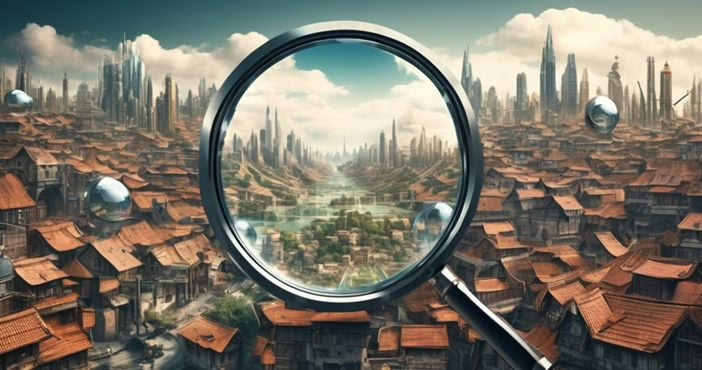


Tradition gives us a sense of belonging; modernisation gives us a sense of becoming
Modernisation refers to the transformation from traditional, rural, and agrarian societies to modern, urban, and industrial ones. While modernisation brings technological advancements, improved education, and better living standards, it also deeply affects cultural and traditional values. Modernisation refers to the process of adopting new ideas, technologies, and lifestyles to improve living standards and societal development. Traditions, on the other hand, are the customs, beliefs, and practices passed down from generation to generation, reflecting the cultural identity of a community.
With modernisation, societies experience rapid changes in communication, education, fashion, and family structures. While this brings growth and global awareness, it also creates tension between modern values and age-old traditions. For example, traditional joint families are often replaced by nuclear families due to urban lifestyles. Similarly, traditional attire and languages are being replaced with Western clothing and English, especially among the youth. Some age-old practices are being questioned or abandoned due to increased awareness and education. However, not all effects are negative. Modernisation has helped eliminate harmful practices like child marriage and gender inequality. It also offers tools to preserve traditions, such as the digital archiving of folk music, literature, and rituals.
Traditions are the soul of every culture, reflecting the values, beliefs, and lifestyles of past generations. However, in today’s fast-paced, modern world, many of these traditions are undergoing major changes. With the rise of technology, urbanisation, and global connectivity, modern life has brought both progress and pressure. On the one hand, it has improved education, healthcare, and communication. On the other, it has led to a gradual fading of traditional practices, languages, and customs.
Festivals are now often celebrated more for show than for their spiritual or cultural meanings. Joint families are turning into nuclear ones, and traditional arts and crafts are being replaced by mass-produced goods. Even food habits, clothing, and languages are shifting to modern and global trends.
Yet all is not lost. Modern platforms like social media and digital archives are helping preserve and promote traditional music, crafts, and rituals. Many young people are now proudly reconnecting with their roots while embracing modern lifestyles. Modernisation need not mean the end of tradition. Instead, it offers an opportunity to evolve traditions in a way that keeps them relevant and respected. Balancing the old and new is the key to a rich and meaningful cultural future.
As the world races toward modernisation, a common question arises: do modern lifestyles and traditional values clash, or can they coexist? “Our ancient roots are not chains, but anchors to wisdom.” Modernisation brings with it technology, scientific thinking, and new ways of living. It encourages progress, equality, and innovation. On the other hand, tradition carries the wisdom, beliefs, and practices passed down through generations. It offers identity, stability, and a sense of belonging.
In many cases, these two forces seem to be in conflict. For example, modern education may challenge traditional beliefs, and fast-paced urban life can lead to the weakening of age-old customs and family bonds. Yet modernisation and tradition don’t always have to clash. They can coexist if balanced wisely. Modern tools like digital media are now being used to preserve traditional arts, languages, and festivals. Young people are learning to honour their cultural roots while also embracing global ideas and opportunities.
In conclusion, modernisation and tradition are not enemies. When blended thoughtfully, they can enrich one another—modernisation adds progress, while tradition adds depth and identity. The key lies in respecting the past while shaping the future. Modernisation need not mean the end of tradition. Instead, it offers an opportunity to evolve traditions in a way that keeps them relevant and respected. Balancing the old and new is the key to a rich and meaningful cultural future.
Showkat Ahmad Lone
lo*************@***il.com