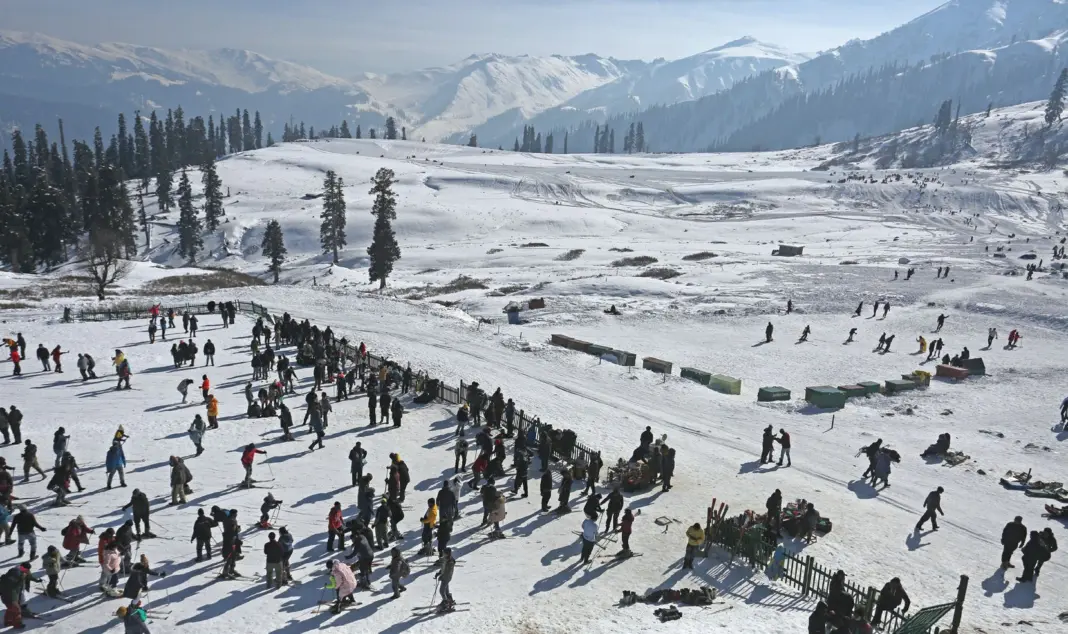


Kashmir Valley is steeped in history and spirituality. The recent encroachment of modern tourism threatens to overshadow its rich cultural identity.
Kashmir isn’t just a place. It’s a feeling, a pulse, a prayer whispered into the wind at dawn. It’s the weight of history pressing against your ribs when you stand by the Dal Lake and watch the shikaras drift, knowing the water has seen too much. It’s the call to prayer slicing through the morning fog, a sound so old and sacred it makes your bones hum. It’s not just home — it’s something deeper, stitched into the skin, burned into the blood.
And yet, every so often, something happens that makes you wonder if anyone understands that. If anyone even sees it.
Like that godforsaken fashion show in Gulmarg.
Ramadan. A month of fasting, prayer, discipline, introspection. A month where the air itself feels different, heavier with devotion, quieter with longing. And in the middle of that — models strutting down a runway in clothes that are indecent to Kashmiri culture. A spectacle in the most grotesque sense. Not a celebration of culture, not an ode to craftsmanship, not a respectful nod to the land that played host. Just another show, another moment of vanity dressed up as progress.
Let’s get one thing straight — this isn’t about Ramadhan alone. This blatant disregard for cultural and spiritual sanctity wouldn’t be tolerated in any month. Kashmir isn’t just a picturesque landscape for outsiders to consume; it’s a place deeply rooted in history, faith and identity. Modernity doesn’t mean stripping it of its roots, and progress doesn’t mean erasing the very essence that makes it Kashmir.
And then, as if the valley hadn’t been insulted enough, came the video – a group of Indian tourists dancing in front of Hazratbal shrine like it was some roadside dhaba with a jukebox. Hazratbal, the shrine that holds a relic of the Prophet Muhammad (PBUH), a place of worship, reverence and quiet surrender. And there they were, twirling and laughing and stomping their feet against the sacred ground as if the walls didn’t hold centuries of whispered prayers, as if the air wasn’t thick with something too profound for them to understand.
It makes you wonder. It makes you sick.
They say Kashmir is open to the world now. They say tourism is booming, the hotels are full and the economy is breathing again. And that’s fine. That’s good, even. But at what cost? If being “open to the world” means letting people waltz into our sacred spaces and treat them like theme parks, if it means our traditions are cast aside in the name of “modernity,” if it means fashion shows in Ramadan and dances in front of shrines, then maybe — just maybe — some doors should stay closed.
Because here’s the thing. It’s not about being anti-fashion. It’s not about hating tourists. It’s not even about resisting change. It’s about respect. It’s about knowing that some places, some times, some moments are sacred, and you don’t mess with them. You don’t hold a rock concert in a church during Sunday mass. You don’t throw a pool party at Auschwitz. And you sure as hell don’t turn Kashmir into a stage for whatever out-of-touch nonsense you want to parade around.
But maybe that’s too much to ask. Maybe people don’t see the valley the way we do. Maybe they never will. To them, it’s just another stop on the itinerary, another backdrop for their Instagram reels. They come, they take, they leave. And what’s left behind? The quiet rage of people who watch their home get turned into a prop.
Somewhere along the way, tourism turned into trespassing. Sacred spaces became backdrops for social media spectacles. The quiet dignity of our traditions was overshadowed by the noisy clamour of cameras and clueless revelry. This isn’t the Kashmir we fight to preserve. This isn’t Kashmir that has survived centuries of resilience.
Respect isn’t negotiable. You don’t waltz into someone’s home and rearrange their furniture. You don’t walk into a shrine and turn it into a party venue. And you don’t host a fashion parade in the holiest month and expect applause. Because Kashmir isn’t a prop. It’s a living, breathing soul and it deserves better.
But here’s the thing about Kashmir. It remembers. The mountains remember, the rivers remember, the streets, the stones, the air — it all remembers. And long after the tourists have packed up their dancing shoes, long after the runway has been dismantled, this place will still be here. Watching. Waiting. Holding its history close, the way it always has.
And some things, no matter how much the world tries to forget them, will never be erased.
Mahoor Haya Shah is a columnist, writer and editor
Mahoor Haya Shah
ha*********@***il.com