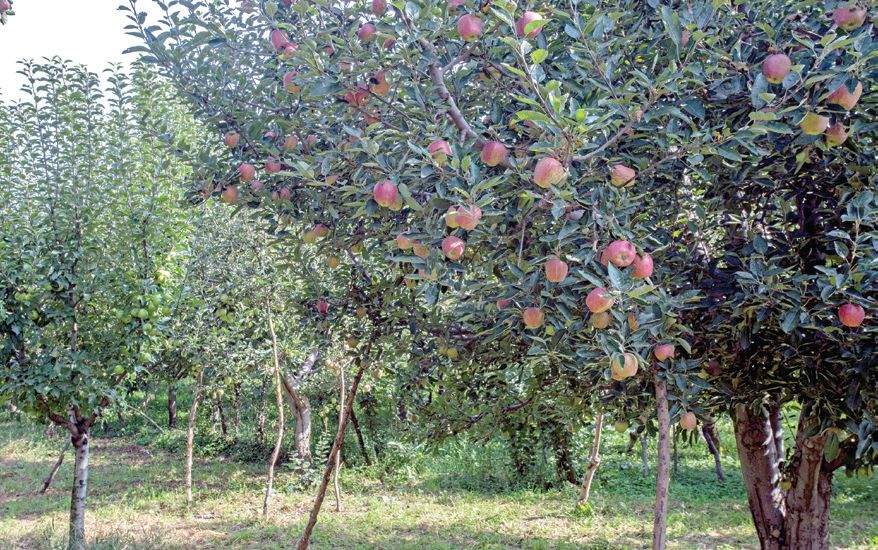


Apple (Malus pumila) is commercially the most important temperate fruit and is the fourth among the most widely produced fruits in the world after banana, orange and grape. China is the largest apple-producing country in the world. The area under apple cultivation in India increased by 24% from 1.95 lakh hectares in 1991-1992 to 2.42 lakh hectares in 2001-2002 (Source; NHB). It is mostly grown in the states/UT of Jammu and Kashmir, Himachal Pradesh, Uttarakhand, Arunachal Pradesh and Nagaland.
Jammu and Kashmir is known to be the habitat of apple production with a contribution share of 74.09 % in apple production in India, whereas Himachal Pradesh contributes 17.59 % of apple production in the country (Source: MOFPI). Apple orchards are a hallmark of agricultural prosperity, and proper management practices are essential to ensure healthy growth and abundant yields. Among these practices, pruning stands out as a critical technique for maintaining the vitality of apple trees. This age-old horticultural practice, if done correctly, can significantly enhance tree health, fruit quality, and orchard productivity.
Why prune apple trees?
Pruning involves the selective removal of certain branches and shoots to shape the tree, improve light penetration, and encourage better air circulation. It helps in:
- Promoting Fruit Production: By removing unproductive wood and encouraging the growth of new fruit-bearing branches(spurs), pruning enhances the tree’s yield potential.
- Improving Tree Health: Pruning eliminates dead, diseased, or damaged branches, reducing the risk of pests and diseases. Opening the canopy for good airflow to help prevent disease.
- Shaping the Tree: A well-shaped tree allows for easier harvesting and maintenance, saving time and labour.
- Enhancing Light Exposure: Proper pruning ensures sunlight reaches all parts of the tree, improving photosynthesis and fruit quality.
When to Prune?
The ideal time to prune apple trees is during the dormant season, typically in late winter or early spring, before new growth begins (between November and early March). Dormant pruning minimizes stress on the tree and makes it easier to see the tree’s structure without foliage. Routine winter pruning should remove about 10-20% of the canopy.
How much to remove
It depends on the tree’s vigour and needs a little bit of judgement. Routine winter pruning should remove about 10-20% of the canopy. Pruning too hard will result in a mass of vigorous, upright growth known as watershoots. Take care not to over prune tip-bearers and partial tip-bearers, as this may remove most the potentially fruiting wood.
Techniques of pruning
- Thinning Cuts: Removing entire branches to reduce overcrowding and improve air circulation.
- Heading Cuts: Trimming the ends of branches to stimulate lateral growth.
- Renewal Pruning: Removing old, unproductive wood to encourage the growth of new, vigorous shoots.
Tools and tips
- Use sharp, sterilised tools such as pruning secateurs, loppers and pruning saws to make clean cuts and prevent infections.
- Start by removing dead, diseased, or broken branches.
- Avoid over-pruning, as excessive removal of branches can stress the tree and reduce fruit production.
- Tripod ladder and Eye protection to avoid any injury from twiggy branches or sawdust.
Challenges and considerations
Pruning requires skill and experience to balance growth and fruiting. Over-pruning or improper cuts can harm the tree, while under-pruning may lead to overcrowding and poor fruit quality. Orchardists are advised to seek guidance from horticultural experts or attend training sessions to master this vital practice.
Conclusion
Pruning is not just a routine orchard task; it is an art and science that directly impacts the productivity and longevity of apple trees. With the right techniques and timing, growers can ensure healthier trees, higher yields, and better-quality fruit, ultimately contributing to the prosperity of the apple-growing community.As the demand for high-quality apples continues to rise, adopting proper pruning practices is more important than ever for sustainable and profitable orchard management.
The writer is an academic counsellor at IGNOU
Aarif Maqbool
aa***********@***oo.com