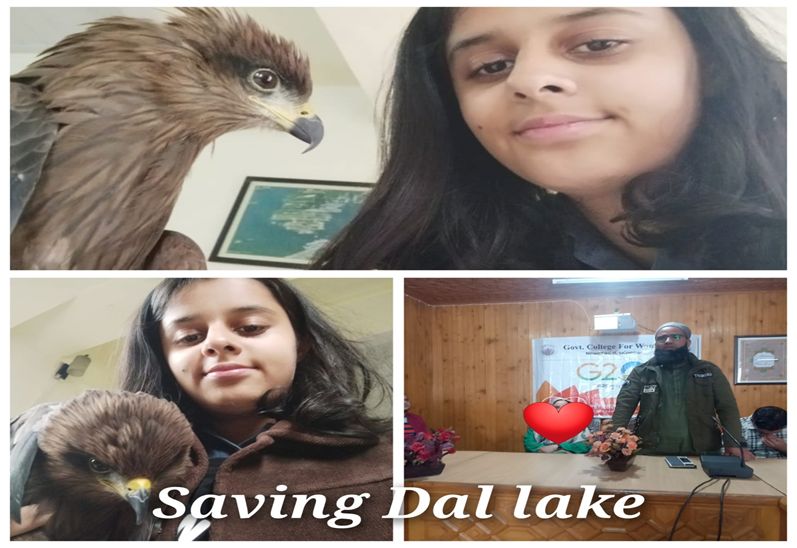
My visit to Kashmir on a mission to “Save Dal Lake” is greatly influenced by pollution and encroachment factors of increased anthropogenic pressures. To combat this devastating anthropogenic action, my mission is greatly supported by one of the great scholars and social activists of Kashmir, Dr Sheikh Arshid Ahmad, Kuchmullah, Tral (writer/columnist).
Let us join our hands and heart together and work for a long pending mission to Save Srinagar’s jewel ‘Dal Lake’.
Kashmir earned the name ‘Paradise on Earth’ when one of the great Mughals, Shah Jahan, visited here and colloquially named and praised this landscape. Amieer Khusrau, a famous poet during the Mughal rule, exclaimed, “If there is paradise on earth, it is this, it is this, it is this.” The scenic beauty of Kashmir has attracted millions and trillions of tourists. This land is so beautiful with snow-covered mountains, green valleys and natural lakes. Its beauty is added more with Mughal gardens with terraced lawns, cascading fountains and flowerbeds.
Importantly, the attraction of tourists has mainly focused on the Dal Lake. Tourists visit the lake throughout the year, however, May to November is the best time to visit the Dal Lake when the pleasant climatic conditions make the tour comfortable. During these months, tourists can explore the region at its best during Shikara rides and houseboat tours. The lake is surrounded by majestic mountains. A famous spot is in the middle of the Dal Lake which attracts tourists named “Char Chinar”. The place is very dreamy and relaxing. Fountains are yet another attraction. Laser and Music shows leave the tourists spellbound.
Dal Lake contains rich flora and fauna. It has thousands of water lilies and lotus, water chestnuts. Besides this, the floating gardens on Dal Lake are more magical. The local inhabitants even grow vegetables in its water during the summer months. The rich ecosystem of this wetland produces lots of tomatoes, cucumbers, water chestnuts and of course the famous nadru (lotus roots, a delicacy in the Kashmir Valley).
In recent years, the Dal Lake water has become contaminated due to the rising number of tourists, particularly those staying in houseboats. Pollutants from residential, agricultural and industrial areas reduce water quality. Land development decreases the amount of wildlife habitat. Fish populations have been declining in recent years as a result of these threats and increased fishing pressure. Commercialization of the place with the establishment of many hotels and houseboats. Water quality suffers due to the dumping of garbage and soil, global warming, deforestation, industry, agriculture and livestock farming, and huge amounts of sewage.
Many initiatives to save Dal Lake have been started. Saving Dal Lake is not that tough. Even small steps make a great difference. Student bodies, NGOs, shopkeepers on Boulevard, and houseboat owners have joined hands to save the beauty and grandeur of the Dal Lake. Various measures were proposed for the conservation of the lake including afforestation and control of grazing animals in the catchment area, reduction of houseboats and hotels and rehabilitation of their owners and inhabitants living in and around Dal at a suitable place, removal of excess weeds on a continuous basis. Trees not only check soil erosion but also retain soil moisture and feed rivers to keep them flowing.
Tourists and inhabitants of houseboats should be educated not to litter the lake with empty plastic bottles, cans, diapers and cigarette stubs. The Jammu and Kashmir government has launched a Floating Sewage Network in Dal Lake in a bid to prevent the flow of untreated effluents into the water body. Cut down on chemicals and use environmentally friendly or organic fertilizers and pesticides. For the past two years, Lake Conservation and Management Authority (LCMA), entrusted with Dal conservation, has taken up a slew of measures to restore the grandeur of the lake.
On a mission, to save Dal Lake, it is my hand-folded request to every Kashmiri that don’t lose such incredible and absolute beauty of the Dal Lake if not done at the earliest attention this top tourist attraction will lose its charm and historical identity in the coming years.
Maansi Prashar Katyal is a Class 10th student at Jayshree Periwal International School in Jaipur, Rajasthan. Feedback at sh*************@***il.com
My visit to Kashmir on a mission to ‘Save Dal Lake’