

True development isn’t in concrete but in cultivating citizens of intellect, discipline, and purpose – the real infrastructure that enables a nation to rule the world
By Syed Mustafa Ahmad
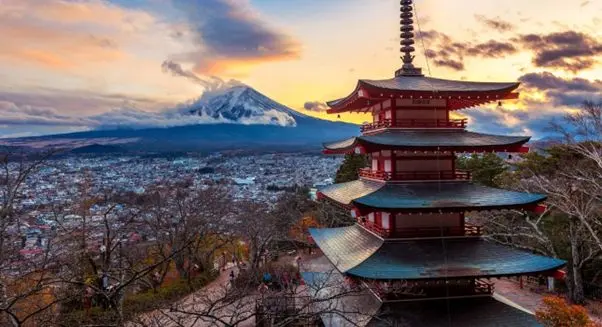
An interesting commentary on Japan was published in The Caravan, an Indian periodical. Before the Second World War, Japan set a lofty example by strengthening the country’s infrastructure. Alongside the manufacturing sector, Japan’s policymakers did not let human capital slip from their sight. For the true development of society, they gave the highest importance to essential aspects of life, such as agriculture, education, human development, and employment. Their focus was on a social structure that was not only sustainable but also flexible. A society that motivates a person to live life. A society where springs of happiness gush forth everywhere. According to them, a country can achieve real development which focuses more on intrinsic things than extrinsic appearances. In other words, in a country where human capital is considered the primary capital, no obstacle can hinder its progress. Yes! If obstacles ever arise, the people of that society know how to deal with them. Instead of wasting their precious time fighting against rocks, they chart their own paths according to their country’s principles, and we call these paths the pinnacle of human capital achievement.
Now the question arises: what are the reasons that enable a seemingly ordinary nation to reach the high pedestal of development, rule the world, and provide its citizens with all the amenities of a prosperous life? A brief mention of some is being made in the following lines.
The first reason is the mark of a civilised nation. The people of Japan are not just civilised in word; on the contrary, they are practically at the pinnacle of civilisation in every matter of life. They live life in a completely different way. According to them, the meaning of this transient life is to imbue it with such a hue of civilisation that it becomes a source of peace for oneself and for onlookers, for both the heart and the eyes. Rather than false colours and paints, it is better to coat the citizens with the delicate and sensitive layers of civilizational values so that the country’s grandeur is enhanced.
The second reason is the purpose of life. They have a purpose, and to achieve that purpose, they can go to any extent through legitimate means. They are never afraid of failure and cannot even think of achieving their goal through unjust and illegal means. There is one purpose in life, and living and dying are for that purpose alone. This instils discipline within nations, and a person stays away from incivility.
The third reason is awareness of life. A country or nation that possesses awareness can never fall victim to poverty and despondency. Awareness brings with it a sense of accountability, and accountability, in turn, helps in determining future paths. Another meaning of accountability is self-assessment. Instead of blaming others, a person should acknowledge their mistake and strive to improve from past experiences. A nation that, in a state of unconsciousness, blames others merely to find a plausible excuse for its own defeat, can never see its dream of development come true. It will forever wander aimlessly, facing hardships.
The fourth and final reason is true knowledge or education. The countries that sprint ahead in the race of real development are well acquainted with true education. For them, the purpose of education is human development, and the secret of human development is embedded in true education. The standard of education in Japan is so high that education proves useful in every sphere of life. At every turn of life, education acts as a torch, providing the means for light instead of cursing the darkness.
Our attitude is one hundred per cent different from this. Our habit is to blame others and absolve ourselves. Because of this, our lives have become victims of waywardness. Now, if we wish to lead conscious and dignified lives, we all must invest as much as possible in human capital. In other words, from the government to the common person, everyone will have to work on human resources development. As mentioned above, the real foundation of infrastructure is human capital. Grand buildings are only praiseworthy when all human beings have reached the pinnacle of intellect and discipline. When the spirit of hard work is ingrained in them. When they know how to live and die for a greater purpose. Only then do tall buildings and colourful parks have value. When processions of ignorant and lazy people run on magnificent highways, then God save that nation.
The need of the hour is that in this fast-changing, high-speed world, we should start running towards real development, engaging in self-assessment. Moving away from the limelight, like a seed, spending our time in the depths of the earth, and emerging in the form of a mighty tree, so that we can say that we utilised the blessings given by Allah to the fullest and, by employing the intellectual faculties He bestowed, added to the glory of human capital. It is better to focus as much attention as possible on human capital.
sy***************@***il.com