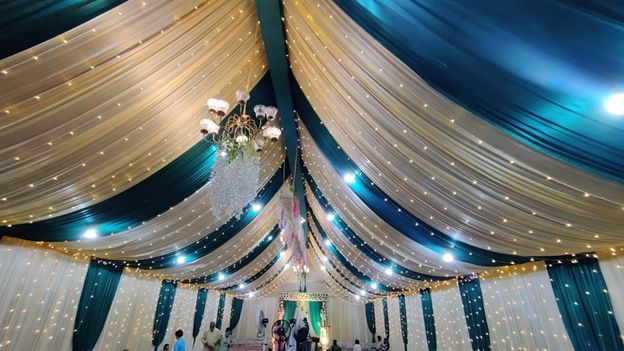


Our elders married their children with a golden heart, not gold. They kept Shadi simple, affordable, and free of unnecessary customs. Their rule was kam kharch, zyada izzat—less expense, more respect. Even the wazwan was simple. Not 30 dishes, just 6 that were enough. Because what’s the point of a grand feast, if the marriage itself doesn’t last?
Today, Shadi has become a burden and a nuisance for our society. Costs delay marriages, elders are ignored, and show-off has taken over. What was once simple and sacred is now a costly project. Come, let’s stop turning Shadi into a burden of cost and competition in Kashmir. Instead, let’s restore simplicity to them like our elders.
Manzoor Akash
In Kashmir, summer is the peak season for weddings, which is a high time to generate awareness about it. We all see it today—modern weddings have become a burden on our society. But was it like this in our elders’ time? Not at all. For our elderly loved ones, marriage was something holy. It was a sacred bond built on trust, love, and responsibility. It was never treated like a deal or a show to impress people. In their time, it was not an evil but a bond full of sanctity, essence and beauty. It wasn’t dowry or debt; it was just dua.
Shadi (wedding) meant barakat (blessing) in our elders’ time, not budget. It wasn’t celebrated just for three days, but for thirty years. It was simple, shared, and sacred, but not a show-off culture or competition as nowadays. Our elders spread love, wisdom and peace, not hatred or chaos. Sincere and grounded, they truly progressed in life. With less, our elders lived in brotherhood and shared joy. With more today, we are distant, and even family feels foreign at Shadi.
Some decades ago, purity in the shadi rituals mattered more than any unnecessary glamour. Today’s Shadi is more a debt and show than a duty. Debt for Shadi in our elders’ era was rare and seen as a shame, beizzati. No doubt, our elders were poor in pocket, but they were pure in relationships, and rich in people. For our elders, Shadi was never about glamour or show. It was a mohalla ritual. Everyone in the neighbourhood came together with love and helped however they could—one lent utensils, another made sweets, someone else managed the guests. It was not a competition. It was community. Marriages were arranged with respect, not money. A rishta usually came through the local imam sahib of the masjid or a respected Zyuth, an elderly person of the area. It did not come through a phone call, a matchmaker, or a matrimonial app.
For our elders, nikkah was the most sacred part of marriage. It was done at home or in the mohalla masjid, not in banquet halls or lavish shamiyanas. Ask any elderly Kashmiri about their wedding, and they will smile first. For them, Shadi was simple. Rich and poor married the same way, with no customs to show status. Society supported; it did not judge. Shadi was never a loan. It was barakat for a lifetime, done with sincerity and no show. That was our elders’ Kashmir, not the one we live in today.
Our elders married their children with a golden heart, not gold. They kept Shadi simple, affordable, and free of unnecessary customs. They believed successful marriages are simple ones. Their rule was kam kharch, zyada izzat—less expense, more respect. Even the wazwan was simple. Not 30 dishes, just 6 that were enough. Because what’s the point of a grand feast, if the marriage itself doesn’t last?
Our elders had less, but they lived more. They chose simple living and high thinking over debt, chaos, and confusion. Today, we are lost in match-making worries. We ask about bank balance before character. But for our elders, it was the opposite: namaz over money, peace over profit, simplicity over show, community over competition, dua over dowry, sincerity over shame, bond over beauty—a society that lived in peace.
Modern marriages have become a burden because our elders are no longer heard. Experienced or buzurg opinions are ignored, and show-off has taken over. What was once a simple Shadi is now a costly project. It’s a race of jiski lathi uski bhaince and meh khaire ta bekes phaeten kaer”. Nobody thinks as a society anymore. In our elders’ Kashmir, life was simple, peaceful, and free of show.
My grandmother Zoon Ded often said: In her time, Shadi was simple, sacred, and sincere. A daughter’s marriage was the whole village’s responsibility, not just one family’s debt. The Koor (daughter) belonged to everyone. It brought joy, not suicide. With the least expense, people found maximum happiness.
As Kashmiri writer and satirist Zareef Ahmad Zareef says, “Khaander in our elders’ time meant love and celebration. It was not about debt and dowry, like it is today. Our elders were simple and sincere. For them, success mattered more than show-off. They never wasted their hard-earned money on useless things. In fact, if someone held a lavish wedding with pomp and show, the whole neighbourhood would look down on him and shame him. Their marriages were built on love, affection, and purity. They truly reflected Kashmiri culture. Unlike them, modern marriages have become a burden and a nuisance for our society.”
Shadi is now a burden, not a community. Costs delay marriages, and elders are ignored. If we can’t restore simple weddings, let’s at least restore respect for our elders. A society without them is a society lost. Today, society has changed the meaning of Shadi. It has now made Shadi a burden. What was once community is now futile competition. Marriages get delayed because the cost of a wedding has become a challenge nowadays.
PS: Come, let’s stop turning Shadi into a burden of cost and competition in Kashmir. Instead, let’s restore simplicity to them like our elders.
The writer is an educator, award-winning columnist and an author of several books
ma*********@******co.in