

Join the celebration of responsible travel and discover why Kashmir remains a paradise on earth
By Ahmad Shakir
Every year, on September 27, people across the world come together to celebrate World Tourism Day. The day was first celebrated in 1980, even though the UN had set the rules back in 1970. The day reminds us how travelling connects the hearts of people, builds new friendships between different cultures, and supports local communities across the globe.
For the year 2025, the theme is “Tourism and Sustainable Transformation.” This theme sounds formal, but it simply means travel thoughtfully, notice the small details around you, and protect nature wherever you visit. Support the local people who serve you and keep old traditions alive. Kashmir naturally matches this spirit. People around the world call it the paradise on earth. Honestly, the moment you step there, you just get it.
The natural charm of Kashmir has amazed travellers for centuries. Amir Khusro, the Persian poet, said, “Agar Firdous Bar Roo E Zameen Ast, Hameen Ast O Hameen Ast O Hameen Ast.”
If there’s a paradise on earth, it is here. When Mughal Emperor Jahangir visited the Kashmir Valley, he was so mesmerised by the natural beauty of Kashmir that he dedicated this couplet to the valley. Celebrating it as a true paradise on earth, Kashmir feels like paradise in every season.
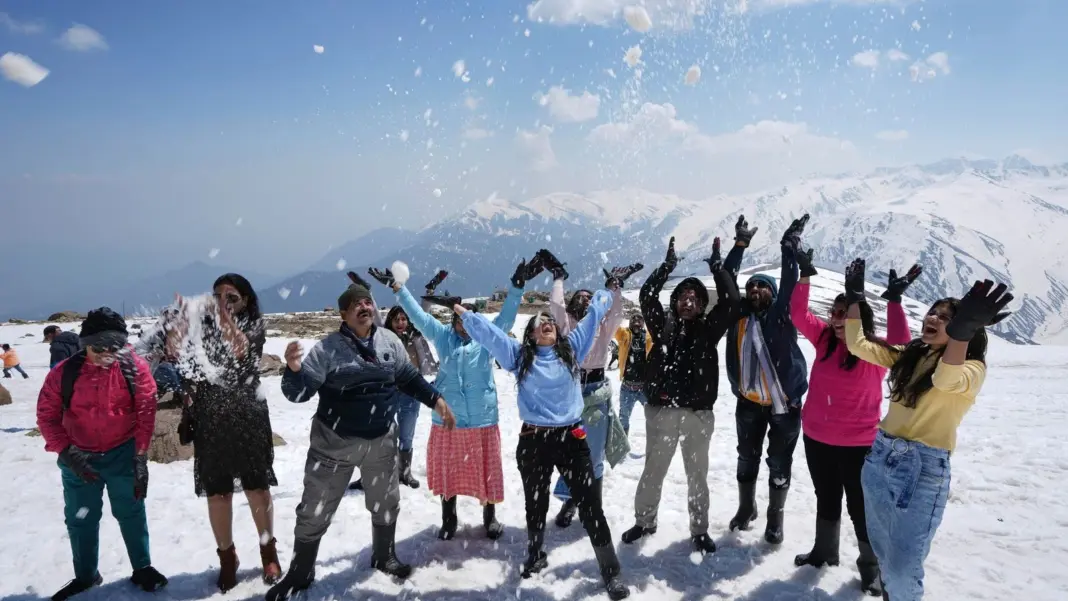
Winter in Kashmir is beyond imagination. Heavy snowfall everywhere—in the mountains, trees, and roads—makes the whole place feel like a white painting or one of those postcards that don’t look real. Spring arrives, and everything bursts into vibrant colours—orchards, gardens, and tiny flowers along the roadsides. In summer, the meadows turn green, rivers sparkle, flowers bloom, bees buzz lazily, and kids run around. Autumn gives the valley a unique beauty as Chinar trees turn red and gold. The valley wears this like a crown, and you just stare.
From the peaceful Dal Lake, where shikaras move gently with mountains reflected on the water in low haze, to Gulmarg, known as the ‘Meadow of Flowers,’ Kashmir offers stunning sights. Gulmarg is famous for its green meadows, snow, and skiing. The saffron fields of Pampore leave a deep impression of natural beauty on every visitor.
As a local saying goes,
“Shahr-E-Kashmir Hai Gul-O-Gulzar, Yahan Har Din Hai Bahaar.”
(Kashmir is a city of flowers; every day feels like spring.)
Kashmir is not just famous for its natural beauty; its culture and traditions also leave a lasting impression. Artisans weaving pashmina shawls, hand-making carpets, and creating bright papier-mâché paintings each carry the patience of generations and showcase the skills of Kashmiri hands. When you touch a shawl, each piece tells the story of Kashmiri tradition kept alive over hundreds of years.
Food is another part of the Kashmiri adventure. The grand Wazwan feast, often called the meal of kings, is not just dinner—it’s an event. Sharing a table means sharing stories. The warm kehwa, flavoured with saffron, almonds, and cinnamon, served to guests and friends, is a warm hug in liquid form and a symbol of Kashmiri hospitality.
Sustainable tourism is a meaningful slogan for Kashmir. The valley’s rivers, forests, and glaciers are true treasures that must be protected. People guide travellers to do so responsibly—suggest eco-friendly stays and encourage not littering. The message is simple: enjoy this paradise, but don’t ruin it. Save it for future generations.
Kashmir has always been famous for its warm hospitality. A well-known saying is,
“Mehman chu Khodayas wathwan.”
(A guest is sent by God.)
The spirit of this quote is still alive. That’s why visitors who come to Kashmir do not just take pictures; they take experiences of kindness and flavours that stay with them forever.
Tourism also supports livelihoods and is more than just an industry for the people of Kashmir. It creates jobs, supports families, and allows the world to witness the valley’s rich traditions. For centuries, Kashmir has been a meeting point of cultures—from Persia to Central Asia to India. Gardens, shrines, temples, and markets are living stories of this past. That is why World Tourism Day feels so closely linked to the Kashmir Valley. Travelling in Kashmir is not just about enjoyment and taking photos; it is about learning, sharing, and finding peace.
An Urdu couplet says it best:
“Har Gul Yahan Ek Kahani Hai, Har Koh Ek Dastaan, Kashmir Woh Kitaab Hai, Jo Har Dafa Nayi Lagti Hai.”
(Every flower has a story; every mountain a tale. Kashmir is a book that feels new every time you open it.)
Kashmir: A Living Paradise
When we speak of Kashmir tourism, there are endless places to visit. Srinagar, the summer capital, is the heart of travel in the valley. The houseboats and floating gardens on Dal Lake and Nigeen Lake are famous worldwide. People from different countries wake up on a houseboat to the sight of shikaras hovering calmly above the water, with birds chirping—a memorable experience for tourists.
Gulmarg is stunning in every season. In summer, wildflowers bloom across the meadows. In winter, it becomes a skiing paradise. Gondola rides offer breathtaking views of the Himalayas.
Pahalgam, the “Valley of Shepherds”, features the rushing Lidder River, pine forests, and wide meadows. Activities include trekking, fishing, camping, and lying on the grass staring at clouds. It also serves as the base camp for the sacred Amarnath Yatra, adding spiritual significance to the place.
Sonamarg, the “Meadow of Gold”, looks spectacular in both summer and winter. Its glaciers, pristine rivers, and mountain passes attract trekkers and explorers from around the world. The journey to Sonamarg is filled with beautiful views of the Sind River, offering some of the best natural scenery.
Kashmir is a land of faith and harmony. The valley is home to famous mosques, temples, and Sufi shrines that attract pilgrims and seekers from around the world. From the Hazratbal Shrine by Dal Lake to the Shankaracharya Temple on the hill, these sites reflect Kashmir’s long tradition of faith and tolerance.
Every corner of the Kashmir Valley offers something unique—adventure, quiet walks, or rich culture. The valley doesn’t just give sights; it gives memories. Mountains, rivers, and gardens all tell stories.
As the sun sets behind the Zabarwan Mountains, Dal Lake turns golden. One understands why Kashmir has been praised for centuries. It is not just a tourist destination; it is a feeling, a melodious poem, and a dream that comes alive with every visit.
For World Tourism Day 2025, with the theme “Tourism and Sustainable Transformation,” Kashmir shows how travel can bring joy, build connections, and protect nature and culture.
A trip to Kashmir is not just another stop on a map. It becomes a memory you carry, a song that stays in your heart and mind, and a longing that makes you want to return. Its beauty, culture, and warmth leave a mark that never fades.
sh*******@***il.com