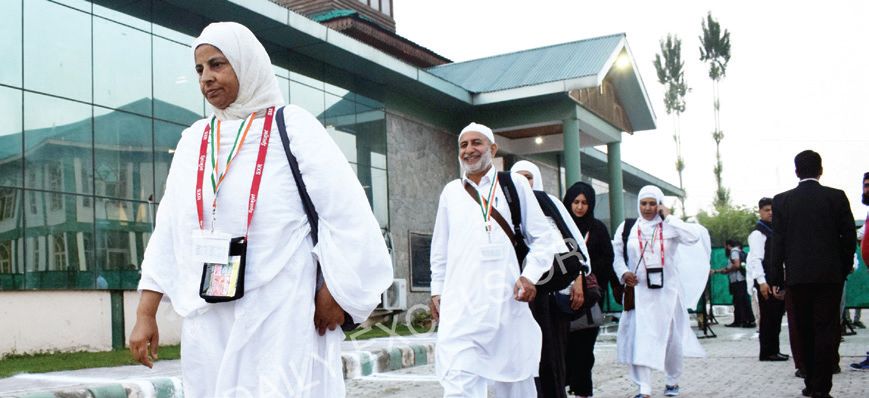


Transparent costs, special provisions for J&K, and key guidelines to help aspiring pilgrims plan their spiritual journey effectively
Kashmiris are naïve when it comes to going on a pilgrimage; they use emotions and great love for the place when choosing Hajj. But they must ask their grandchildren, children, or anyone who can read the policy and understand what lies in it. What are the benefits for Kashmiris, how private tour operators charge them, how visas are processed, and what facilities are available in Saudi Arabia? Most of the time, they are told to give you a place nearby or close to the place of Hajj, but that is not possible to accommodate the huge number of people during Hajj.
Read the Hajj policy available on the Hajj Committee of India’s website and understand the benefits. Here are a few guidelines that I have extracted from the policy:
The Hajj pilgrimage is a profound spiritual obligation and a lifelong dream for millions of Muslims worldwide. For Indian citizens, including those from Jammu & Kashmir, the journey is facilitated by the Hajj Committee of India (HCoI) under a structured, transparent policy. The recently announced Hajj Policy for 2026 (1447 H) introduces a clear financial framework alongside its procedural guidelines, ensuring pilgrims can plan their sacred journey with clarity and confidence.
Understanding the Hajj 2026 Policy Framework
The policy is built on principles of inclusivity, transparency, and digital efficiency. Key highlights include:
• Once-in-a-Lifetime Rule: With limited exceptions for Mehrams and companions, an individual can perform Hajj through HCoI only once.
• Digital-First Approach: All applications must be submitted online via the HCoI portal or the Hajj Suvidha App, streamlining the process and reducing paperwork.
• Priority Allocation: Top priority is given to elderly pilgrims (aged 65 and above), ladies without Mehram (LWM), and waitlisted applicants from the previous year.
• Health Mandates: Strict medical screening is compulsory to ensure pilgrims are physically, mentally, and behaviorally fit for the arduous journey.
The Cost Structure of Hajj 2026
A significant aspect of the 2026 policy is the detailed breakdown of costs. The total amount payable by a pilgrim is divided into two main parts:
1. Advance Hajj Amount (Payable upon provisional selection):
All selected pilgrims must pay an advance of Rs 1,52,300. This is a composite fee comprising:
• Advance Hajj Amount: Rs 1,50,000
• Miscellaneous Dues: Rs 2,000 (Covers establishment, training, handling charges, and donation for Haj Houses)
• Non-Refundable Processing Fee: Rs 300
2. Balance Hajj Amount (Payable in instalments):
The final total cost will vary depending on the Embarkation Point (EP) due to differing airfares. The total amount includes the Advance Hajj Amount plus the balance, which covers:
• Facilities in Saudi Arabia: Accommodation in Makkah and Madinah, transportation, Mashair package (Mina, Arafat, Muzdalifah), visa fees, and Qurbani (Adahi) if opted for.
• Airfare: The actual cost of round-trip flights from the chosen EP.
• Insurance: Group insurance charges.
• Taxes: Airport and service taxes.
Based on the 2025 figures provided as a reference (which are indicative for 2026), the total cost from different EPs varies. For a pilgrim departing from Srinagar, the total estimated cost for 2025 was Rs 3,90,750, which included an airfare of Rs 1,61,995.
Pilgrims must be prepared for potential fluctuations in the final cost due to changes in foreign exchange rates (for Saudi Riyal expenses) and the actual airfare determined after the airline bidding process.
Special Provisions and Cost Considerations for Jammu & Kashmir
The policy acknowledges the unique position of J&K pilgrims and offers specific provisions:
1. Special Quota Allocation: Under Stage-IV of the quota distribution, the Union Territory of Jammu & Kashmir is allocated up to 2,000 seats as a special measure. This ensures a significant number of pilgrims from the region can be accommodated.
2. Srinagar as an Embarkation Point: Srinagar is one of the 17 operational EPs. This allows pilgrims from J&K to begin their journey locally, significantly reducing pre-travel logistical burdens and costs associated with travelling to a distant EP.
3. Financial Planning: While the cost from Srinagar is among the higher ones due to its geographical location, the ability to travel directly from home is a major financial and practical benefit. Pilgrims should budget for the estimated total cost of approximately Rs 4,00,000 – Rs 4,20,000 (projection for 2026 based on 2025 data) and be ready for the two-stage payment process.
4. Waitlist Priority: Applicants from J&K who were on the waitlist for Hajj 2025 will receive priority under the General-B (WL) category, enhancing their chances of selection in 2026.
How To Apply: A Checklist For J&K Pilgrims
1. Eligibility Check: Ensure you have a valid machine-readable Indian passport with validity until at least December 31, 2026.
2. Form a ‘Cover’: Apply in a group of 1 to 5 family members or near relatives. The cover head will manage payments and communications.
3. Submit Online Application: Fill the Hajj Application Form (HAF) on hajcommittee.gov.in or via the Haj Suvidha App before the closing date of July 31, 2025.
4. Upload Documents: Scanned copies of passport, photograph, address proof, and bank account details of the cover head are mandatory.
5. Financial Preparation: Ensure you have the funds ready for the advance payment of Rs 1,52,300 upon provisional selection after the Qurrah (draw of lots).
The Hajj Policy 2026 provides a clear and structured pathway for the pilgrims of Jammu & Kashmir. By understanding the detailed cost breakdown and the special provisions made for the region, aspiring Hajis can plan their finances effectively and navigate the application process with greater ease. This transparency empowers individuals to focus on the spiritual preparation for the journey of a lifetime, confident in the knowledge of the logistical and financial framework supporting them.
San’na Firdous
fi**********@***il.com