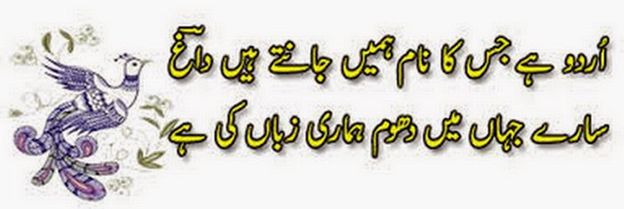


A language is not just words; it is a culture, a tradition, a unification of a community, a whole history that creates what a community is: Noam Chomsky
In a multilingual nation like India, where linguistic plurality has been a cornerstone of identity and democracy, the diminishing presence of Urdu in the public sphere is a matter of concern, culturally, politically, and socially. Once celebrated as a symbol of refinement and resistance, Urdu now faces marginalisation, not through explicit prohibition but through gradual neglect.
This is not merely a story of language loss; it is a symptom of deeper fractures in our understanding of identity, inclusion, and national heritage.
The Historical And Cultural Context
Urdu is not an imported language. It evolved in the Indian subcontinent, drawing from Persian, Arabic, Turkish, and local dialects. It flourished in the courts of Delhi, Lucknow, and Hyderabad, and later became the language of India’s anti-colonial poetry, intellectual debates, and cinematic expression.Its decline, therefore, is not just linguistic, it marks a disconnection from a significant strand of India’s cultural fabric.
A Shift In Perception
Post-Partition politics altered the perception of Urdu in the Indian mainstream. Despite being spoken by people across religious communities, the language began to be increasingly identified with Indian Muslims, and was often viewed suspiciously as “foreign” or “other.” This mischaracterisation played a role in Urdu being sidelined in institutions, education, and media. Over time, language became a proxy for identity politics, and Urdu was caught in this crossfire.
Neglect In Education And Policy
While the Indian Constitution recognises Urdu as one of the 22 scheduled languages, its practical status remains precarious. Government schools in many states do not offer Urdu as a subject, and Urdu-medium schools have seen a steady decline due to a lack of investment and institutional support. There is a shortage of trained Urdu teachers, updated curriculum materials, and digital educational resources in the language. The Three Language Formula, while inclusive in theory, has largely failed to protect the interests of Urdu-speaking students. In many cases, Urdu is treated more as a symbolic inclusion rather than a serious medium of instruction or scholarship.
Disappearing From Popular Culture
There was a time when Bollywood films and Indian radio were infused with the grace of Urdu: lyrics, dialogues, and scripts brimmed with a linguistic elegance that transcended class and community. However, popular culture has shifted rapidly towards a blend of colloquial Hindi and English, and Urdu’s presence has diminished from mainstream entertainment.
This is not to say Urdu has disappeared; it survives in ghazals, Sufi poetry, and selective media. But these remain isolated islands, disconnected from the broader linguistic ecosystem.
Economic Realities And Parental Choices
In the age of globalisation, language learning is often tied to economic opportunity. Parents are understandably focused on teaching their children English or Hindi, languages with higher visibility in employment, governance, and academia. Urdu, despite its cultural richness, is seen by many as impractical or non-essential in professional advancement.This perception, even among Urdu-speaking households, has led to a voluntary decline in transmission, making the language vulnerable to generational loss.
Lack Of Media Representation
Urdu newspapers, once prominent voices of public opinion, are struggling to survive amid shrinking readerships and falling advertisement revenue. Mainstream TV news rarely features Urdu-language content, and government broadcasting platforms provide minimal support to Urdu programming. The digital media boom has largely left Urdu behind, with few major portals offering robust content in the language.
What Does This Silence Mean?
The neglect of Urdu is not just about a script or a vocabulary. It represents a gradual cultural amnesia, a forgetting of shared histories, literary traditions, and inclusive narratives. As Urdu fades from the national stage, so does a part of India’s pluralistic identity. Moreover, language loss often correlates withthe marginalisation of communities. When a language disappears from schools, government records, and media, the communities that speak it often feel alienated and unheard. The fading of Urdu must therefore be seen in the broader context of representation and equity.
The Path Forward: Revival Without Romanticism
Rescuing Urdu from the margins does not require romanticising the past; it requires vision and policy. There is a pressing need to:
Ø Strengthen Urdu education across government and private institutions.
Ø Digitise Urdu literature, making it accessible to the younger generation.
Ø Encourage multilingual programming in media that includes Urdu voices.
Ø Support literary festivals, publications, and creators working in the language.
Most importantly, there is a need to reframe the narrative around Urdu, not as a language of a community, but as a shared cultural legacy of India.
India’s strength lies in its diversity, and every language that thrives is a testament to that strength. The silence around Urdu is not just a linguistic concern; it is a challenge to our pluralism, our memory, and our collective future. A language once used to articulate dreams of freedom and justice deserves better than oblivion.
If we are to uphold the values of inclusion and cultural richness, reviving Urdu must be part of our national consciousness, not just for the sake of the language, but for the sake of who we are as a people.
The writer is a lecturer in ET & ICT, Islamia Faridiya College of Education, Kishtwar
Mohd Salahudin Qazi
mo****************@***il.com