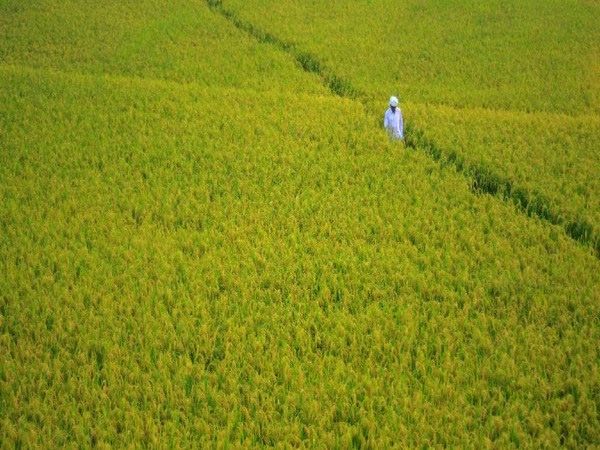
India is an agrarian country and the main occupation of people is agriculture. About 70 percent of the rural population is involved in this occupation, especially rural women who continue to play a major role in agricultural activities. Their activities range from crop production, livestock production, horticulture, post harvesting etc. and what not along with their primary functions as wives, mothers and homemakers.
Despite their key and crucial role in agricultural development, their significance and contribution have not yet been acknowledged and recognized and they (rural women farmers) face several constraints. They are at present the largest group of landless labourers. In the Indian Himalayas, a pair of bullocks work 1064 hours, a man 1212 hours and a woman work 3485 hours in a year on a one-hectare farm. Thus women’s average contribution is estimated at 55 percent to 66 percent of the total labor with percentages much higher in certain areas. The main barrier for women is access to the resources. As FAO also reports, if women farmers gain access to the same resources as their male counterparts, the entire world will eat, too.
To empower female rural farmers, there is a need to close the gender gap in agriculture and build a sustainable future for women. The women should also have access to land, financing, markets, agricultural training and education. In developing countries, only 10 to 20 percent of women are landholders and in some parts of the world, women still cannot legally own or control land. If women aren’t empowered to make decisions about the land they work in, it is not possible for them to enter contract farming agreements that could provide higher earnings and reliable sources of income.
Agricultural extension services are also important to empower women as they provide training to the farmers and enhance their capacity building and skills. These services can make them aware of new information, knowledge and innovation in the agricultural sector which they can utilize in their farms for better productivity which will help them to increase their income and thus enhance their living standard.
Time is ripe to take initiatives to address gender issues in agriculture; and support economic opportunities for women. Empowering women in agriculture can be instrumental in bringing a paradigm shift toward economic growth and stability.
The writer is a research scholar and can be reached at bi**********@***il.com
Empowering Women In Agriculture