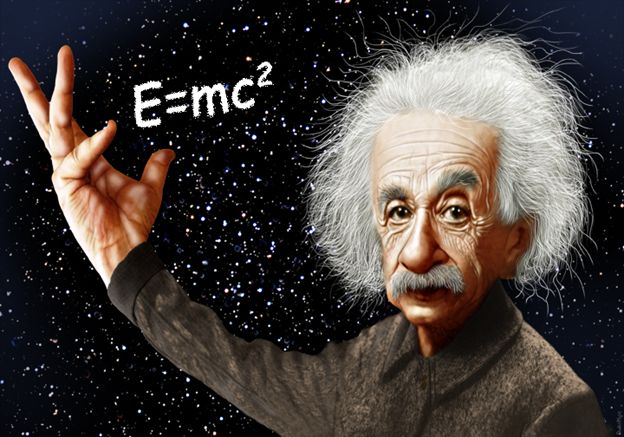


I have tried to read philosophers of all ages and have found many illuminating ideas but no steady progress toward deeper knowledge and understanding. Science, however, gives me the feeling of steady progress: I am convinced that theoretical physics is actual philosophy. It has revolutionized fundamental concepts, e.g. about space and time (relativity), about causality (quantum theory), and about substance and matter (atomistics), and it has taught us new methods of thinking (complementarity) which are applicable far beyond physics. Max Born)
With the rise of post-modern philosophy, scientific facts and theories much like some theories in social science and humanities have been reduced to mere personal opinions that one is free to accept or reject. A lot of propaganda is being spread to discredit theoretical Physics not only through social media but also through other platforms. Those discrediting and running propaganda include dangerous Facebook sensationalists and a hell lot of people belonging to disciplines other than science.
So how does one respond to this organized ignorance and propaganda other than to put theoretical physics in its proper historical context and methodology? Theoretical physics as a science is as old as Greek civilization. It deals with developing and evolving theories to explain the nature of the universe at the most fundamental mental level. Theoretical physics is not only the most important branch of physics without which physics would stagnate and no new discoveries or ideas would develop but is also important to make advancements in other fields. Not only does theoretical physics quench our intellectual thirst in seeking the answer to some fundamental questions but also is a great tool that makes man’s intellectual advances in the world possible. The intellectual advancements that man has made so far in understanding nature would not have been possible had there been no theoretical physics.
Theoretical physics involves a complex interplay between creative thinking, mathematical formalism, experimental validation, and collaboration, all with the goal of advancing our understanding of the fundamental principles that govern the universe. Our understanding of nature and reality is deeply rooted in the mathematical theories and abstractions put forward by theoretical physicists from time to time. it does not merely theorize the known reality and obscure truth but rather makes an effort to unfold before us the higher orders of reality. Theoretical physics involves creating mathematical models and frameworks to describe the fundamental forces, particles, and phenomena that make up the universe and then using these models to make predictions, suggest new phenomena, and guide experimental research. How beautifully José Carlos Somoza a Spanish psychiatrist puts it, “They think that differential equations are not reality. Hearing some colleagues speak, it’s as though theoretical physics was just playing house with plastic building blocks. This absurd idea has gained currency, and now people seem to feel that theoretical physicists are little more than dreamers locked away in ivory towers. They think our games, our little houses, bear no relation to their everyday worries, their interests, their problems, or their welfare. But I’m going to tell you something, and I want you to take it as a ground rule for this course. From now on I will be filling this board with equations. … And when I’m done, I want you to do the following: look at those numbers, all those little numbers and Greek letters on the board, and repeat to yourselves, “This is reality,” repeat it over and over.”
Theoretical physics employs both reductionism and unification to make sense of reality. The importance of theoretical physics not merely lies in it being at the core of every human innovation be it lasers, medical imaging, weather forecasts, GPS system, smartphone transistors, etc, it also lies in its explanatory power of the phenomena and observation. It does not merely theorize so as to escape from present reality but to take the present reality along to predict, and discover the reality at different levels and scales. Anthony Standen, the British chemist and writer, once famously remarked, “The first thing to realize about physics … is its extraordinary indirectness…. For physics is not about the real world, it is about “abstractions” from the real world, and this is what makes it so scientific…. Theoretical physics runs merrily along with these unreal abstractions, but its conclusions are checked, at every possible point, by experiments.”
Fast forward now to the standard model. Standard model a triumph of hundreds of years of hard work by both experimental and theoretical physicists is right now our best description of the building blocks of matter and three fundamental forces. But it suffers from many shortcomings. It does not incorporate gravity, it does not explain matter-antimatter asymmetry and it does not tell us anything about the nature of dark matter and dark energy. Similarly, there is a hierarchy problem (why gravity is so weak), colour confinement (can we have an analytic proof for it in non-abelian gauge theory), why exactly are there three generations of quarks and leptons, and what is the fundamental structure of space-time among many others. And at the most fundamental level, the cornerstones of modern physics quantum mechanics and general relativity which work so well in their realms when combined together do not work, which does not make any sense. To answer such outstanding problems theoretical physicists come up with new theories which embody principles of symmetry, simplicity and mathematical elegance, and consistency. The new theories do not contradict established physics and truths but take them along to add to our understanding of nature at a more deeper and fundamental level. The new theories are continuously tested and refined through experimentation to ensure their accuracy and predictive power. But how much time it will take a theory to grow and be tested experimentally is rather a difficult question to answer. It took almost 50 years for the Higgs Boson and 100 years for gravitational waves to be detected after they were predicted.
In a nutshell, theoretical physics is not just a tool that only shapes our understanding of the cosmos both at the macroscopic level and microscopic level but also helps us in making intellectual advances possible. it is a sophisticated and organized tool that is not merely lost in mathematical abstractions but that takes man out of the dark labyrinth and superstitious beliefs.
The writer is a Physics student and can be reached at na************@***il.com