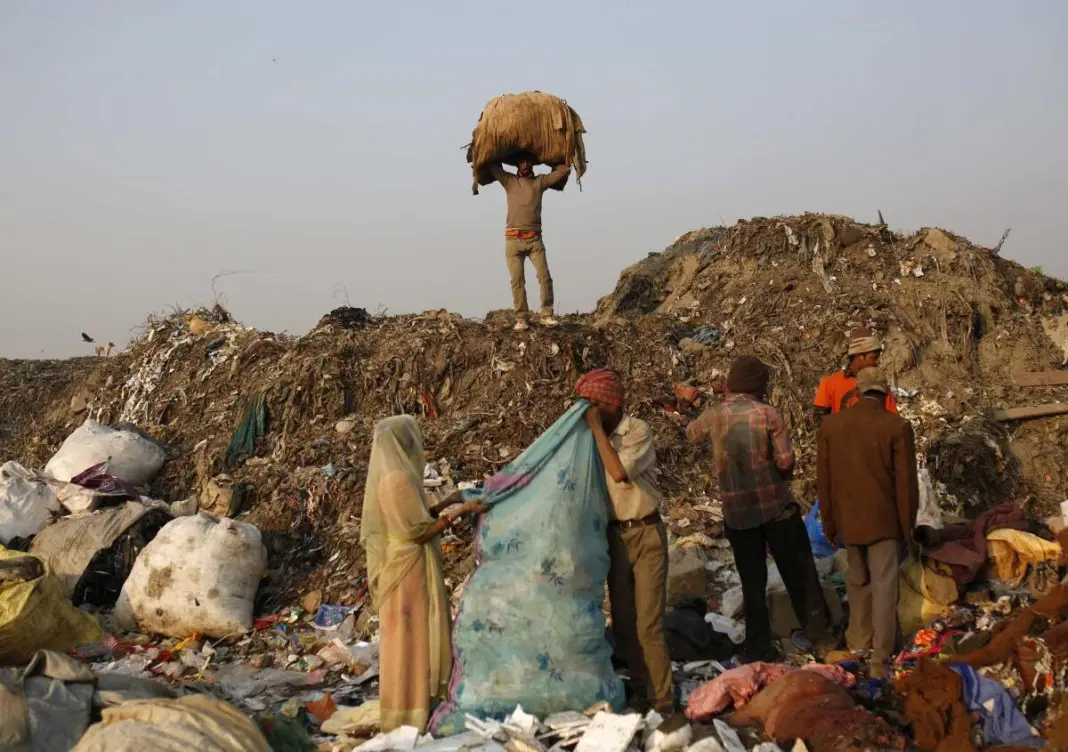


Poverty is both a driver and a consequence of natural and artificial disasters. Climate change and natural disasters impact the poor the most because they have the fewest resources. Research has revealed that the poor suffer the worst from natural disasters. They have lower capacity and ability to cope with climate change than prosperous members of society. Data published by Scientific American showed that big natural disasters may worsen inequality as the rich move away from disaster-prone areas, while the poor are left behind. In weaker economies and countries with poorer infrastructure, poor people often have pathetic housing and shelter facilities as they live in unsettled or less developed areas. They also live in houses constructed of less durable materials compared to wealthy people who live in houses made of solid materials. Impoverished people are more likely to live in hazardous areas and are less able to invest in risk-reducing measures. The lack of access to insurance and social protection means that people in poverty use their already limited assets to buffer disaster losses, which drives them into further poverty.
Poverty is a cause and consequence of natural disaster risk. The UN agencies consider that drought is the hazard most closely associated with poverty. The impact of disasters on the poor can cause, in addition to the loss of life, injury and damage, a total loss of livelihoods, displacement, poor health, and food insecurity. The UN Office for Disaster Risk Reduction estimates that the wealthiest two percent of the world’s adult population now owns over 50 percent of global wealth, and the bottom 50 percent own less than one percent of global wealth. As per the UN department of economic and social affairs, over 80 percent of people in poverty live in rural areas. Many developing countries present a large size of rural population. The livelihoods of the rural population are highly exposed and vulnerable to weather-related hazards. The poor people in villages have low resilience to loss because they have little or no surplus capacity to absorb crop or livestock income losses and recover. Even a small loss might feed into further poverty and future vulnerability. Floods are among the most devastating natural disasters. They occur due to climate change. Droughts, storms, earthquakes, landslides, and avalanches also cause colossal damage to human settlements. Due to their natural location, some areas of many countries like Pakistan and India are also prone to floods, landslides, and avalanches. Over the years, natural disasters have increased due to human-induced climate change and more extreme weather. This trend will continue in the future as well. In rural areas, livelihoods are particularly sensitive and vulnerable to weather fluctuations and extremes. Climate change is inextricably linked to greenhouse gas emissions, as continuous increases in greenhouse gas emissions are worsening extreme weather conditions all over the planet.
The United Nations agency World Meteorological Organization has said that the symptoms and effects of the worst climate change, such as severe floods, heat waves, and droughts, have affected millions of people and caused billions of dollars in losses. They have further said that the extreme weather events occurring in 2022 have once again highlighted the clear need for further measures to reduce greenhouse gas emissions. The organization has called for measures to adapt to climate change, including improving universal access to early warning systems for natural disasters. Although detailed global temperature data for 2022 will release in mid-January 2023, the World Meteorological Organisation says the last eight years were the warmest in known human history. It will also be the 10th year in a row that global warming has increased by at least one degree Celsius compared to pre-industrial levels and is likely to exceed the 1.5-degree limit set in the Paris Agreement. The effects of climate change are generally felt through water and include more severe and frequent droughts, more intense floods, and seasonal rainfall. It also causes the accelerated melting of glaciers and negatively impacts economies, ecosystems, and all aspects of life on earth.
The writer is a London-based researcher, educator and author. He can be reached on Twitter @MIMazhar