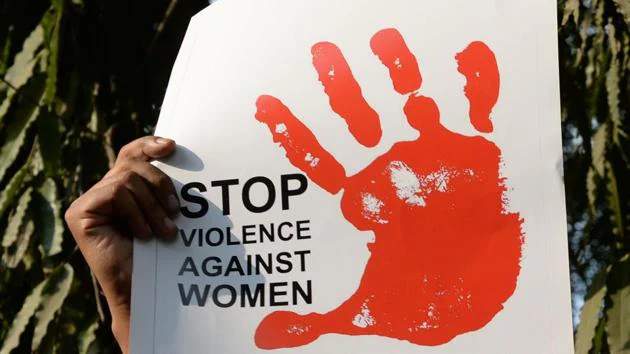


Almost all major global religions praise and elevate women. Islam emphasises spiritual equality. Hinduism honours the divine feminine. Sikhism teaches absolute gender equality. If the Divine treats women with absolute equality, why does the world fail to treat them the same way?”
Fiza Aijaz Reshi
Women are fundamental to the existence and continuation of humanity. As the creators of life, it is entirely accurate to view women as the nurturing essence of our world. If society progresses, it is because of the foundational role that women play, meaning they should be valued above all else.
Almost all major global religions praise and elevate women.
Islam emphasises spiritual equality, establishing that men and women are judged equally by Allah. The Quran granted women advanced rights to own property, retain their personal earnings, and inherit wealth.
Hinduism honours the divine feminine (Devi) and views the ideal relationship between men and women as an equal partnership. Ancient scriptures, such as the Rig Veda, depict women as prominent scholars and sages.
Sikhism explicitly teaches absolute gender equality. In the 15th century, Guru Nanak Dev famously spoke out against the degradation of women. In Sikh tradition, women are permitted to lead religious congregations, read directly from the Guru Granth Sahib, and participate in all religious and community services on an equal footing with men.
If the Divine treats women with absolute equality, why does the world fail to treat them the same way?
The Modern Cycle Of Objectification And Marginalisation
Despite these religious ideals, women face systemic inequality and violence both in the public sphere and within their own homes. Historically and into the modern era, women have been falsely perceived as weak, often reduced merely to their physical beauty or objectified for male validation.
When looking at the modern world, a woman’s life is frequently commodified, reduced to specific utilitarian roles from birth to death:
The Daughter: From birth, daughters are often viewed as financial or social burdens by their families, a bias that intensifies if the parents already have a daughter.
The Wife: Following marriage, a woman is often reduced to the role of a housewife, in which her societal purpose is limited to bearing children and managing domestic chores.
The Grandmother: In the final stage of life, elderly women are often expected to solely care for grandchildren. If they become physically unable to do so, they are too often neglected, abandoned, or forced into old-age homes by their families.
At every stage of life, the world inflicts cruelty upon women, exposing them to child marriage, dowry harassment, systemic discrimination, and violence.
The Global Crisis Of Gender-Based Violence
According to international reports, the global scale of violence against women is staggering. Approximately 840 million women—nearly one in three worldwide—have been subjected to physical or sexual intimate partner violence, non-partner sexual violence, or both, at least once in their lives. Adolescent girls are at an even higher risk than adult women; globally, nearly 1 in 6 girls aged 15 to 19 who have been in a relationship report being physically or sexually abused by a partner within the past year. How can a man be so cruel?
Furthermore, sexual violence by non-partners remains widespread yet deeply underreported, with 6% (approximately 215 million women aged 15 and older) experiencing such trauma. Women and young girls also routinely fall victim to human trafficking and severe sexual exploitation.
In recent years, the world has witnessed horrifying extremes of brutality: young girls who leave home for their education are found brutally raped and murdered, women are discarded in sheds by their families, killed by their husbands, or buried by their in-laws. Even in domestic spheres initially built on love, women face sudden abandonment and divorce. The psychological and physical toll is immense, leaving survivors highly vulnerable to severe depression, anxiety disorders, unplanned pregnancies, sexually transmitted infections, and HIV.
The Legal Framework And Statistical Reality In India
Despite the presence of international treaties and national institutions, legal frameworks often fail to deter societal brutalities against women. In India, criminal acts against women are tried under the Bharatiya Nyaya Sanhita (BNS), which replaced the older Indian Penal Code, alongside other specific statutes:
General Harassment and Outraging Modesty (Sections 74/75 BNS): Criminalises acts like unwelcome physical contact, sexually colored remarks, or attempts to outrage a woman’s modesty, carrying strict prison sentences.
Workplace Harassment: Governed by the Sexual Harassment of Women at Workplace (Prevention, Prohibition and Redressal) Act, 2013, which legally mandates employers to establish Internal Committees (IC) to address complaints.
Domestic Violence: Addressed under the Protection of Women from Domestic Violence Act, 2005.
Despite these legal provisions, statistics from the National Crime Records Bureau (NCRB) reveal an alarming reality. India records over 471,000 registered cases of violence and harassment against women annually, averaging more than 51 formal complaints filed every single hour. The official registered crime rate stands at 66.4 incidents per lakh of the female population.
The statistical breakdown of these crimes includes:
Cruelty by Husbands or Relatives: Accounts for the largest share at 31.4% of all cases (a rate of 19.7 per lakh women).
Kidnapping and Abduction: Comprises 19.2% of reported cases.
Assault to Outrage Modesty: Accounts for 18.7% of cases (a rate of 12.4 per lakh women).
Rape and Sexual Assault: Accounts for 7.1% of cases (a rate of 4.4 per lakh women).
Crucially, these numbers only reflect crimes that are officially filed. The true scale of the crisis is hidden by massive underreporting. Women are frequently deterred from seeking justice due to a lack of legal awareness, the normalisation of abuse, low trust in the legal system, the administrative hurdles of reporting, socio-cultural pressures, the fear of victim-blaming, and the threat of retaliation from perpetrators.
Path To Reform And Strategic Solutions
Modern problems require modern solutions.
Prominent examples can be found in emerging political platforms, such as the policy visions outlined by C. Joseph Vijay (Thalapathy Vijay), whose political movement advocates for a drastic shift in women’s security through specialised administrative enforcement. Key proposed frameworks include:
The ‘Singappen’ Special Task Force: A dedicated, specialised women’s law enforcement unit utilising advanced technological surveillance and direct executive oversight.
Fast-Track Legal Directives: Rules ensuring the rapid filing of charge sheets, expedited trial proceedings, and an absolute zero-tolerance policy against offenders.
Currently, the enforcement of women’s safety laws is highly unequal across India. In some states, gender-based crimes are investigated with total gravity, while in others, severe harassment is minimised, dismissed, or easily forgotten.
Conclusion
To correct this crisis, every state must comprehensively reform its law enforcement and social policies. We must shift from merely praising women in theory to protecting them in practice. Justice systems must enforce severe, unyielding punitive actions so that potential criminals think a hundred times before committing an offence. Cruelty, brutality, and harassment against women and young girls are escalating at an alarming rate; countering this requires systemic intolerance and immediate, modern executive action.
Ultimately, we can think, write, and raise awareness about issues, but the onus of action lies with the government.
re*************@***il.com