

79% of students aged 14–16 in Kashmir use smartphones for social media. Reels train the brain for rapid consumption, destroying attention spans and critical thinking. With 1.04 lakh schools nationwide operating with a single teacher, the crisis is deepening. Experts warn: “If we fail to act, we may raise a generation that knows how to swipe but not how to think.” The solution: structured phone policies, interactive teaching, teacher recruitment, parental monitoring, and restoring respect for education as intellectual growth, not just exam success.
Dr Towseef Bhat
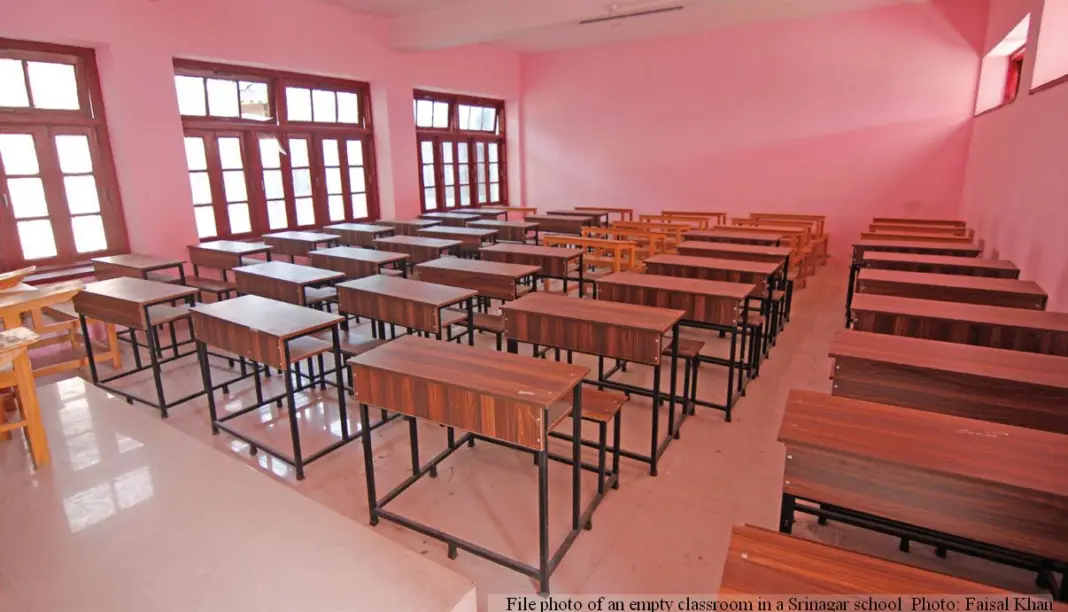
A teacher stands in front of a classroom explaining an important lesson. The textbook is open, the blackboard is filled with notes, and the syllabus is waiting to be completed. Yet, many students are mentally elsewhere. Some are thinking about the latest Instagram Reel, others about a trending YouTube Short, and many are waiting for the next notification on their smartphones. This growing disconnect between students and classroom learning has become one of the most serious educational challenges in India.
In Kashmir, the problem is becoming even more visible as schools struggle with declining student attention, increasing mobile phone dependency and a shortage of quality teachers. The rise of short-form content such as Instagram Reels, YouTube Shorts and Facebook videos has fundamentally changed how young minds consume information. These videos usually last between a few seconds and a minute, providing instant entertainment with little effort or concentration. While classrooms require sustained attention, patience, critical thinking and active participation, reels train the brain for rapid consumption and constant stimulation.
Research increasingly supports these concerns. A 2024 study on mobile phone short video addiction found that excessive short video consumption negatively affects attention functions, self-control and executive functioning. (PMC) Another Indian study conducted among undergraduate students in West Bengal found a strong negative relationship between reel consumption and attention span. Students who spent more time watching reels showed greater attention diversion, frequently checking notifications even during classes and study sessions. (Indian Mental Health) According to a nationwide survey conducted by the National Council of CBSE Schools (NCCS), nearly 74 per cent of students spend more than two hours daily on screens for non-academic purposes, while 21 per cent spend more than four hours on social media, gaming and mobile phones. More significantly, 69 per cent of teachers reported a decline in classroom concentration and attention among students. (The Times of India)
In Jammu and Kashmir, the issue is becoming impossible to ignore. ASER-based findings indicate that nearly 79 per cent of students aged 14 -16 years use smartphones for social media purposes. (Facebook) A separate Kashmir-based study found that 63 per cent of parents believe their children are addicted to mobile phones. (Facebook) Educational observers across the Valley increasingly report students struggling to remain attentive during lessons, preferring digital entertainment over reading books or engaging in classroom discussions. One of the leading newspapers of Kashmir recently described social media addiction as a growing threat to young minds, warning that students are becoming trapped between digital connection and educational decline. The impact extends beyond academics. Excessive screen exposure has been linked with anxiety, poor mental well-being, sleep disturbances and reduced social interaction among students. Studies from Kashmir have also highlighted a negative association between heavy smartphone use and students’ mental well-being.
A recent article published in Rising Kashmir described social media as the “most powerful classroom in Kashmir”, warning that students are increasingly trapped in endless cycles of videos, notifications and online engagement. The article noted growing concerns about declining attention spans, sleep disturbances and deteriorating mental health among young people across the Valley.
Mobile phones alone are not responsible for the crisis. Another major factor is the shortage of quality teachers and the declining effectiveness of classroom instruction in many schools.
A recent NITI Aayog report revealed that more than 1.04 lakh schools in India operate with only a single teacher. The report also highlighted weak learning outcomes, teacher shortages and significant educational disparities across states. (ThePrint) Government data released in Parliament similarly confirmed the existence of over one lakh single-teacher schools across the country. (Digital Sansad) While many teachers work with dedication despite difficult circumstances, shortages, and a lack of proper training often reduce the quality of classroom learning. In many schools, a single teacher is forced to handle multiple classes and subjects simultaneously. Educational experts have repeatedly argued that improving learning outcomes requires greater investment in teacher recruitment, training and professional development. (Education International)
Another major reason behind declining classroom interest is the examination-centred nature of education. Many students study primarily for marks rather than knowledge. Memorisation often replaces understanding. Creativity, discussion, critical thinking and curiosity receive less attention than test scores. Consequently, learning becomes a burden instead of an intellectually rewarding experience.
The decline of reading culture has further aggravated the situation. Earlier generations spent considerable time reading books, newspapers and magazines. Today, many students consume information through short videos and fragmented online content. While digital media provides access to information, it rarely develops the deep comprehension and analytical skills that reading fosters.
Parental involvement has also changed. In many households, smartphones have become convenient tools for keeping children occupied. Excessive screen exposure often begins at an early age, making digital dependency difficult to control during adolescence. Several studies now associate excessive smartphone use with poor sleep quality, anxiety, reduced concentration and declining academic performance.
Students often encounter limited subject choices, insufficient individual attention and classrooms where innovative teaching methods are difficult to implement. When uninspiring classroom experiences combine with the constant attraction of short-form digital content, students naturally gravitate toward the easier and more entertaining option. The result is a generation that increasingly struggles with sustained focus. Reading lengthy texts, participating in discussions, solving complex problems and listening attentively for extended periods are becoming more difficult for many learners. Classrooms are competing with algorithms specifically designed to capture attention every few seconds.
The question, therefore, is not whether technology is harmful. Technology itself is neutral. The real issue is uncontrolled and unregulated use. Educational experts increasingly argue that the solution lies in balancing technology with meaningful human learning experiences.
First, schools should establish structured mobile phone policies. Smartphones should not become a source of continuous distraction during instructional hours. Several educational systems worldwide have already introduced restrictions on phone usage inside classrooms to improve concentration and student engagement.
Second, governments must invest seriously in teacher recruitment, training and professional development. Every classroom needs qualified, motivated and well-supported teachers. Teacher education programmes should include training in digital literacy, classroom psychology, student engagement strategies and technology-assisted learning. Experts consistently emphasise that educational reforms cannot succeed without strengthening the teaching profession itself.
Third, teaching methods must become more interactive. Students learn better when they participate actively through discussions, projects, experiments, debates, collaborative learning and problem-solving activities. Modern classrooms must compete not by becoming entertainment centres but by becoming intellectually engaging spaces.
Fourth, parents need to monitor screen time more carefully. Establishing technology-free study hours, encouraging reading habits, promoting sports participation and maintaining open communication with children can significantly reduce digital dependency.
Fifth, schools should strengthen counselling and mental health support systems. Many students today face stress, anxiety, social pressure and uncertainty about their future. Emotional well-being directly influences academic engagement and learning outcomes.
Finally, society must restore respect for education as a process of intellectual growth rather than merely a pathway to examination success. A student who can focus, think critically, read deeply and communicate effectively will always possess advantages that no algorithm can replace.
At its core, this is not merely a technological crisis but a crisis of attention, mentorship and purpose. As students become increasingly absorbed by digital distractions, the role of educators becomes even more vital. No smartphone, however advanced, can replace the influence of an inspiring teacher. No reel can substitute for the wisdom gained from deep reading, thoughtful discussion, and sustained reflection. No algorithm can nurture values, empathy, discipline and character in the way a dedicated educator can. The stakes of this challenge are especially high. The future will not be decided by the number of smartphones in the hands of its youth but by the quality of ideas in their minds and the strength of values in their hearts. Every distracted classroom today is a warning for tomorrow. Every vacant teaching post is a lost opportunity. Every child who loses the habit of concentration loses a part of his or her potential.
Recognising these risks also points us toward a solution. If we fail to act, we may raise a generation that knows how to swipe but not how to think. how to consume information but not how to analyse it. how to seek instant gratification, but not how to pursue meaningful achievement. But if parents, teachers, policymakers and society come together with urgency and vision, our classrooms can once again become places where dreams are nurtured, talents are discovered, and futures are built.
Ultimately, the choice before us is clear. We can allow our children to become prisoners of endless scrolling, or we can help them become thoughtful learners, responsible citizens and enlightened human beings. History will judge us not by the technology we placed in their hands but by the education we placed in their minds.
es*********@***il.com