

Faith without sacrifice is incomplete, prosperity without charity is hollow, and worship without humanity is meaningless. True greatness lies not in what one possesses, but in what one is willing to sacrifice for truth, compassion, justice, and the welfare of others.
Dr Aashaq Hussain Bhat
As the crescent moon heralds the arrival of Eid-ul-Adha on 27 May 2026, millions of Muslims across the globe unite in prayer, gratitude, and remembrance of one of the most profound and spiritually uplifting episodes in human history—the unwavering obedience of Prophet Ibrahim (Peace Be Upon Him) and the steadfast devotion of his beloved son, Prophet Isma’eel (Peace Be Upon Him). Revered as the “Festival of Sacrifice”, Eid-ul-Adha is far more than a celebration marked by rituals, festive meals, and new attire. It is a timeless spiritual institution that teaches humanity the enduring values of sacrifice, patience, compassion, equality, charity, and complete submission to the will of Almighty Allah. In an age increasingly overshadowed by selfishness, materialism, hatred, and widening social divisions, the sacred message of Eid-ul-Adha shines as a powerful beacon of moral guidance, spiritual awakening, and human unity.
The foundation of Eid-ul-Adha lies in the Quranic account of Prophet Ibrahim (Peace Be Upon Him), who saw in a dream that Allah had commanded him to sacrifice his beloved son. The Holy Quran narrates this extraordinary event in Surah As-Saffat: “Then when they had both submitted themselves, and he had laid him prostrate on his forehead, We called out to him, ‘O Ibrahim! You have fulfilled the vision.’ Indeed, thus do We reward the doers of good.” This divine trial was never intended to shed human blood; rather, it was meant to elevate the spiritual ideals of obedience, sincerity, faith, and trust in Allah. In His infinite mercy, Allah replaced Prophet Ismail with a ram, thereby establishing the sacred practice of Qurbani (sacrifice) for believers. The message remains crystal clear even today: true faith requires a willingness to sacrifice one’s ego, greed, pride, hatred, and worldly attachments for the sake of righteousness, truth, and divine pleasure.
The teachings of Prophet Muhammad (PBUH) further illuminate the profound spiritual essence of this sacred festival. The Prophet (PBUH) said: “Neither their meat nor their blood reaches Allah, but what reaches Him is piety from you.” This deeply meaningful statement emphasises that the true purpose of sacrifice does not lie in ritual slaughter alone, but in the cultivation of Taqwa—God-consciousness, sincerity, humility, and moral excellence. The Prophet (PBUH) also taught that among the best deeds during the days of Eid-ul-Adha is offering sacrifice with sincerity and distributing its meat among relatives, neighbours, and especially the poor and needy. His blessed life was a perfect embodiment of generosity, mercy, and compassion. Even during moments of celebration, he remained deeply concerned for widows, orphans, travellers, and the underprivileged. Through Eid-ul-Adha, Muslims are reminded that social responsibility and care for humanity are inseparable dimensions of true worship.
The four rightly guided Caliphs—Abu Bakr As-Siddiq (RA), Umar ibn Al-Khattab (RA), Uthman ibn Affan (RA), and Ali ibn Abi Talib (RA) —further enriched the ethical and spiritual understanding of sacrifice through their exemplary lives and noble teachings. Abu Bakr As-Siddiq once remarked, “The strongest among you is the one who conquers his own desires for the sake of Allah.” This statement resonates deeply with the philosophy of Eid-ul-Adha, where believers symbolically sacrifice their inner weaknesses, selfish impulses, and immoral tendencies. Abu Bakr’s leadership reflected humility, truthfulness, simplicity, and unwavering faith—qualities that continue to inspire Muslims to uphold honesty, justice, and moral integrity in society.
Umar ibn Al-Khattab (RA), renowned for his justice and fearless devotion to truth, constantly emphasised accountability before Allah. He famously stated, “Take account of yourselves before you are taken to account.” Eid-ul-Adha serves as an annual opportunity for self-reflection, spiritual renewal, and moral introspection. The act of sacrifice should compel individuals to examine whether they have truly sacrificed arrogance, dishonesty, corruption, oppression, and hatred from their lives. Umar’s (RA) governance was marked by social welfare, equality, and deep concern for ordinary people. Historical accounts describe how he would personally walk through the streets at night to ensure that no family slept hungry. His remarkable legacy reminds modern societies that true leadership is rooted not in power or privilege, but in service to humanity and justice for all.
Uthman ibn Affan (RA), widely admired for his generosity and modesty, demonstrated through both words and actions that wealth attains real value only when it is used for the welfare of others. During periods of famine and hardship, he generously spent enormous resources to feed the poor and support the Muslim community. His famous saying, “Concern for this world blinds the heart,” remains profoundly relevant in today’s materialistic age. Eid-ul-Adha discourages extravagance, arrogance, and superficial display. Instead, it teaches moderation, gratitude, humility, and the importance of sharing blessings with the less fortunate. The spirit of sacrifice loses its true meaning when celebrations become confined to luxury and social competition while countless families continue to struggle with hunger, poverty, and deprivation.
Similarly, Ali ibn Abi Talib (RA) beautifully summarised the moral philosophy of Islam when he said, “The best form of devotion to the service of Allah is not to make a show of it.” Eid-ul-Adha is fundamentally rooted in sincerity and purity of intention. Sacrifice without humility, charity without compassion, and worship without moral conduct are devoid of spiritual substance. Hazrat Ali (RA) consistently advocated justice, wisdom, patience, kindness, and courage. His teachings remind humanity that real sacrifice often lies in forgiving others, helping the oppressed, speaking the truth in difficult circumstances, and standing firmly for justice and righteousness despite personal hardships.
Islamic scholars and renowned Ullemas throughout history have also reflected deeply on the spiritual meaning of Eid-ul-Adha. Imam Al-Ghazali explained that the outward act of sacrifice symbolises the believer’s willingness to surrender personal desires before divine commandments. According to him, true Qurbani is not limited to sacrificing animals; rather, it also includes sacrificing envy, greed, selfishness, arrogance, and attachment to worldly temptations. Likewise, Ibn Taymiyyah emphasised that acts of worship become meaningful only when accompanied by sincerity, humility, and righteous conduct. He observed that Allah values purity of intention far more than outward display. Such profound spiritual understanding transforms Eid-ul-Adha into a festival of inner purification, ethical renewal, and spiritual elevation.
Contemporary scholars have continued to highlight the social and humanitarian dimensions of Eid-ul-Adha. Mufti Muhammad Taqi Usmani has repeatedly stressed that sacrifice should revive compassion, empathy, and collective responsibility within society. According to him, Eid remains incomplete if the poor are neglected and excluded from communal happiness. Similarly, Yusuf al-Qaradawi described Eid-ul-Adha as a manifestation of social solidarity, where economic barriers dissolve, and communities unite in mutual care, brotherhood, and shared humanity. Their reflections reinforce the Islamic vision of a society founded upon empathy, justice, dignity, and collective well-being.
The association of Eid-ul-Adha with the sacred pilgrimage of Hajj further deepens its universal significance. Every year, millions of pilgrims gather in the holy city of Mecca to perform the rites of Hajj while dressed in simple white garments that erase distinctions of race, nationality, wealth, status, and social class. This extraordinary gathering symbolises the equality of humankind before Allah. Kings and labourers stand shoulder to shoulder in prayer, demonstrating that true honour lies not in worldly rank or material possessions, but in righteousness, humility, and piety. The message of Hajj and Eid-ul-Adha carries immense relevance in today’s fractured world, where discrimination, violence, racism, intolerance, and economic inequality continue to threaten global harmony and human coexistence.
Eid-ul-Adha also conveys an important ethical message regarding kindness towards animals and environmental responsibility. Islamic teachings instruct believers to treat sacrificial animals with mercy, dignity, and care. Prophet Muhammad (PBUH) strictly forbade cruelty to animals and emphasised that every act of kindness is rewarded by Allah. The sacrifice must therefore be carried out humanely, responsibly, and hygienically. In many parts of the world, charitable organisations distribute sacrificial meat among impoverished families, refugees, and disaster-stricken communities, thereby transforming the ritual into a powerful instrument of social welfare, humanitarian assistance, and collective compassion.
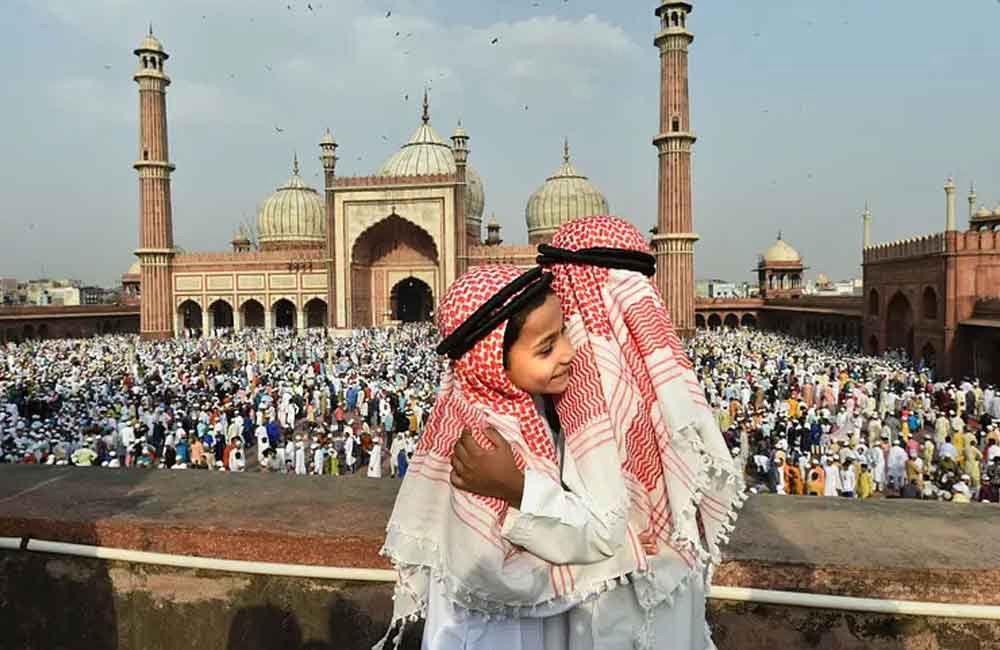
Beyond its religious dimensions, Eid-ul-Adha strengthens family bonds and community relationships. Relatives visit one another, old disputes are reconciled, neighbours exchange greetings, and communities come together in collective joy and harmony. The festival nurtures a spirit of forgiveness, brotherhood, and emotional solidarity. In a world increasingly isolated by digital distractions, social fragmentation, and emotional disconnection, these beautiful traditions preserve the warmth of human relationships and the spirit of togetherness. The smiles of children wearing new clothes, the fragrance of festive meals, and the collective prayers echoing from mosques all reflect the beauty of shared faith, cultural heritage, and communal harmony.
However, the deeper challenge of Eid-ul-Adha lies not merely in celebrating a single day, but in sustaining its values throughout the year. The world today urgently needs the spirit of Ibrahimic sacrifice-not necessarily the sacrifice of animals, but the sacrifice of hatred for love, injustice for fairness, greed for generosity, selfishness for compassion, and division for unity. Humanity needs leaders who embody the honesty of Abu Bakr, the justice of Umar, the generosity of Uthman, and the wisdom of Ali. It needs societies guided by empathy rather than intolerance, and by moral conscience rather than material obsession.
As Muslims across India and the world celebrate Eid-ul-Adha 2026, this sacred festival should inspire collective introspection, ethical transformation, and renewed commitment to humanity. Let the message of sacrifice encourage people to uplift the poor, comfort the suffering, protect the vulnerable, and strengthen the bonds of brotherhood and human solidarity. Let the teachings of Prophet Muhammad (PBUH) and the righteous Caliphs illuminate hearts with humility, sincerity, compassion, and justice. And let this blessed occasion remind all people—regardless of religion, nationality, or background—that true greatness lies not in what one possesses, but in what one is willing to sacrifice for truth, compassion, justice, and the welfare of others.
Eid-ul-Adha is therefore far more than a religious celebration; it is a living moral philosophy and a timeless lesson for humanity. It teaches that faith without sacrifice is incomplete, prosperity without charity is hollow, and worship without humanity is meaningless. In the enduring story of Prophet Ibrahim (PBUH), humanity finds the ultimate lesson of courage, obedience, patience, and unwavering trust in the Almighty. May this blessed festival renew the spirit of peace, brotherhood, compassion, and justice in every heart, and may the world move closer towards harmony, mutual respect, and shared human dignity.
Eid Mubarak to all.
The writer is an Assistant Professor in the Department of Biosciences at Chandigarh University, Punjab. His academic interests include public health awareness, environmental sustainability, and science communication aimed at promoting social and human well-being.
aa***********@****il.in