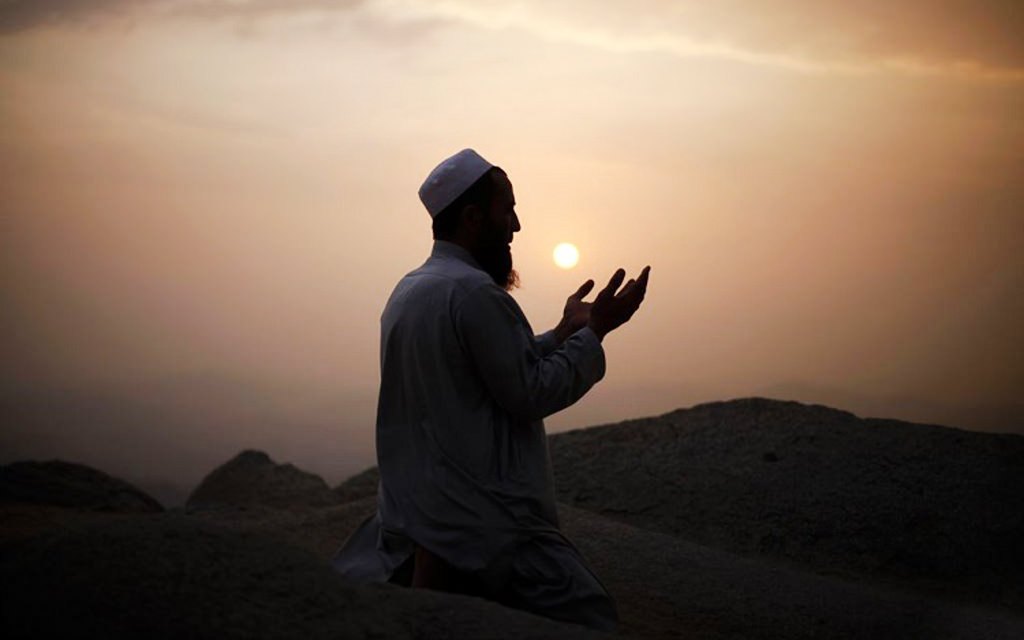


Muslim scholars (ʿUlama) must address contemporary challenges—technological transformation, geopolitical shifts, and moral complexity—by prioritising Taqwa (God-consciousness), unity (Qur’an 3:103), and educational reform
Nasir Hussain
The contemporary Muslim world is confronted with a wide range of intellectual, social, and moral challenges. Rapid technological transformations, evolving geopolitical dynamics, and the growing complexity of modern societies necessitate thoughtful guidance and responsible leadership. In such circumstances, the role of religious scholars (ʿUlama) becomes particularly significant.
Historically, they have served as custodians of religious knowledge, interpreters of divine guidance, and moral authorities within Muslim societies (Al-Ghazali, Ihya Ulum al-Din). However, the demands of the present age require that their intellectual and moral energies be directed toward issues that genuinely strengthen the Muslim community rather than being dissipated in secondary or trivial disputes.
One of the foremost responsibilities of religious leadership is the cultivation of God-consciousness (Taqwa) among believers. The Qur’an repeatedly emphasizes that true nobility and moral excellence arise from Taqwa: “Indeed, the most noble of you in the sight of Allah is the most righteous of you” (Qur’an 49:13). In the Islamic worldview, faith transcends the mere performance of ritual acts; it constitutes a comprehensive moral and spiritual framework that shapes both individual character and collective social conduct. As classical scholars such as Imam Al-Ghazali argued, the ultimate objective of religious knowledge is the purification of the soul and the cultivation of virtuous character (Al-Ghazali, Ihya Ulum al-Din). When individuals internalise a profound sense of accountability before Allah, ethical behaviour naturally follows.
Equally important is the urgent need to address sectarian fragmentation and to promote unity within the Muslim Ummah. The Qur’an explicitly instructs believers: “Hold firmly to the rope of Allah all together and do not become divided” (Qur’an 3:103). While diversity of opinion (ikhtilāf) has historically been a feature of Islamic intellectual life, it was traditionally managed with scholarly decorum and mutual respect. Classical scholars such as Imam Al-Shafi‘i emphasised that legitimate juristic disagreement should not undermine fraternity among Muslims. Contemporary scholars like Yusuf al-Qaradawi have similarly warned that sectarian conflicts weaken the moral and political strength of the Ummah (Al-Qaradawi, Fiqh al-Ikhtilaf).
Another critical area that demands reflection is the reform and revitalisation of the Madrassa curriculum. Historically, madrassas played a pivotal role in preserving and transmitting Islamic scholarship. Institutions such as Al-Qarawiyyin in Morocco and Al-Azhar in Egypt served as major centres of intellectual activity for centuries (Makdisi, The Rise of Colleges, 1981). Nevertheless, the modern world requires an educational framework that equips students with broader intellectual competencies. Scholars such as Syed Muhammad Naquib al-Attas and Ismail Raji al-Faruqi have argued for an integration of revealed knowledge with contemporary disciplines in order to produce intellectually balanced and socially responsible individuals (Al-Attas, Islam and Secularism, 1978; Al-Faruqi, Islamization of Knowledge, 1982).
Closely related to this reform is the promotion of high-quality and skill-oriented education among Muslim youth. The Islamic intellectual tradition has historically valued the pursuit of knowledge in all beneficial forms. The Prophet Muhammad (peace be upon him) emphasised the centrality of learning, declaring that “seeking knowledge is obligatory upon every Muslim” (Ibn Majah, Hadith 224). During the classical Islamic period, scholars such as Ibn Sina, Al-Biruni, and Ibn Khaldun made profound contributions to science, medicine, philosophy, and sociology, demonstrating that intellectual inquiry and religious commitment are not mutually exclusive.
At the same time, educational reform must ensure that the Qur’an and Sunnah remain the foundational epistemological sources guiding the overall framework of knowledge. Islamic scholars have traditionally understood knowledge (‘ilm) as encompassing both revealed and acquired forms. As Ibn Khaldun explains in his Muqaddimah, the flourishing of civilisations depends upon a balanced development of religious sciences and rational disciplines. When modern subjects are integrated within an Islamic ethical framework, education becomes not merely a means of economic advancement but a vehicle for social responsibility and moral development.
Finally, Muslim educational institutions must prepare students to confront emerging global challenges with intellectual confidence and ethical clarity. Issues such as technological transformation, environmental sustainability, globalisation, and cultural interaction require thoughtful engagement rooted in both faith and reason. Contemporary thinkers emphasise the importance of producing Muslims who are firmly grounded in their spiritual tradition while actively contributing to modern intellectual and social life.
In conclusion, the contemporary Muslim world requires a renewed and transformative vision of religious leadership. By prioritising the cultivation of God-consciousness, promoting unity within the Ummah, reforming educational institutions, encouraging intellectual excellence, and integrating Qur’anic guidance with modern knowledge, Muslim scholars and institutions can play a pivotal role in shaping a confident and ethically grounded community. The challenge before the Muslim world is not merely the preservation of tradition, but its revitalisation in a manner that meaningfully engages with the realities and opportunities of the modern age.
References:
The Qur’an (3:103; 49:13).
Al-Ghazali, Abu Hamid. Ihya Ulum al-Din.
Al-Qaradawi, Yusuf. Fiqh al-Ikhtilaf.
Al-Attas, Syed Muhammad Naquib. Islam and Secularism. Kuala Lumpur, 1978.
Al-Faruqi, Ismail Raji. Islamization of Knowledge. 1982.
Makdisi, George. The Rise of Colleges: Institutions of Learning in Islam and the West. 1981.
Ibn Khaldun. Al-Muqaddimah.
Ibn Majah, Hadith 224 (on seeking knowledge)
pz********@***il.com