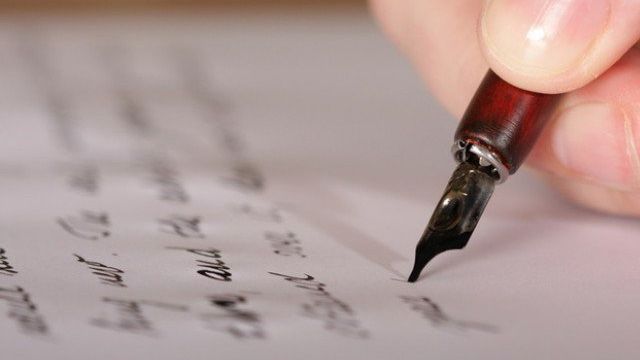


We must learn to unsee the archaic hierarchies imposed upon our flesh and instead, feel the unified symphony of its being. For in the relentless pursuit of life’s ambitions, the body is not merely the instrument, but the very music itself. To neglect its wisdom is to compose a tragedy; to listen is to finally live in harmony with our own existence.
Dr Ghulam Mohammad Khan
In the dizzying theatre of our absurd engagements, we take for granted the most important instrument of our being: the body. This vessel of flesh and sentience, which perceives a world, reasons a path, and feels the sting of failure, is the silent, suffering protagonist of every endeavour, until its final curtain. Yet, in the societal structure of my home, Kashmir, the body is too often relegated to a mere secondary tool. We treat it as a means to an end, a conduit that is scarcely noticed until it fails: when a fractured leg refuses the mountain path to graze the cattle, or when the simple, primal relief of a morning is poisoned by the fire of haemorrhoids.
During a rare, hurried consultation, a doctor lamented to me the alarming number of constipation cases in Kashmir that, concealed by shame until too late, devolve into severe haemorrhoids. He derided what he saw as a regional awkwardness, a collective instinct to hide ailments affecting “unmentionable” body parts. Seeking to deepen the conversation and signal my understanding, I suggested the issue was rooted in the very bedrock of our culture. I ventured that our society assigns elaborate, unwritten roles to different parts of the body, roles that are rigid and rarely challenged. Certain organs and their functions are culturally designated as abominable, forcing their concealment to avoid moral condemnation. I illustrated this with the stark cultural dichotomy of the right and left hands. The right hand, I explained, is sanctified; it is the hand for eating, for greeting, for exchange. The left is, unfortunately, condemned to manage all that is deemed unclean. This division is so profound that a person once advised me never to spit to my right, as good spirits reside there, but to reserve the left for such profane acts. Similarly, a shopkeeper once refused a bank note from my left hand, demanding I offer it with my right. My left hand, I confessed, felt profoundly offended.
I expanded this to the broader cultural psychology governing “private” parts and the social roles they have been forced to perform for decades. It was then that the doctor, with a wave of his hand, dismissed the entire discourse. He declared, with finality, that he had always found the humanities and social sciences to be trash.
In our culture, the body is a landscape inscribed with ancient, unspoken rules. Just as we decipher omens in a crow’s cry, a cat’s wail, or an unexpected rain, we assign profound meaning to the geography of our own flesh. The upper body—the eyes, the hair, the cheeks—is a public gallery, celebrated in poetry and conversation. But the terrain below the waist is a shrouded country, its very mention a transgression. A touch there is not merely contact; it is a contamination, demanding a purification that a grimy door handle could never warrant. The body, thus, is divided into a kingdom of light and a shadowed, silent underworld. Within this structured social hierarchy, the body is partitioned into realms of grace and disgrace. Certain features are celebrated as sites of aesthetic virtue, while others are systematically demonised. This artificial categorisation is not seen as a human construct but is lived as a celestial decree, an unassailable truth.
Consequently, the body’s functional, effusive dimensions—those associated with flatulence, fluid, and smell—are rendered unspeakable. The pubic area and the armpits are exiled from polite discourse, and even the nose, despite its proximity to the esteemed cheeks and eyes, is demoted for its mundane realities of mucus and moisture.
This ingrained disregard is so deeply internalised that it persists even in moments of dire necessity. As the doctor noted, this inhibition becomes a matter of life and limb. He admitted that the majority of haemorrhoidal cases that tragically progress into cancer find their roots not in biology alone, but in this suffocating cultural silence, a testament to how deeply the stigma attached to certain body parts can endanger lives.
What is truly arresting is the dichotomy in the public consciousness: here, political discourse is a revered and sophisticated art. People consider strategies with the acuity of seasoned analysts, reject opinions with a scholar’s intellectual rigour, and approach political pronouncements with innate, unwavering scepticism. Yet, this very same culture of scrutiny evaporates when confronted with the archaic, pathetic associations ascribed to the body. The same minds that deconstruct statecraft with surgical precision leave the most fundamental prejudices about their own flesh utterly unexamined.
Moreover, in our relentless pursuit of worldly ideals—be they personal ambition, education, family, or faith—we often neglect the very vessel that makes such pursuits possible: the body. It is the silent bearer of our burdens, the instrument that not only carries out our will but also processes, interprets, and metabolises the very substance of our lives. This truth was embodied by a man in our locality, whom I had always known as a monument of tireless labour. He worked on his land, tended to his band saw with the devotion of a craftsman for a beloved, and cared for his horse and cart as if they were his own family. His piety was as steadfast as his labour. Yet, throughout this lifetime of physical and spiritual exertion, he scarcely granted his own body a conscious thought. It was a tool, reliable and uncomplaining. When he struggled to find a wife, he was compelled to embark on a long, disorienting journey to Bengal, from which he did not return for ten months. The merciless heat and hardship of that exile fractured his mind, and he wandered, lost to himself, in alien landscapes. Though he eventually returned and regained a semblance of mental stability, he could never find harmony with his own physical self. He had lived his entire life through his body, but he had never learned to listen to it. In a final, cruel irony, his body claimed him one winter dawn as he left to pray, clad in thin clothes, succumbing to hypothermia that spoke of a dialogue long broken.
To conclude, our very existence demands a profound reclamation of the body from the shackles of dogma. We must learn to unsee the archaic hierarchies imposed upon our flesh and instead, feel the unified symphony of its being. For in the relentless pursuit of life’s ambitions, the body is not merely the instrument, but the very music itself. To neglect its wisdom is to compose a tragedy; to listen is to finally live in harmony with our own existence.
gl******@***il.com