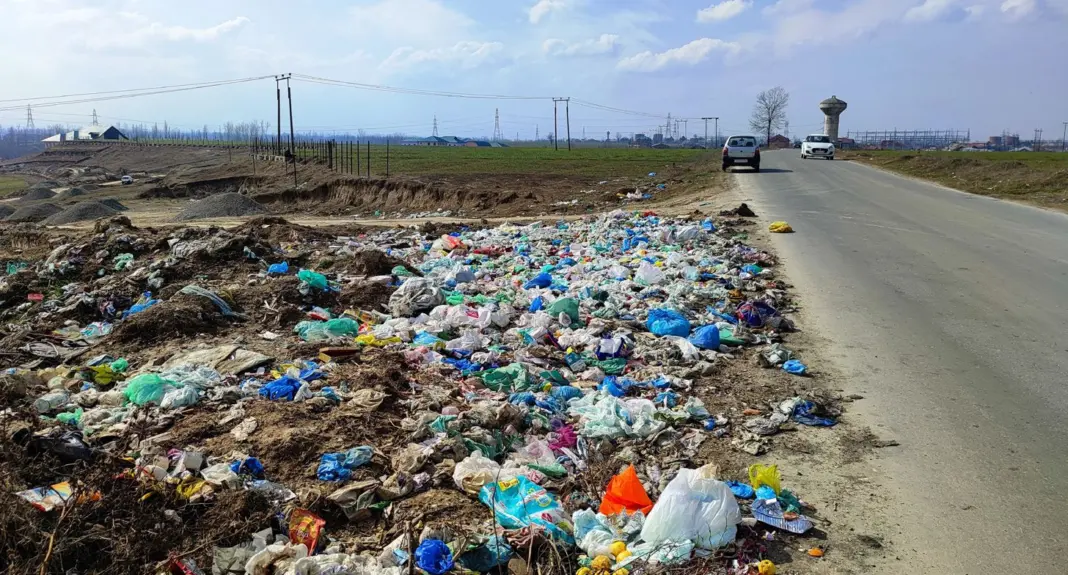


With no proper disposal systems, Kashmir’s rivers and soil absorb deadly chemicals, while authorities look the other way
Jammu and Kashmir, known for its majestic landscapes and pristine natural beauty, is facing an environmental crisis that remains largely unnoticed: the unsafe and unregulated disposal of hazardous waste. From biomedical waste to industrial effluents, the accumulation and mismanagement of these dangerous substances are quietly threatening the region’s ecosystems, public health, and fragile biodiversity.
Hazardous waste includes any waste material that poses substantial or potential threats to public health or the environment. This includes chemicals, batteries, heavy metals, pesticides, medical waste, and by-products from industries. In J&K, particularly in urban centres like Jammu, Srinagar, and emerging industrial zones, the increasing generation of such waste has not been matched by adequate infrastructure or regulatory enforcement to manage it safely. What makes hazardous waste so dangerous is its ability to persist in the environment and accumulate in the food chain. In water bodies, for instance, the presence of heavy metals and toxic chemicals can wipe out aquatic life and render water unfit for consumption or agriculture. On land, improper dumping leads to soil contamination and long-term degradation, threatening crops and ultimately entering the food supply.
Hospitals, clinics, and diagnostic laboratories are among the most consistent generators of hazardous waste in Jammu and Kashmir. Biomedical waste, if not treated and disposed of properly, can be a major source of infection and disease. Reports have indicated that many healthcare facilities in the region lack proper segregation and treatment mechanisms for infectious waste. In rural areas and smaller towns, where infrastructure is even weaker, biomedical waste is often dumped in municipal landfills or burned in open spaces, releasing toxic fumes into the atmosphere. This has serious implications for sanitation workers, ragpickers, and nearby residents, who are unknowingly exposed to dangerous pathogens and chemical residues.
With efforts to boost industrial development in J&K—particularly in sectors like pharmaceuticals, cement, and chemicals—has come an increase in industrial waste. However, the environmental safeguards and waste treatment systems required to handle this expansion have not kept pace. Many industrial units, particularly in the outskirts of Jammu, Samba, and Kathua, either lack Effluent Treatment Plants (ETPs) or do not operate them efficiently. Untreated effluents find their way into local streams and rivers, leading to water pollution that affects both human and animal populations.
A critical aspect of the problem lies in the absence of a comprehensive hazardous waste management policy tailored for the region. While national guidelines exist under the Hazardous and Other Wastes (Management and Transboundary Movement) Rules, 2016, their implementation in J&K is sporadic and under-resourced. The region lacks a centralised facility for the scientific treatment, storage, and disposal of hazardous waste. Collection mechanisms are either absent or poorly coordinated, especially in remote and hilly areas. Regulatory oversight is weak, with limited manpower and poor inter-departmental coordination between the Pollution Control Committee, urban local bodies, and health departments.
The consequences of this neglect are far-reaching. Contaminated water sources, soil degradation, and polluted air are already evident in parts of the region. Local communities living near industrial clusters or waste dumping sites report a rise in respiratory illnesses, skin disorders, and waterborne diseases. Biodiversity is also at risk. The fragile ecosystems of Kashmir, which support a variety of endemic species, are vulnerable to even small changes in environmental chemistry. Toxic leachate from waste dumps can destroy aquatic habitats and damage agricultural productivity in surrounding areas.
Despite multiple guidelines issued by the Central Pollution Control Board (CPCB), enforcement remains a weak link. Regular inspections, public reporting, and penal action against violators are rare. Public awareness about hazardous waste and its dangers is low, which further reduces community pressure on authorities to act. There is also a lack of reliable data. Without accurate, updated information on the quantity and type of hazardous waste being generated, planning for its safe disposal remains guesswork. This data gap significantly undermines any long-term policy or infrastructural investment efforts.
Addressing hazardous waste disposal in Jammu and Kashmir requires a multi-pronged approach. Infrastructure must be developed, including scientifically managed Common Hazardous Waste Treatment, Storage, and Disposal Facilities (TSDFs). The J&K Pollution Control Committee must be strengthened with more resources and authority to enforce hazardous waste rules. All industrial units should be mandated to install and operate ETPs and submit regular compliance reports. Healthcare facilities need to comply with biomedical waste management norms, including colour-coded segregation and on-site treatment. Public awareness campaigns are essential to educate citizens, particularly those near disposal sites, about the risks of hazardous waste and the importance of reporting violations. A centralised database of hazardous waste generators and quantities should be created to improve monitoring and planning.
Looking Ahead
Jammu and Kashmir stands at a critical crossroads. The challenge of hazardous waste disposal may not be as visible as other issues, but its long-term consequences are far more damaging. To protect the region’s unique ecological heritage and ensure public health, there must be a shift from reactive to proactive environmental governance. This begins with recognising hazardous waste as a top-tier environmental concern. Investments in infrastructure, tighter regulatory frameworks, and active citizen participation must go hand in hand. Additionally, integrating modern waste treatment technologies and fostering collaboration between government bodies, industries, and civil society will be essential for sustained progress. With timely intervention and a commitment to sustainability, J&K can turn this silent emergency into an opportunity—one that safeguards both its environment and its people for generations to come.
The writer is an environmental enthusiast and a library professional, currently posted at the Government SAM Degree College, Budgam
Aadil Jahangir
aa**********@***il.com