

Nestled in the lap of the majestic Himalayas, Tral is far more than a picturesque valley in South Kashmir. It is one of the oldest inhabited regions of the Kashmir Valley and a living repository of its civilisational, cultural, and spiritual legacy. While the beauty of its forests, meadows, springs, and mountains has always captivated visitors, its historical significance has often remained overshadowed. Yet, a careful study of archaeological discoveries, ancient traditions, religious monuments, and local historical literature unmistakably establishes Tral as one of the earliest cradles of civilisation in Kashmir.
Despite possessing such extraordinary historical wealth, Tral has remained relatively underrepresented in mainstream narratives of Kashmir’s history. Greater academic attention, systematic conservation, heritage tourism, and public awareness are urgently needed to safeguard these invaluable assets for future generations. Protecting monuments, preserving ancient springs, documenting oral traditions, encouraging archaeological research, and promoting responsible tourism can collectively restore Tral to its rightful place in the historical consciousness of Kashmir.
Inaam Peerzada
Nestled in the lap of the majestic Himalayas, Tral is far more than a picturesque valley in South Kashmir. It is one of the oldest inhabited regions of the Kashmir Valley and a living repository of its civilizational, cultural, and spiritual legacy. While the beauty of its forests, meadows, springs, and mountains has always captivated visitors, its historical significance has often remained overshadowed by more frequently discussed regions of Kashmir. Yet, a careful study of archaeological discoveries, ancient traditions, religious monuments, and local historical literature unmistakably establishes Tral as one of the earliest cradles of civilisation in Kashmir.
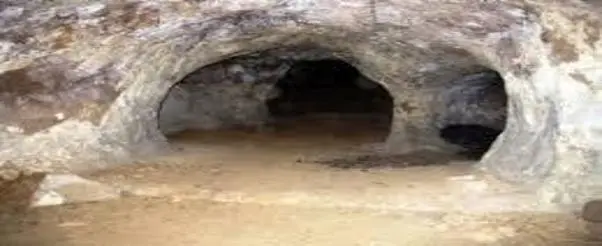
Gufkral Caves – An Ancient Archeological Site
The antiquity of Tral is best reflected in the prehistoric archaeological site of Gufkral, situated on the outskirts of the town. The very name “Gufkral” is derived from the Kashmiri words gufa (cave) and kral (potter), literally meaning “the cave of the potters”. Excavations carried out by the Archaeological Survey of India during the 1980s unearthed evidence of continuous human occupation dating back several millennia. Archaeologists discovered Neolithic pit dwellings, handmade pottery, polished stone tools, bone implements, animal remains, and later Megalithic burials. These findings indicate that long before the rise of organised kingdoms, settled communities had already established themselves in Tral, practising agriculture, animal husbandry, pottery, and other early crafts. Gufkral therefore stands as one of the most significant prehistoric sites in the entire Himalayan region and provides invaluable insights into the earliest chapters of Kashmir’s human history.
The importance of Tral did not diminish with the passage of time. During the historical period, the region emerged as an important centre of culture, religion, and learning. Numerous archaeological remains scattered across its villages testify to its glorious past. The ancient temple complex of Narastan, built in the characteristic architectural style of early Kashmir, reflects the artistic excellence of the period and demonstrates that Tral occupied an important place in the religious landscape of ancient Kashmir. Although centuries have passed and much of the structure has weathered the test of time, its surviving stone architecture continues to speak of the engineering brilliance and aesthetic sensibilities of the early Kashmiris.
Narastan Ruins – A 14th Century Temple Dedicated To Shiva
The region is equally renowned for its sacred springs, many of which have been revered for centuries. Among the most celebrated are Pingladevi Nag and Mandodari Nag, both deeply embedded in local tradition and folklore. These perennial springs not only served as reliable sources of water but also became centres of religious reverence, attracting devotees from distant places. Such springs remind us that the relationship between nature and spirituality has always been a defining characteristic of Kashmiri civilisation, and Tral preserved this relationship with remarkable continuity.
The historical significance of Tral is further strengthened by its association with the ancient Naga tradition that once flourished throughout Kashmir. Before the widespread spread of Buddhism and later Hindu philosophical schools, the Naga cult occupied an important place in the religious life of the valley. Numerous springs and water bodies in Tral bear names associated with this ancient tradition, reflecting cultural continuity extending back many centuries. Later, Buddhism also left its imprint upon the region, followed by the flourishing of Shaivism, one of Kashmir’s greatest philosophical contributions to the world.
Khanqah E Faiz Fanah Shrine, A 700-Year-Old Shrine Dedicated To Mir Syed Ali Hamadani (RA)
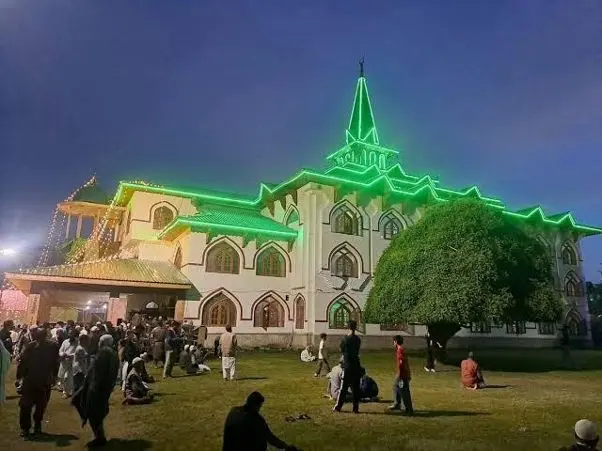 As Islam spread across Kashmir during the fourteenth century, Tral once again emerged as a significant centre of religious scholarship and spirituality. The region produced distinguished saints, scholars, jurists, and Sufi preachers who played an instrumental role in disseminating Islamic teachings while preserving the indigenous ethos of Kashmir. Numerous shrines, mosques, and seminaries established over the centuries continue to serve as symbols of Tral’s enduring spiritual heritage. The coexistence of ancient archaeological remains alongside Islamic religious institutions beautifully illustrates the layered civilizational history that defines the region.
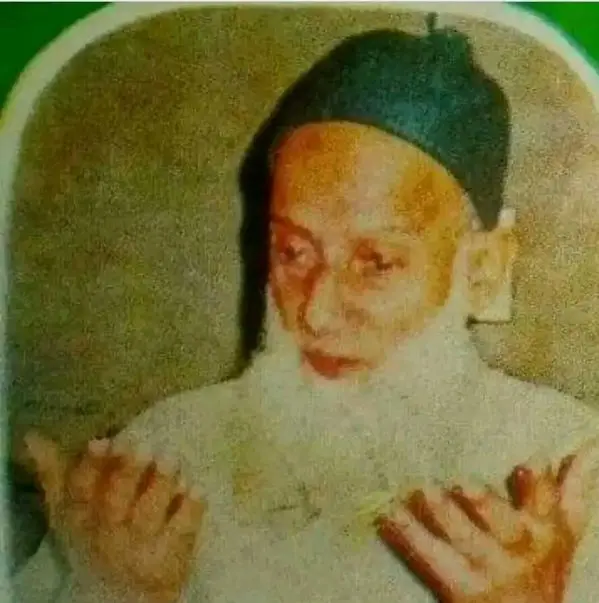
Maulana Nooruddin Trali (1900-1993), a prominent religious scholar, preacher, and educationist who transformed the educational landscape of the region in the mid-20th century
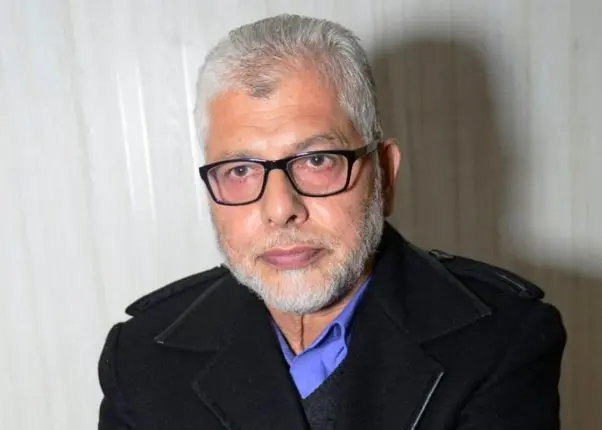
 The literary and intellectual contributions of Tral are equally remarkable. For generations, the town has produced scholars, poets, physicians, historians, educationists, and social reformers who have enriched Kashmiri society through their scholarship and public service. The documentation of Tral’s history by local historians has played a crucial role in preserving the collective memory of the region. Among such contributions, Dr Nisar Ahmad Bhat Trali’s monumental Urdu work Aayeena-e-Tral occupies a unique place. The book meticulously records the geography, history, archaeology, genealogy, religious institutions, notable personalities, folklore, educational development, and socio-cultural traditions of the entire Tral region. It stands today as one of the most comprehensive local histories ever written on any region of Kashmir and serves as an indispensable reference for researchers and history enthusiasts alike.
Dr Nisar Ahmad Bhat Trali, a physician and writer who has written the first and the only available history book on the Tral region titled Aayeena-e-Tral
 Nature has also played a decisive role in shaping Tral’s historical importance. Surrounded by dense forests, alpine pastures, snow-clad mountains, and abundant freshwater resources, the region offered ideal conditions for early human settlement. The vast forests of the Tral Wildlife Sanctuary, stretching towards the upper reaches of the Himalayas, have historically supported diverse flora and fauna while providing natural protection to human settlements. The fertile plains enabled agriculture to flourish, while mountain passes connected Tral with other parts of Kashmir, facilitating trade and cultural exchanges over centuries.
Local folklore and oral traditions further enrich the historical landscape of Tral. Stories passed down from generation to generation preserve memories of ancient rulers, saints, scholars, sacred springs, forgotten settlements, and miraculous events. Although such traditions require careful historical scrutiny, they nevertheless constitute an invaluable component of Kashmir’s intangible cultural heritage and often complement archaeological and literary evidence.
Despite possessing such extraordinary historical wealth, Tral has remained relatively underrepresented in mainstream narratives of Kashmir’s history. Much public discourse has focused either on its breathtaking natural beauty or on contemporary developments, leaving its immense archaeological and civilisational importance largely unexplored. Greater academic attention, systematic conservation, heritage tourism, and public awareness are urgently needed to safeguard these invaluable assets for future generations. Protecting monuments, preserving ancient springs, documenting oral traditions, encouraging archaeological research, and promoting responsible tourism can collectively restore Tral to its rightful place in the historical consciousness of Kashmir.
To describe Tral merely as another beautiful town would therefore be a grave understatement. It is a landscape where prehistoric caves, ancient temples, sacred springs, Islamic shrines, and living traditions coexist within a remarkably small geographical area. Few places in Kashmir present such an uninterrupted continuum of human habitation from the Neolithic Age to the present day. Every village, every spring, every hill, and every stone seems to narrate a chapter of Kashmir’s long and fascinating journey through time.
Tral is not simply a geographical entity; it is a civilisational archive carved into the mountains of Kashmir. From the prehistoric inhabitants of Gufkral to the philosophers, saints, scholars, and historians who followed, countless generations have contributed to its enduring legacy. Recognising Tral as one of the principal cradles of Kashmir’s civilisation is not merely an act of regional pride but a historical responsibility grounded in archaeological evidence, literary documentation, and centuries of uninterrupted cultural continuity. As research continues to unfold new dimensions of Kashmir’s past, Tral will undoubtedly remain one of its most illuminating chapters—a timeless testament to the origins, resilience, and richness of Kashmiri civilisation.
References
Dr Nisar Ahmad Bhat Trali, Aayeena-e-Tral (Urdu), Tral, 2010.
- N. K. Bamzai, Culture and Political History of Kashmir.
- A. Stein (Trans.), Kalhana’s Rajatarangini.
Archaeological Survey of India (ASI), Excavation Reports on Gufkral, 1981–82.
- M. D. Sufi, Kashir: Being a History of Kashmir.
Mohammad Ishaq Khan, Kashmir’s Transition to Islam.
Abdul Ahad Azad (where relevant to Kashmiri cultural traditions).
Local oral traditions and historical accounts preserved in the Tral region.
The writer hails from Tral, and is pursuing Bachelors in English Literature from the Islamic University of Science and Technology (IUST), Awantipora
in***************@***il.com