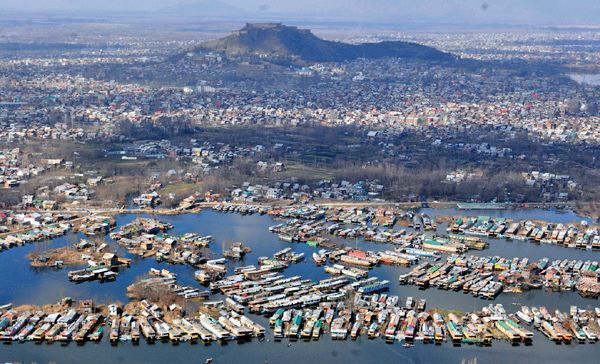


This article outlines eight key initiatives to enhance infrastructure, preserve heritage and ensure sustainable development in city
The city of Srinagar stands at a crucial crossroads, with numerous projects and initiatives poised to enhance its infrastructure and quality of life. There is a need to address several key issues that have been sidelined over the years. From the revitalisation of water transport on the Jhelum River to the completion of vital infrastructure like the New Ganderbal Hydroelectric Project, these initiatives hold the potential to transform Srinagar into a more efficient, sustainable and vibrant city.
The current government must revive these proposals and prioritise citizen-centric solutions that not only preserve the city’s rich heritage but also enhance the overall well-being of its residents. This article outlines eight pressing projects and initiatives that require immediate attention:
- Inland Water Transport Project from Pampore to Chattabal
This project was conceived by the Srinagar Development Authority (SDA) during 1997-99 under my tenure as Project Director. A comprehensive Detailed Project Report (DPR) was prepared by internationally acclaimed consultants, M/s RITES. The project was aimed at decongesting Srinagar’s roads and reviving water-based transport that historically thrived on the Jhelum river.
The plan envisaged 50-seater motorboats for passengers and 25-seater boats for tourists, offering scenic rides past Srinagar’s heritage sites. It was also expected to boost riverside tourism and rejuvenate the arts and crafts market along the riverbanks. Unfortunately, despite initial enthusiasm, the project was reduced to symbolic efforts — a few signboards and a couple of expensive boats at Zero Bridge.
The DPR continues to gather dust in the I&FC Department. Reviving this project could serve as a signature initiative for the current administration, combining heritage conservation, tourism, and urban mobility.
- Skew Bridge near Presentation Convent School
A motorable skew bridge on the Jhelum near the Presentation Convent was constructed up to the deck level in 2017 at a cost of Rs 12 crore. Strangely, despite the original design, a pedestrian footbridge was constructed on flimsy grounds using steel girders, nullifying the investment and the objective of decongesting city roads.
A PIL filed in the Hon’ble High Court supported the restoration of the motorable bridge, but the case file was reportedly misplaced. There is still an opportunity to replace the footbridge decking with the originally designed RCC deck, thereby restoring the utility of the project and easing central Srinagar’s traffic woes.
- New Ganderbal Hydroelectric Project (NGHEP)
Initiated in 1992 with a DPR prepared by M/s Thapar Consultants, NGHEP is strategically located near Srinagar, offering minimal transmission losses. Infrastructure and land acquisition were largely completed early on, and the project was expected to augment not only power supply but also water availability through the Rangil Water Supply portal.
Despite its technical viability and infrastructural readiness, the project remains stalled—likely due to past political disturbances. The current government, known for decisive action, must prioritize this ready-to-execute project for energy sufficiency and public utility enhancement.
- Solid Waste Disposal Scheme – Greater Srinagar
In the 1980s, the Urban Environmental Engineering Department (UEED), with M/s Universal Enviroscience as consultants, prepared a DPR proposing a mechanical compost plant near Noorbagh, with an interim sanitary landfill at Achen Saidpora.
Instead, unscientific landfilling consumed wetland areas, creating severe environmental and health hazards, with odour extending to SKIMS. The original composting-based waste management plan needs urgent revival to mitigate pollution and ensure sustainable urban sanitation.
- Chrar-i-Sharif Development Project
Following the devastating 1995 fire that razed the historic shrine and surrounding town, a dedicated development project was initiated. With sustained efforts and ministerial support, a Rs 25 crore HUDCO loan was secured, and restoration works began. However, due to political transition, funding and momentum were lost.
The Chrar-i-Sharif shrine holds immense spiritual, cultural, and historical value, and the project must be revived and completed to honour the legacy of Hazrat Shaikh Noor-ud-Din (RA) and support the local economy.
- Urban Renewal & Circular Road System
Key internal roads of Srinagar, including the KZP road under the Circular Road Plan, remain incomplete or stalled without justification. These roads are crucial to decongesting the inner city and improving mobility. Immediate attention to resume work on these projects is warranted.
- Parking Infrastructure
Unregulated roadside parking across Srinagar results in frequent traffic jams. There is an urgent need to develop designated parking spaces and multi-level facilities in commercial zones to ensure a smooth flow of traffic and ease of access.
- Fixed Bus Stops with Bus Bays
In the absence of designated bus stops, passenger vehicles halt mid-road, obstructing traffic and increasing accident risk. The government must identify and build bus bays at fixed locations to streamline public transport and enhance commuter safety.
Conclusion
The projects and concerns highlighted above are feasible, impactful, and citizen-centric. Most were conceptualised with foresight but derailed due to administrative inertia or political shifts. The present administration has demonstrated resolve in executing large-scale reforms and development initiatives. It is urged to revisit and revive these proposals for sustainable urban planning, heritage preservation, and civic well-being.
The writer is a former Chief Engineer, PWD and former Chairman, Institution of Engineers (India), J&K State Centre
Er Mohammad Ashraf Fazili
sh*************@***il.com