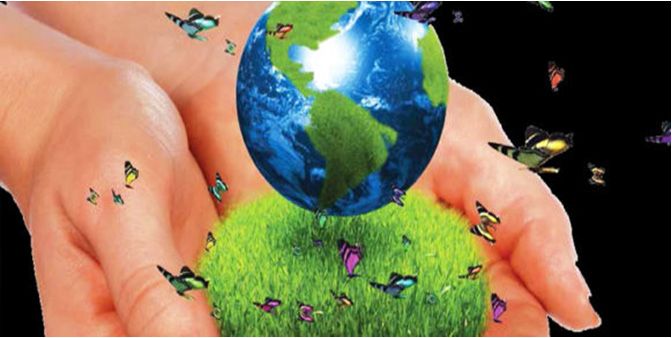


As biodiversity declines and ecosystems degrade, it is imperative that we move from discussion to action, fulfill our duties to protect the environment and ensure a sustainable future.
First of all, we need to understand the proper meaning of the term environment. What is the environment?
Environment can be defined as the total of all living and non-living elements and their effects that influence human life. It refers to the surroundings or conditions in which a person, animal, or plant lives or operates.
Our natural environment is at a crossroads. Our biodiversity is on the verge of extinction. While we express many concerns, our responsibilities often remain confined to papers and ceremonial activities such as seminars, debates, discussions, and environmental conferences, rather than actual practice.
We all fight for our basic rights and are often asked to perform duties towards our nation. However, we hesitate to play a pivotal role when it comes to maintaining, preserving, and protecting our ecosystem. As Gandhi Ji said, “Rights can only be achieved in the world of duties.”
Our land is degrading day by day—who is responsible? Our water bodies—oceans, rivers, lakes, ponds, and streams—are shrinking. Who is responsible? Our flora and fauna, forests, wildlife, mineral, and energy resources are being spoiled. Who is responsible for such irrational and immoral actions? As humans, we are all responsible for this negligence.
These unavoidable questions demand answers and action. Meanwhile, our bird species are heading towards extinction due to hunting. The increasing conflict between humans and animals is another matter of grave concern. Hunting of animals is a punishable offence under the Prevention of Cruelty to Animals Act, 1960.
Major Environmental Concerns:
Deforestation: Increases greenhouse gas emissions and disrupts the weather cycle.
Climate Change: A pressing issue that has intensified over the last few decades.
Pollution: Chlorofluorocarbons (CFCs) in the air create a hole in the ozone layer.
Loss of Biodiversity: Describes the decline in the number, genetic variability, and variety of species.
Global Warming: Causes climate change, posing a serious threat to life on Earth through widespread flooding and extreme weather conditions.
Global Efforts by the United Nations to Protect the Environment:
United Nations Environment Programme (UNEP) Summit, 1992: Responsible for coordinating responses to environmental issues within the United Nations system.
Kyoto Protocol: Adopted on December 11, 1997, and enforced on February 16, 2005, it operationalizes the UN Framework Convention on Climate Change, with 192 parties committed.
Sustainable Development and Climate Action: The UN launched its Sustainable Development Agenda in 2015 to support environmental preservation.
India’s Commitment to Climate Change:
India has played a prominent role in tactfully addressing environmental issues. India’s policies on climate change are clear and cooperative with the global community. The country is committed to fulfilling 50% of its energy requirements from renewable sources by 2030, compared to 2005 levels.
At the Paris Summit on Climate Change on December 12, 2015, India supported the Paris Agreement, advocating for mitigation of climate change effects. The Paris Agreement came into force on November 4, 2016.
We must translate these commitments into collective action to protect and sustain our natural environment for future generations.
By Rahi Firdous
fi**********@***il.com