

Exploring the Quranic imperatives of learning and action as a pathway to individual growth and societal justice
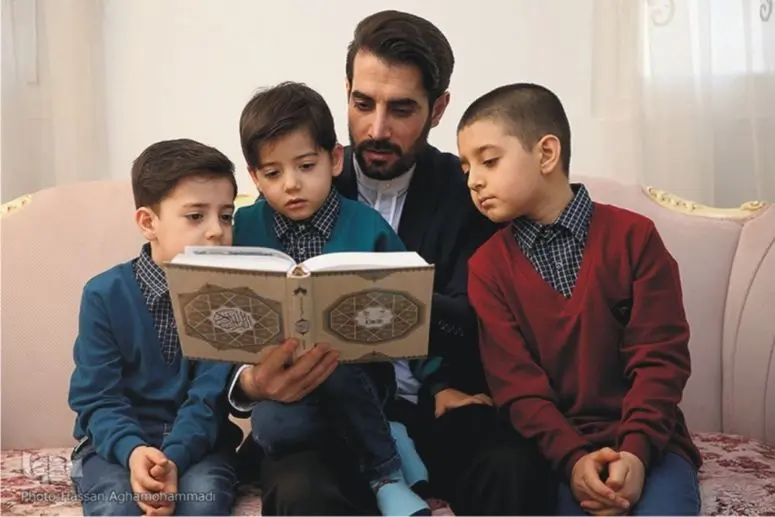
Islam profoundly emphasises learning, viewing it as an essential part of one’s spiritual and personal development. In Islam, seeking knowledge is not merely an intellectual pursuit but a spiritual duty that strengthens one’s relationship with Allah (SWT) and improves society as a whole. One of the most famous sayings in Islam regarding knowledge comes from the Prophet Muhammad (PBUH), who said, “Seeking knowledge is an obligation upon every Muslim.” Imam Al-Ghazali, a renowned Islamic scholar, says “Knowledge without action is wastefulness, and action without knowledge is foolishness.”
Humanity’s superiority over all other creatures lies in its unique capacity for creative knowledge—a trust that even the heavens, despite their height, the mountains, despite their strength, and the earth, despite its vastness, declined to bear (Quran 33:72). This knowledge allows humans to understand and “name” the properties of things (Quran 2:31), equipping them with the power to explore and harness the mysteries of the universe. Thus, humanity’s mastery over creation was always intended. Yet, this mastery must be used responsibly, for knowledge is a double-edged sword, capable of both constructive and harmful outcomes. Therefore, man’s real test lies in ‘mastering’ that mastery of the universe. So, ‘al-amana’ or the ‘trust’ which the universe trembled to bear, according to late Islamic scholar and thinker Fazlur Rahman, was to discover the laws of, and thus achieve mastery over, nature or in the Quranic terminology, to know the ‘names’ of all things and then use this mastery — under the human initiative — to create a positive world order.
To the Quran, all knowledge — intellectual, scientific or intuitive — comes from God. It sets a high value on knowledge and excludes no category of learning whatsoever, with the overriding principle that this knowledge should be utilised through proper and constructive channels. Man’s essential task is to reconstruct a scientific picture of the objective reality and employ the same to create a healthy moral order. So, to engage in a scientific pursuit without harnessing it for the creation of a just moral order — to know the ‘names’ without utilising them — would be, in the words of the Quran, ‘abath’ or a vain, dangerous, indeed Satanic pursuit.
Pristine Islam combined metaphysics and social reality — the Holy Prophet’s (PBUH) religious experience concerned both monotheism and socioeconomic justice. With an inherent symbiotic relationship, both monotheism and socioeconomic reforms assume fusion and flow like a seamless singular stream from the inner unity of the Quran and the immaculate conduct of the Prophet. Closer examination reveals that it was not monotheism but rather its entailing social reforms that invoked a vehement reaction from the Makkan oligarchy for they were least bothered by the monotheism of the Hanifs — certain Makkans who arrived at monotheism through self-deliberation — not linked with social reforms.
Islam combined metaphysics and social reality
Islam, unlike the ancient world, combined metaphysics and social reality. Earlier, the streams of pure intellect and transcendentalism had flowed independently despite the coexistence of Jews and Greeks for a considerable period of time at Alexandria. To Christianity, excepting the gospels, everything was futile. Islam focused on the fusion of religious and positive knowledge; it made history a field of divine activity to objectify moral values. The Quran inspired Muslims to pursue all branches of knowledge irrespective of the dichotomy of the sacred and the profane and to utilise the same for the benefit of mankind.
Born out of a violent break with its past, the modern West will seek no negotiation with any spiritual system or moral ideology. In such a situation, what else but the Quran can steer the world out of its crisis? Islam was the only genuine movement in history which ethically ‘oriented’ the raw materials of history rather than compromised with them under the convenient cover of secularism. Later, vested interests broke the fusion of metaphysics and social reality. Orthodoxy’s nexus with dictators led to the dichotomy of state and religion, while many Sufis’ neutr¬ality to social phenomena triggered ‘personal-ism’ at the cost of collectivism. Ever since, orthodox religious knowledge has been quarantined in the ma¬¬dressah, having no organic link with the positive knowledge of the external world.
The world of Islam in contradistinction to the ‘material’ West and the ‘spiritual’ East stands as a ‘gold median community’ (2:143) tasked with arbitrating their conflicts. On this premise, Iqbal has said: “Although we [Muslims] are coiled up in ourselves like a bud; should we perish, the whole garden [of the world] must perish.”Dr Fazlur Rahman similarly challenged the West along the lines that you can ignore the law of gravity but Islam cannot be ignored. Muslims have become prisoners of the past and if they do not take the initiative to rediscover Islam, their future is bleak.
Muslims owe it to themselves and to the world at large to recover the fusion of moral values and social phenomena through the crystal-clear Weltanschauung of the Quran. This would be a potent step for them to assume the steering wheel of history. For how long must the Muslim faith remain in the grip of the past?
In essence, the ultimate purpose of learning in Islam is to acquire knowledge that inspires a person to act with kindness, humility, and selflessness. It’s not just about gaining information but about using that knowledge to benefit others and reflect the values of compassion and generosity that Islam encourages. When a person learns and grows with a sincere, kind heart, they can positively impact their community and draw closer to Allah. This approach to knowledge emphasizes that the true worth of learning lies in how it helps one become a better person, dedicated to serving others and uplifting society.
The writer is a freelancer and researcher at the University of Kashmir
By Dr Bhat Mukhtar
dr********@***il.com