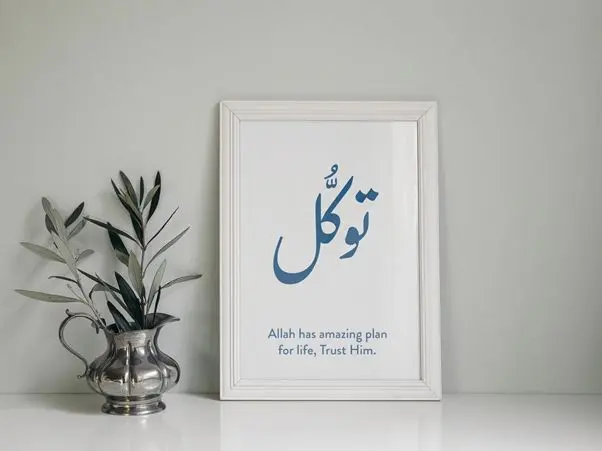


‘And whoever relies upon Allah – then He is sufficient for him.’ Tawakkul reframes effort as duty rather than entitlement, transforming waiting into hope and struggle into meaning.
Shariq Nabi Wani
In every era, human beings have wrestled with uncertainty. Yet our age seems uniquely saturated with it. We live in a time of instant communication and relentless comparison, where achievement is displayed publicly and failure feels amplified. Careers are mapped with precision, futures are strategised in spreadsheets, and success is measured in visible milestones. Beneath this restless striving lies a quieter anxiety: the fear of losing control.
The desire for control is deeply human. To control is to feel secure; to predict is to feel powerful. We believe that careful planning guarantees stability and that discipline ensures desired outcomes. Yet life repeatedly interrupts this illusion. No plan is immune to disruption. Illness visits without warning. Economic tides shift unexpectedly. Relationships fracture. Loss arrives without consultation. In such moments, the myth of total self-sufficiency dissolves, and we confront a difficult truth: our control is partial.
It is precisely at this intersection of effort and limitation that the Islamic concept of Tawakkul) reveals its depth. Often translated as “trust in God,” Tawakkul is far more than a devotional sentiment. It is a philosophy of living—a disciplined orientation of the heart. It calls for sincere, responsible effort while entrusting the outcome to Allah. It neither denies human agency nor exaggerates it. Instead, it situates human action within a broader horizon of divine wisdom.
The Qur’anic assurance, “And whoever relies upon Allah – then He is sufficient for him” (65:3), does not promise a life without hardship. Rather, it promises sufficiency amid hardship. The verse does not remove storms; it reframes them. Security is relocated not in flawless execution of plans, but in reliance upon the One who governs what lies beyond our sight.
Philosophically, Tawakkul addresses one of humanity’s oldest tensions: the relationship between destiny and free will. If destiny exists, what becomes of human responsibility? If outcomes are divinely decreed, does effort lose meaning? Islamic thought does not resolve this tension by denying either reality. Instead, it affirms both. Human beings are accountable for intention, effort, and ethical choice. Outcomes, however, unfold within a wisdom that transcends human calculation.
This perspective cultivates intellectual humility. Our perception is fragmentary; our knowledge incomplete. What appears beneficial today may prove harmful tomorrow. What feels like loss may conceal protection. Tawakkul, therefore, is not blind optimism but epistemological modesty—the recognition that ultimate knowledge belongs to Allah alone.
Modern culture often struggles with this humility. We celebrate mastery and self-determination. Productivity is glorified, and the language of “manifesting” outcomes suggests that sufficient willpower can bend reality to personal desire. While ambition and diligence are virtues, a subtle distortion occurs when effort turns into entitlement. We begin to assume that results are owed to us. When they fail to appear, frustration hardens into resentment.
Tawakkul dismantles this entitlement. It reframes effort as duty rather than guarantee. One strives not because success is assured, but because striving itself carries meaning. In this framework, the worth of action lies in sincerity and perseverance, not merely in visible achievement. Success becomes gratitude; failure becomes refinement.
Psychologically, this shift transforms the experience of uncertainty. Much of human anxiety arises from attachment to outcomes beyond our control. We replay possible futures, anticipate rejection, and fear disappointment. Tawakkul does not eliminate uncertainty—it dignifies it. Uncertainty becomes the field within which trust operates.
Trust, in this sense, is not passive. It does not anesthetise pain or erase grief. Loss remains painful. Delay remains difficult. But despair—the collapse of meaning—is prevented. When one believes that events unfold within divine wisdom, hardship is not stripped of purpose. Silence may signal preparation. Delay may indicate protection. Closed doors may redirect toward better paths unseen.
In this way, Tawakkul cultivates resilience. Resilience is not the denial of vulnerability; it is the capacity to endure without losing coherence. A heart anchored in trust does not equate temporary failure with ultimate defeat. Identity is not constructed solely upon achievement. Instead, it is grounded in a relationship with the Divine that transcends fluctuating circumstances.
Importantly, Tawakkul must not be confused with passivity. To rely without effort is negligence, not faith. The Prophetic teaching to “tie the camel and then trust in Allah” encapsulates this balance. Action precedes reliance. Responsibility is embraced fully before surrendering outcomes. Human agency and divine trust are not contradictions; they are complementary dimensions of the same spiritual posture.
In ethical and social life, Tawakkul becomes a source of courage. Fear of loss often silences truth. Fear of failure restrains initiative. Fear of uncertainty discourages risk. When sustenance, honour, and destiny are believed to rest ultimately in divine hands, fear loosens its grip. One can pursue justice without certainty of immediate reward. One can speak honestly without being paralysed by consequence.
Thus, Tawakkul purifies ambition. It encourages excellence without obsession. It motivates planning without panic. It tempers confidence with humility. The heart remains active and engaged, yet unburdened by the illusion of absolute control.
There is also an existential dimension to Tawakkul. Beyond daily anxieties lie deeper questions: Why suffering? Why delay? Why apparent injustice? Absolute answers often remain beyond human comprehension. Tawakkul does not dissolve mystery; it teaches how to live faithfully within it. It is the art of remaining steadfast without demanding complete explanation.
This orientation generates serenity—not because life becomes predictable, but because meaning endures even when predictability disappears. Plans are made, yet not idolised. Goals are pursued, yet not worshipped. Success is welcomed with gratitude; failure is met with reflection. In relinquishing the obsession with control, the heart discovers freedom.
In times of collective turbulence—social unrest, economic instability, global crises—Tawakkul acquires communal relevance. It fosters perseverance without panic and patience without paralysis. It reminds societies that while strategy is necessary, arrogance is destructive. True strength lies not in imagining invulnerability, but in acting with integrity while trusting outcomes beyond human orchestration.
Ultimately, Tawakkul redefines success itself. Success is not merely attaining what was desired. It is remaining principled in the pursuit. It is sustaining hope without conditions. It is preserving dignity when results disappoint. It is recognising that human effort, though limited, is never wasted in the sight of Allah.
To live with Tawakkul is to inhabit a paradox: to strive as though everything depends on you, while knowing that ultimately it does not. It is to accept limitation without surrendering responsibility. It is to confront uncertainty without forfeiting hope.
Perhaps, then, Tawakkul is not only a theological doctrine. It is a comprehensive philosophy of living—one that confronts uncertainty without denial, embraces effort without arrogance, and accepts outcomes without despair. In relinquishing the obsession with control, the heart does not become weaker. It becomes freer.
To trust is not to withdraw from the world, but to engage with it more courageously. It is to plant seeds even when the season appears uncertain. It is to continue striving, believing that unseen currents are already at work. Tawakkul transforms waiting into hope and struggle into meaning. It allows the believer to endure winter without doubting the arrival of spring.
For in the end, what steadies the human soul is not the certainty of outcomes, but the certainty of reliance. And when reliance becomes sincere, even the darkest night begins to carry the promise of dawn.
Guloo’n Mein Rang Bhare Baad-E-Naubahaar Chale
Chale Bhi Aao Ki Gulshan Ka Kaarobaar Chale
sh**********@***il.com