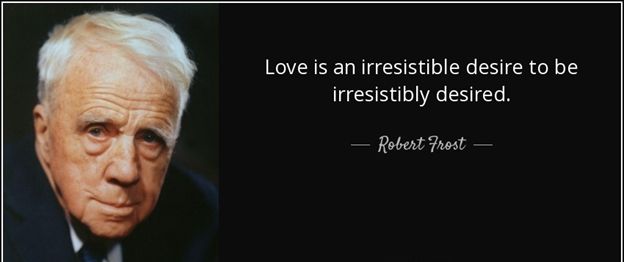


This article argues that true love is not a state to be achieved, but a self-sufficient act of giving born from an inner sense of completeness
By Divyansh Sharma
Abstract
We can’t justify what love is, but we can somehow come closer to what love is not because love as a word as a meaning might be different for all but what love can’t should be the same for all and here I tried to some connect the dots with a philosophical examination of the nature of love, proposing that its authentic essence is fundamentally non-transactional and rooted in self-completeness, rather than mutual obligation. The article concludes that true love is neither successful nor unsuccessful, as it is not a state or a position to achieve, but rather a self-sufficient act of pure giving. This selfless, unconditioned love is the hallmark of the complete individual, for whom the present moment is already a state of success and happiness.
Love that carries biases and is conditioned by give-and-take dynamics amounts to merely balancing accounts of reciprocity. If something has been given, the recipient feels an obligation to return; if something has been taken, the individual feels obliged to reciprocate. This transactional relationship, which focuses on maintaining a profit and loss (P&L) balance, severely compromises the true essence of love. Authentic love fundamentally demands nothing; it is characterised by pure giving, giving in every sense of the word.
One does not give because the other person is lacking something or is actively soliciting from them. This transactional model of asking and giving can never truly be love. Love exists when two individuals are inherently complete in themselves; they do not need to ask for anything in the relationship, as there is no sense of lack, and everyone remains whole.
Consider it this way: the self is like a terrain, and its condition, whether it is level or contains a void or ‘pit’, is entirely dependent on the individual. If there is a pit, it creates a space that demands to be filled. When others perceive this internal void, they attempt to fill it with their own thoughts and oughts, effectively trying to mould the individual in their image. This dynamic is reciprocal; if one’s partner also carries such a pit, the individual attempts to fill it.
When you see yourself from a perspective where you see yourself as completeness, if we stay in the present, if we live in this moment, what’s now is enough, but since it’s now, we can never compare ourselves because I feel that if we are in the present, we are at the top, we are successful, we are in our best form.
I never thought I would be able to write all this, to put love into a complex thing like this, but today I’m doing it. If I don’t think this way, I will keep tormenting myself, and from self-torment, your land will never remain flat. To keep it flat, you first need to perceive yourself as complete.
If you look at love fundamentally, you’ll understand when and how your identity with love happened. When you were a child, you got love for doing something good; you got love for getting good marks, for doing well in sports. If you understand this, you will realise you have been showing yourself as good, but according to the world, you’ll get love. Love got stuck in those conditions that, maybe knowingly or unknowingly, are not in your hands.
In childhood, maybe you did some good deeds according to the world, so you got love because back then, there were no limits set on you, but today, when you go looking for love in the world, everyone has some predetermined set bar. This set bar is very dangerous because this bar is the symbol of conditions that are obstructing your love. This is the last link due to which you are foolishly understanding yourself as incomplete. You’re not incomplete, but the world created by puppets is trying to make you feel that way.
The relationship is being shown in its basic form, and you are just being used. You are the horse which the rider or owner uses to earn profit. Similarly, you are the horse of this world, and the people around you, this society, this religion, this caste system, this setup, they are the riders. The horse does not have that much understanding because its eyes have a patch that only shows what’s in front, but all the game is on its flanks; all the business happening on its sides. Similarly, a patch is put in front of our eyes too, yes, but that patch isn’t visible; the patch is of fear, the patch is of greed, the patch is of created rules. This patch also eats away at our inner understanding and the art of seeing around us.
Removing this patch is very straightforward; you just need to stay in this society and fool it because if you do something different, you’ll come into the world’s notice. There’s no fear in being different; you just need to do all this without coming into the world’s notice because if you’re not mature enough and divergent, this society won’t leave any stone unturned in pulling you back into that “mire” because these people are permanent residents of that mire, and their business works like an MLM scheme the father needs to prepare the son, the mother prepares daughter, the grandparents prepare grandchildren, this whole scene of preparing our offsprings is continuous and rigorous process that has been following.
Now I feel all this has gone so deep into us during evolution that it doesn’t even look different; we do all this knowingly-unknowingly or unconsciously, like during evolution when we learned to walk on two legs, and we didn’t find it awkward, and we’ve made it like our nature that nothing is changed, we have been like this only
We have even bounded love, a pure thing with so many restrictions and conditions. Today, we question even Radha-Krishna’s love; today, we don’t leave anyone, Laila-Majnu, Heer-Ranjha, we just want their love because maybe we’ve never gotten such love, never felt it in that way.
Faqeers and thinkers have gone to extremes, postulating 7 stages of love for us:
Dilkashi (Attraction)
Uns (Attachment)
Ishq (Love)
Akidat (Trust)
Ibadat (Worship)
Junoon (Madness)
Maut (Death)
Love, which could be a sign of freedom, has been bound in the game of stages. These all seem more like life stages than love stages. I won’t go into that contradiction because if I define it as life stages, it will become another restrictive tag.
Why can’t we just see love as love, as it is? To see love just as love, we need to remove that metaphorical patch from our eyes because the world has manipulated the definition of love for its own convenience, dictating what love is or is not, and whether it is pure or impure. How can one attach a tag to something that is not even a possession? Love is fundamentally a mutual understanding between two individuals, not a physical entity.
For you, maybe Ram and Sita are ideal love, or maybe you find Rukmani and Krishna a right love or maybe Radha and Krishna too. But you can never weigh love like this, an old man can’t love a young woman, or a scheduled caste shouldn’t love a brahmin.
Love is neither successful nor unsuccessful because love has no state; love is not a position to achieve. You’ve probably heard a very common saying: “He/she completes me.” How can someone complete you? If someone is completing you, there’s some void, some lack in you; here, you lose your inherent identity. You’re doing transactions in the name of love; you’re just fulfilling those lacks in yourself that are holding you back, pulling you back, or strangling you from within.
If you’re complete in yourself, what else can you take from anyone? When one is complete in themselves, there is nothing they can take from another. Love is not about receiving; it is purely about giving. While this is difficult, legendary stories often depict a lover sacrificing everything, even forgoing insistence upon receiving that love, dedicating their entire life to a person they may never obtain.
This is not achieving love, it’s selfless love; they know the love they’re giving will never be returned, but they’re not giving thinking they’ll get it back; they’re just giving because they’re complete in themselves; there’s no pit in their land that they need to fill by asking for love from someone. This selfless love stems from completeness, so they’re just giving, and they don’t even feel they’re giving anything because love isn’t a quantifier number for them; they’re not giving by weighing it; maybe they don’t even feel it because maybe for someone else life is a very special tool to prove themselves, to fulfill their desires, but for that complete lover there’s nothing like that because whatever they are, they are today; they’re successful today; their happiness is today; for them, there’s no other position to achieve; their being now, being in this present moment is success because they never thought they’d ever reach where they are today.
Endnotes
- This entire reflective essay presents an original philosophical argument by the author regarding the nature of love, drawing on introspective analysis rather than external sources. The concepts of “conditioned love,” “self as terrain,” and the “patch over human sight” are developed as foundational metaphors for understanding love beyond societal constructs.
- The “pit” metaphor signifies an internal void or a perceived lack within an individual that external forces or other individuals attempt to fill, often leading to unauthentic relationships.
- The “set bar” refers to the societal, cultural, and personal criteria or expectations that individuals impose on love, thereby making it conditional rather than unconditional.
- The “patch” metaphor illustrates how fear, greed, and societal rules obstruct a person’s holistic understanding and perception of love, limiting their view to predetermined pathways.
- The concept of remaining within society while “deceiving it” suggests a strategic and mature navigation of societal norms without fully conforming to their conditional demands regarding love. This is not about literal deception, but about silently rejecting the conditional framework while maintaining a functional presence.
- The “mire” represents the stagnant, conditional, and restrictive societal framework of love that individuals are often born into and perpetuated by.
- The reference to dilkashi (attraction) through maut (death) outlines a traditional Sufi or poetic progression of love stages, here critiqued for potentially binding the essence of love within a linear, goal-oriented framework.
Bibliography
- Krishnamurti, Jiddu. Freedom from the Known. Edited by Mary Lutyens. London: Rider Books, 2010.
- Krishnamurti, Jiddu. “What is a Religious Mind?” In The Collected Works of J. Krishnamurti, 1967-1968. Vol. 16. 1968.
- Schimmel, Annemarie. Mystical Dimensions of Islam. Chapel Hill: University of North Carolina Press, 1975.
About the writer: My foundational academic journey began with a Bachelor of Commerce (BCom) degree. Following this, I launched my professional life as a trader. Simultaneously, a significant shift in my perspective occurred as I started exploring new places; travelling quickly became an intrinsic and essential part of my life. This blend of commerce and exploration laid the groundwork for my current intellectual passion: Master’s in Philosophy. Philosophy has become a new partner for my life, characterised by a dedicated study of Jiddu Krishnamurti’s works, Annie Besant’s translation of the Bhagavad Gita, and an intense focus on existential contemporary problems of applied philosophy. di****************@***il.com