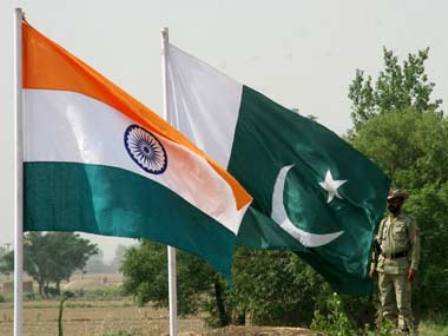
NEW DELHI: India, whose nuclear arsenal went up from 172 warheads in 2024 to an estimated 180 in 2025, maintains an overall lead over Pakistan as it has also made significant progress in developing advanced nuclear delivery systems in the recent past, a report said.
According to Stockholm International Peace Research Institute (SIPRI)’s annual assessment of the state of armaments, India’s new canisterised missiles, which allow warheads to be pre-mounted and transported more safely, could potentially carry nuclear warheads even during “peacetime”.
Key findings of the ‘SIPRI Yearbook 2025’ are that a dangerous new nuclear arms race is emerging at a time when arms control regimes are severely weakened.
“India is believed to have once again slightly expanded its nuclear arsenal in 2024 and continued to develop new types of nuclear delivery systems. India’s new canisterized missiles, which can be transported with mated warheads, may be capable of carrying nuclear warheads during peacetime, and possibly even multiple warheads on each missile, once they become operational,” the report said.
India’s next-generation delivery platforms include Agni Prime (Agni-P) missile and the Multiple Independently Targetable Re-entry Vehicle (MIRV)-capable Agni-5 system.
Agni-P is India’s new-generation, advanced variant of the Agni series of missiles.
The latest test of the Agni-P was conducted last year, according to the Ministry of Defence.
The report said that Pakistan also continued the development of new nuclear delivery platforms and accumulated more fissile material in 2024, suggesting an intent to further expand its nuclear arsenal in the times to come.
The SIPRI report also talked about brief India-Pakistan military confrontation in early 2025, and raised serious concerns about the risks of nuclear weapons usage during conventional conflicts.
The report said that while India and Pakistan continue to modernise their arsenals, China is also building up its nuclear weapons and related systems at a faster rate.
China has been adding around 100 new nuclear warheads annually since 2023, the report said, adding that by January 2025, it had completed or was nearing completion of approximately 350 new Intercontinental Ballistic Missile (ICBM) silos spread across desert areas in the north and mountainous terrain in the east of the country.
“China is increasing its nuclear force steadily,” SIPRI Director Dan Smith said, adding that the country could reach 1,000 warheads within the next seven to eight years.
The report further noted that since the end of the Cold War, Russia and the US had dismantled more warheads than they deployed each year, leading to a slow reduction in global nuclear stockpiles. But this trend may now be reversing, with dismantlement slowing down while deployment of new warheads increases.
SIPRI said that all nine nuclear-armed states–the United States, Russia, the United Kingdom, France, China, India, Pakistan, North Korea, and Israel–continued to invest heavily in modernising their nuclear forces in 2024.
This includes not only upgrading existing systems but also introducing newer technologies and weapons, it said.
Agencies
India’s nuclear arsenal bigger than that of Pakistan: SIPRI