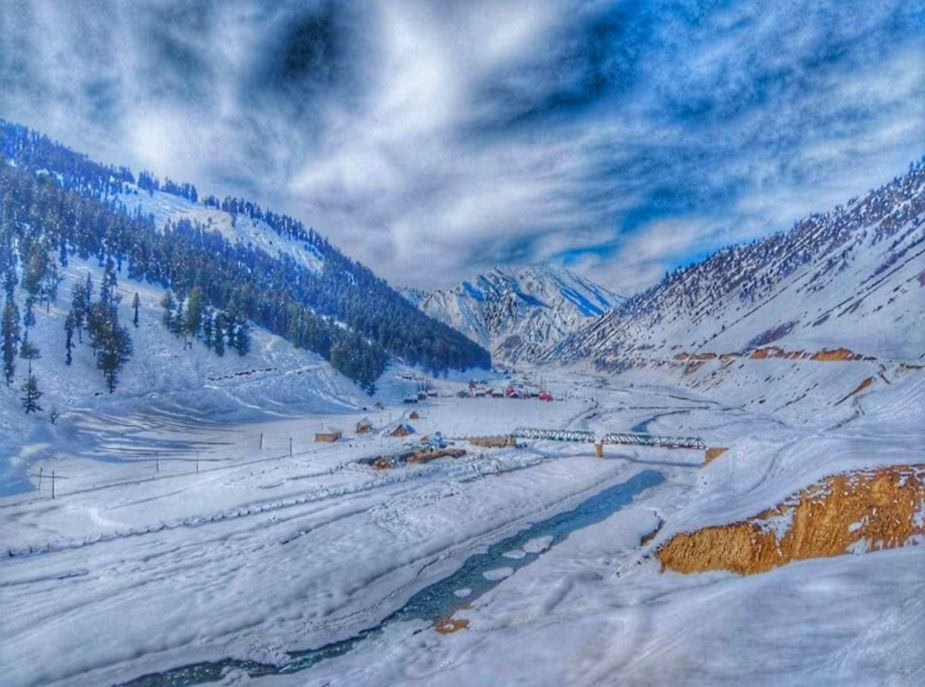


120km from Bandipora, a road less travelled leads to a Himalayan paradise untouched by mass tourism
Hidden away in the far northern reaches of Jammu and Kashmir lies a valley so pristine and secluded that it feels like a world apart — Tulail Valley. Tucked within the larger Gurez region and embraced by the lofty Himalayan mountains, Tulail is a place where time slows down, nature reigns supreme, and serenity becomes a way of life.
Tulail Valley lies around 120 kilometres from Bandipora and roughly 30 kilometres from Dawar, the main town of Gurez. The journey to this remote paradise is not easy, especially during the winter months when heavy snowfall blocks access for several weeks. However, for those who brave the rugged terrain and winding mountain roads, the reward is an awe-inspiring experience of untouched natural beauty.
The valley is framed by snow-clad peaks, lush alpine meadows, and dense forests that change colour with the seasons. The shimmering Kishanganga River snakes through the valley, adding a mystical charm to the landscape. Traditional wooden houses, picturesque bridges, and terraced fields complete the picture, making Tulail look like a scene straight out of a fairy tale.
The people of Tulail are predominantly Dards — an ethnic group speaking the Shina language. Their culture, language, and way of life have been preserved over centuries, largely due to the valley’s isolation. Hospitality is deeply rooted in the local tradition, and visitors are often welcomed with warmth and curiosity.
Life in Tulail is simple yet resilient. Locals depend on agriculture, livestock, and seasonal trade. Modern facilities are limited, but the sense of community and harmony with nature more than compensate for it.
As word about Tulail spreads among trekkers and offbeat travellers, there is a growing need to preserve its delicate environment and cultural integrity. Responsible tourism, guided by respect for nature and local traditions, is key to ensuring that Tulail remains unspoiled for generations to come.
Tulail isn’t just a destination — it’s a journey into the heart ofthe Himalayan wilderness. It offers a rare opportunity to disconnect from the noise of modern life and reconnect with nature, culture, and oneself. Whether you’re a photographer, adventurer, nature lover, or someone in search of peace, Tulail promises a soulful experience.
In a world addicted to speed, Tulail teaches the art of slowing down. Days here begin with the golden hue of sunrise reflecting off snow peaks and end with skies peppered with stars. There’s no Wi-Fi — just real connections with people, nature, and silence.
Adventure seekers can trek through meadows, camp near rivers, or explore neighbouring villages like Sheikhpora and Badugam. Birdwatching, stargazing, and storytelling replace the usual rush of travel itineraries.
As whispers of Tulail’s beauty begin to spread among travel enthusiasts, so does the responsibility of keeping it pristine. Unregulated tourism could endanger the fragile ecosystem and disrupt local life. Sustainable tourism is not just a suggestion here — it’s a necessity.
Travellers are encouraged to leave no trace, support local businesses, and respect the culture that has thrived in isolation for centuries.
Because some places don’t just ask you to visit — they ask you to feel. Tulail is one such place. It doesn’t scream for attention; it sings a quiet song for the soul.
If you’ve ever longed for a journey that touches the heart more than the camera lens, Tulail Valley awaits — not with fanfare, but with open arms and endless skies.
In the silence of Tulail, you don’t just hear the wind — you hear yourself.
Muneer Ahmad Shiekh
sh************@***il.com