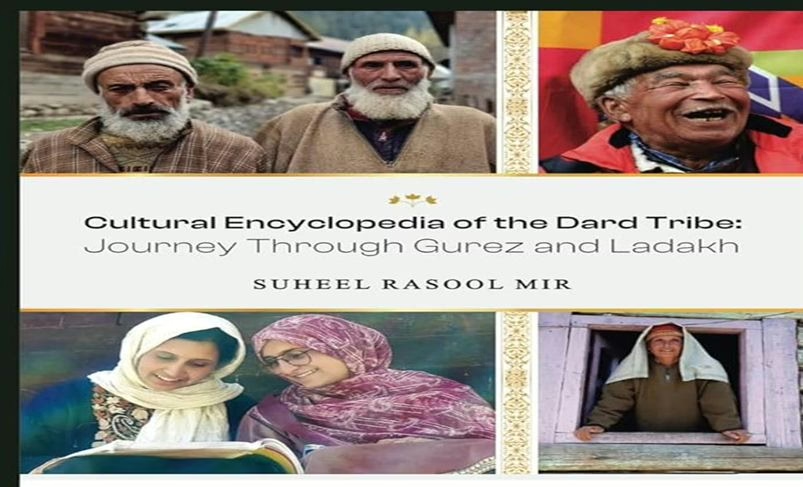


This enlightening volume delves into the rich cultural history of the Dard community in Gurez and Ladakh, and serves as an essential resource for sociologists, anthropologists and tribal studies enthusiasts
Author: Dr Suheel Rasool Mir
Language: English
Publication Year: (2024)
Pages: 450
ISBN-13: 978-9360069995
Publisher: Wings International Publication, Pune (Maharashtra) India
One of the significant additions to the field of ethnographic studies is Cultural Encyclopedia of the Dard Tribe: Journey Through Gurez and Ladakh by Dr Suheel Rasool Mir. Published by Wings Publication International at Agrasen Square, Indore – 4520001 (MP), India, this book serves as a foundational work for future sociologists and anthropologists of Kashmir. It provides a comprehensive ethnographic study of the Dard tribe, offering invaluable insights into their cultural, linguistic, and social aspects.
Sociologists and anthropologists have long contributed to the field of ethnography through pioneering studies such as The Interpretation of Cultures (1973) by Clifford Geertz, Sex and Temperament in Three Primitive Societies (1935) by Margaret Mead, and The Melanesians: Studies in Their Anthropology and Folklore (1891) by Robert Henry Codrington. In a similar vein, Dr Mir’s work lays the groundwork for understanding the rich cultural traditions of the Dard tribe through rigorous ethnographic research.
The book has received endorsements from esteemed academics and administrators, including Maitrayee Chaudhuri, President of the Indian Sociological Society, and Lieutenant Governor of Jammu & Kashmir, Shri Manoj Sinha. They have praised the book as a valuable and commendable contribution to sociological knowledge, benefiting both the nation and the tribal community.
A Detailed Overview of the Book
Dr Mir’s book is structured into fifteen well-researched chapters that comprehensively explore various aspects of the Dard tribe:
- Introducing Gurez, Drass, Kargil, Batalik & Dha-Hanu (pp. 11–36)
This chapter provides an introduction to the geographical and cultural landscapes of Gurez, Ladakh, and Gilgit-Baltistan. It highlights the similarities and differences in traditions and customs among the Dards of these regions.
- Socio-Linguistic Profile of Dards of Gurez & Ladakh (pp. 36–44)
This chapter explores the linguistic diversity of the Dard tribe, focusing on their ethnographic background and overarching sociolinguistic themes.
- Mapping Cultural & Traditional Ethos of the Dard Tribe (pp. 45–108)
The author discusses the main festivals, religious customs, traditional attire, jewelry, sports, games, and dances practiced in Dardistan.
- Social Structure (pp. 109–154)
This section delves into the tribe’s social systems, including family, marriage, kinship, caste stratification, language, religion, funeral rites, education, and migration patterns.
- Food, Culture & Identity (pp. 155–166)
The author examines the traditional dietary practices of the Dards and how modern influences are changing their food consumption habits.
- The Women of Dard-Brokpa from Gurez and Ladakh (pp. 167–188)
This chapter provides a detailed description of the resilience and roles of women in Gurez, Drass, and Kargil.
- Seasons, Seasonality & Social Life (pp. 189–206)
The author explains how seasonal changes influence the Dards’ way of life and their customs.
- Economy, Livelihood & Agriculture (pp. 207–230)
This chapter discusses the agrarian structure of the Dard tribe, including the main crops cultivated and the economic factors affecting their livelihood.
- Dards’ Contemporary Life (pp. 231–250)
The author examines recent socio-economic changes in Gurez, including the rise of tourism, improvements in mobile connectivity, and road infrastructure development.
- Tulail & Hanu Fort – Heritage Regions of the Dard Tribe (pp. 256–280)
This chapter highlights the historical heritage sites of the Dard tribe and their significance in social and cultural life.
- Dardi Village Profile (pp. 281–298)
The author describes the village structures, traditional governance, and problem-solving mechanisms within Dard society.
- Bridging Identities – Communal Harmony in Aryan Valley (pp. 299–304)
This chapter focuses on communal harmony among the Dards of Ladakh despite their unique identities. The author discusses the customs, traditions, and festivals that foster unity within the community.
- Literary Icons of the Dard Tribe (pp. 305–310)
Dr Mir highlights notable literary figures from the Dard tribe who have played an essential role in preserving and promoting their language, customs, and cultural heritage.
- Conclusion (pp. 311–346)
The book concludes with a detailed discussion on the importance of documenting cultural history, as the traditional practices of the Dards are undergoing rapid transformation. Dr Mir emphasizes the need for preserving these rich traditions for future generations.
This Cultural Encyclopedia crosses geographical boundaries by providing an extensive account of the Dard tribe’s landscape, culture, traditions, social structure, economy, and evolving way of life. It serves as a crucial resource for postgraduate students, research scholars, and academics in sociology and anthropology.
Dr Suheel Rasool Mir’s work is indeed a commendable addition to ethnographic studies, providing an insightful and well-researched reference for both scholars and general readers interested in the rich cultural heritage of the Dard tribe.
The writer is a PhD scholar of Sociology at Vikrant University Gwalior
Adil Hussain Bhat
ad********@***il.com