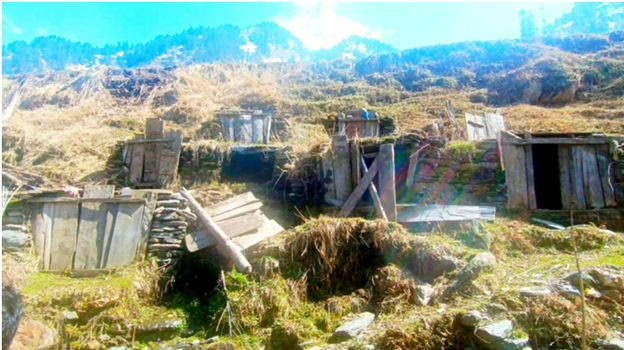


The natural refrigeration system of Dudran Boniyar is an outstanding example of traditional practices providing sustainable solutions to modern challenges
Dudran, a beautiful village 15 kilometres from the tehsil headquarters Boniyar, is a treasure trove of natural beauty, cultural richness, and traditional wisdom. The serene valley lives up to its name, “Dudwan” or the “Milk Forest,” as it boasts a bountiful supply of agricultural and dairy produce. Although the village is renowned for its picturesque meadows, red beans, maize, and beautiful wood carvings, one of its greatest aspects is its ingenuity in using natural springs as refrigerators. These “Dud Door” (milk doors) have become an integral part of daily life, showcasing how the community lives in harmony with nature and uses the earth’s resources sustainably.
Understanding Dudran’s Geography and Way of Life
Dudran is a lush valley dotted with green pastures and brick-shaped stone houses. The inhabitants, mostly farmers and animal rearers, lead simple lives deeply rooted in nature. The local economy revolves around agriculture and dairy farming, with the primary sources of income being the sale of milk and red beans. Despite scarce resources and limited infrastructure, the villagers have maintained their livelihoods through innovative practices, such as using natural springs as refrigerators.
Why Use Natural Refrigerators?
The use of natural springs as refrigerators in Dudran is not just a matter of tradition but a necessity shaped by the village’s unique circumstances. Below are the key reasons why people rely on these natural methods of cooling:
- Plentiful Natural Springs
Dudran is blessed with a network of natural springs that flow throughout the year, providing a continuous supply of cold water. Villagers use this water to keep milk and other perishable items fresh. The springs serve as natural coolants, eliminating the need for electricity or modern refrigeration systems.
- Economic Constraints
As narrated by Jallo Sheikh Mohammad Qayoom, an employee of the Education Department, Dudran has a literacy rate of just 20%. The village has limited access to modern amenities and employment opportunities. Only about 3% of the population is employed in formal sectors, while 10% work as carpenters and masons known for their woodcarving skills. For most families, dairy farming and agriculture are the primary sources of income. In this setting, natural refrigeration provides a cost-effective solution, removing the burden of expensive appliances or electricity bills.
- Preservation of Dairy Products
Milk, a staple product in Dudran, must be preserved to meet daily needs and generate income. Natural springs help keep the milk fresh, especially during the hot summer months. The cold water prevents spoilage and turns the milk into a refreshing drink cherished by both locals and visitors.
- Community Sharing
One of the most striking features of the natural refrigeration system in Dudran is that it is communal. Springs and their cooling powers are not privately owned but belong to the entire village, ensuring accessibility for everyone. This fosters unity and cooperation among villagers, strengthening the community ties characteristic of life in Dudran.
- Sustainability and Environmental Friendliness
The use of natural refrigerators aligns with Dudran’s environmentally conscious way of life. By depending on nature, villagers reduce their carbon footprint and support sustainable living. This practice demonstrates how ancient knowledge can be applied to modern environmental goals.
The Process of Natural Refrigeration
The process is simple yet effective. Milk containers are placed in the cold water streams or near the springs. The flowing water keeps them cool, while stone walls and surrounding vegetation act as natural insulation to enhance the cooling effect. This method is especially effective during summer when temperatures are highest, and refrigeration is most needed.
Impact on Daily Life and Economy
The natural refrigeration system has a profound impact on the villagers’ daily lives and economic activities:
- Economic Savings
By avoiding the costs associated with modern refrigeration, villagers can allocate their limited resources to other essential needs, such as education and healthcare.
- Better Quality of Milk
Fresh and cool milk stored in natural refrigerators is highly prized, earning the village a reputation for producing high-quality dairy products.
- Community Cohesion
The shared use of natural springs fosters a sense of community and collective responsibility among the villagers.
Challenges and Future Prospects
While the natural refrigeration system is efficient, it is not without challenges:
– Limited Scalability: The springs may not support a growing population or increased dairy production.
– Climate Change: Changes in precipitation patterns due to climate change could reduce water availability, making springs unreliable.
– Limited Awareness: This practice remains largely confined to Dudran and is little known to the outside world.
To address these challenges, villagers could integrate traditional practices with modern innovations, such as solar-powered refrigeration units, to complement natural springs and increase capacity and reliability.
Beyond Natural Refrigeration
While Dudranians take pride in their innovative use of natural refrigeration, they are also highly talented in sports, particularly Kabaddi. Despite lacking a proper playground, Dudran’s children have excelled in the sport, winning numerous tehsil-level tournaments and earning appreciation from prominent sports personalities. This natural talent for Kabaddi reflects the resilience, determination, and resourcefulness of Dudran’s inhabitants—the same qualities seen in their use of natural refrigeration.
Conclusion
The natural refrigeration system of Dudran Boniyar is an outstanding example of traditional practices providing sustainable solutions to modern challenges. By harnessing the power of natural springs, villagers have created an eco-friendly and cost-effective method for preserving dairy products, safeguarding their livelihoods, and celebrating their cultural heritage. Preserving and promoting this practice means recognizing grassroots ingenuity and inspiring others to pursue sustainable living.
The writer is a columnist and teacher
By Mukhtar Ahmad Qureshi
mu*********@***il.com