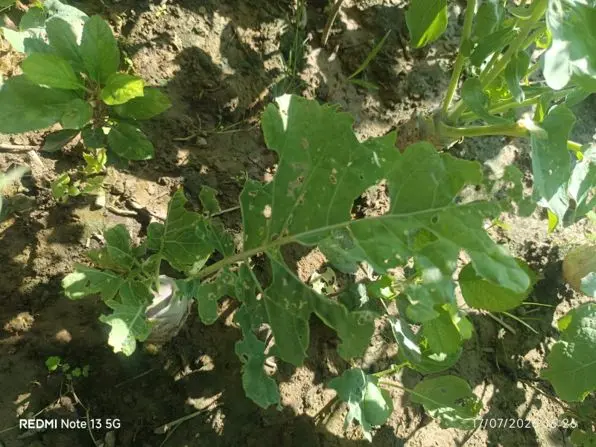


Experts advise neem oil spray to manage pest infestation
Hajin: A disease affecting haakh, Kashmir’s staple leafy vegetable, has emerged as a cause of concern across the Valley this season, with the crop witnessing widespread damage in several areas.
Residents say the vegetable, which is usually grown in kitchen gardens and remains available for most of the year, has become less common this season after the disease affected its cultivation.
For many households, haakh has long been an essential part of the daily diet and is traditionally cultivated in home gardens. This year, however, many families say they were unable to harvest this vegetable from their gardens due to the disease.
“We have our own kitchen garden, but we could not grow haakh this year,” said Shahid Ahmad, a resident. “When my mother wanted haakh, I went to the market, but the vendor told me the crop had been affected by a disease. Whatever little produce was available was selling at a higher price.”
Residents from different parts of the Valley said the disease, locally referred to as saeyi, has affected haakh in many villages.
They said the problem has been witnessed for the second consecutive year, prompting concern among people who depend on the vegetable as a regular part of their meals.
Many residents expressed concern over the absence of awareness programmes on the disease. They alleged that no awareness camps or field visits were conducted by the Agriculture Department in areas such as Bandipora, Hajin and Sumbal to inform people about the cause of the disease or the measures required to prevent its spread.
They urged the Agriculture Department and experts from SKUAST-K to study the disease, identify its cause and issue timely advisories so that the vegetable, considered an integral part of Kashmir’s food culture, can be protected in the coming seasons.
Chief Agriculture Officer Bandipora told Kashmir Reader that the disease has affected the crop there. “It is a confirmed attack by the caterpillars of the cabbage butterfly. When such a large-scale infestation occurs, farmers should spray neem oil on the crop and repeat the application after an interval of two weeks to effectively manage the pest,” he said.