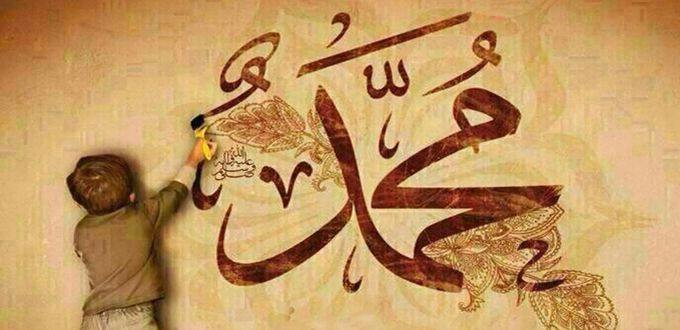


The Seerah of Prophet Muhammad (Peace Be Upon Him) is the Qur’an lived – a timeless blueprint for the renewal of hearts, minds, societies, and civilisations. Allah’s greatest favour was to send a Messenger who ‘recites His revelations, purifies them, and teaches them the Book and Wisdom’ (Qur’an 3:164). The Prophet (Peace Be Upon Him) declared, ‘I was sent only to perfect noble character,’ making moral excellence the foundation of true civilisation. The Seerah is not merely history remembered, but Divine guidance embodied.
Shabeer Ahmad Lone
Dar in chaman gul-e-be-khar kas na chid are,
Chiragh-e Mustafavibasharar-e Bulahabiast.
— Hafiz
The Seerah of Prophet Muhammad (Peace Be Upon Him) is the Qur’an lived—a timeless blueprint for the renewal of hearts, minds, societies, and civilisations. Allah’s greatest favour was to send a Messenger who “recites His revelations, purifies them, and teaches them the Book and Wisdom” (Qur’an 3:164). The Prophet (Peace Be Upon Him) declared, “I was sent only to perfect noble character,” making moral excellence the foundation of true civilisation. The Qur’an further affirms, “If you love Allah, then follow me; Allah will love you” (3:31), establishing the Seerah as the path to Divine love. Through him, Allah “removes their burdens and the shackles upon them” (7:157), liberating humanity from ignorance, injustice, and spiritual bondage. And “those who strive in Our cause—We shall surely guide them to Our ways” (29:69), reminding us that transformation follows sincere striving. Thus, the Seerah is not merely history remembered, but Divine guidance embodied—a perennial model for human flourishing, moral excellence, and civilisational renewal.
A Universal Moral Vision
Drawing on the insights of impartial non-Muslim thinkers such as Sarojini Naidu, Mahatma Gandhi, and Basant Kumar Bose, Prof. K. S. Krishna Rao refutes the biases of prejudiced Orientalists and responds to their criticisms with reasoned analysis. He portrays the Prophet Muhammad (peace be upon him) as a universal moral leader whose message rests on justice, ethical strength, democracy, and human equality rather than the sword. In his integrated personality, the Prophet united the roles of statesman, spiritual guide, commander, teacher, philosopher, orator, defender of the oppressed, and guardian of human dignity, demonstrating the harmony of righteous means and noble ends.¹
Among the enduring inheritances of humanity, few lives have generated as profound, sustained, and transformative an influence as that of Prophet Muhammad (Peace Be Upon Him). Across centuries, cultures, languages, and civilisations, his life has been studied not only by theologians and believers but also by historians, sociologists, philosophers, political theorists, psychologists, and scholars of leadership. Yet despite the vast literature devoted to the subject, the Seerah often remains confined within fragmented frames: a sacred biography for the devout, a historical narrative for the historian, a source of ethical instruction for the moralist, or an object of academic inquiry for the scholar. Such perspectives, though valuable, risk obscuring its deeper significance. The Seerah is best understood not merely as the story of an extraordinary individual, but as a comprehensive vision of human flourishing and civilisational renewal—an integrated framework for understanding what human beings can become and what societies can aspire to achieve.
The Seerah and the Human Condition
Every civilisation, whether ancient or modern, ultimately grapples with a common set of questions. What constitutes a good life? What enables societies to endure? How can power be reconciled with justice, prosperity with compassion, freedom with responsibility, and individuality with social cohesion? The answers proposed by civilisations have varied widely, yet the persistence of these questions suggests that they are woven into the very fabric of the human condition. The Seerah enters this conversation not as an abstract philosophical treatise but as a lived and embodied response. It presents a vision in which the flourishing of individuals and the flourishing of societies are inseparable, where inner transformation and outer reform are understood as mutually dependent dimensions of a single process.
One of the most remarkable features of the Seerah is its insistence that genuine change begins within the human person. Long before contemporary psychology emphasised the importance of mindset, character, resilience, emotional intelligence, and purpose, the Prophetic model placed extraordinary emphasis on the cultivation of the inner life. The transformation initiated by the Prophet (Peace Be Upon Him) was not fundamentally a political project seeking power, nor an economic project seeking wealth, nor even a social project seeking influence. It was first and foremost a project of human development. The earliest revelations did not announce a political manifesto or a constitutional framework; they called human beings to reflection, self-awareness, accountability, learning, and moral awakening. They sought to reform perception before reforming institutions, conscience before law, and character before structures.
Contemporary Resonance
This insight resonates deeply with contemporary research across diverse disciplines. Studies in developmental psychology increasingly affirm that long-term success and well-being depend not merely on intelligence or resources but on character traits such as self-regulation, perseverance, empathy, and integrity. Leadership scholars emphasise trust as the cornerstone of effective institutions. Social scientists identify social cohesion and shared moral norms as prerequisites for sustainable development. Economists concerned with human development increasingly recognise that prosperity divorced from ethical purpose often produces instability rather than flourishing. What modern scholarship has discovered through centuries of empirical investigation finds a striking parallel in the Prophetic emphasis on the moral and spiritual formation of the human being.
Yet the Seerah does not stop at individual transformation. It rejects the false dichotomy between personal spirituality and social engagement. In many intellectual traditions, the inward and outward dimensions of life are treated as competing priorities. The Seerah offers a more integrated vision. It recognises that spirituality devoid of social responsibility can become self-absorbed, while activism devoid of moral grounding can become destructive. The life of the Prophet (peace be upon him) demonstrates how contemplation and action, devotion and service, worship and justice, can reinforce rather than undermine one another. The same individual who spent nights in prayer spent days addressing poverty, mediating disputes, educating communities, nurturing families, and building institutions.
Civilisational Renewal
This synthesis becomes particularly significant when viewed through the lens of civilisational development. Historians continue to debate the causes of civilisational rise and decline. Some emphasise economic productivity, others military strength, technological innovation, geographical advantage, or political organisation. While each of these factors undoubtedly matters, the Seerah points towards a deeper foundation: the moral and intellectual quality of the human beings who inhabit a civilisation. Institutions, after all, do not operate themselves; laws do not enforce themselves; technologies do not direct themselves towards the common good. Behind every institution, system, and achievement stands the human person. A civilisation cannot consistently rise above the ethical character of its people.
The transformative power of the Seerah becomes particularly evident when one considers the society in which it emerged. Seventh-century Arabia was characterised by strong tribal loyalties, recurring cycles of conflict, limited educational opportunities, social inequality, and the marginalisation of vulnerable groups. Within a remarkably short period, many of these patterns were fundamentally altered. Tribal identities were not abolished but subordinated to broader moral commitments. Literacy and learning became objects of esteem. Economic relationships were increasingly shaped by ethical considerations. Women, orphans, the poor, and the socially marginalised were accorded unprecedented recognition and protection. Consultation emerged as a principle of collective decision-making. Knowledge became a pathway to honour. Service became a mark of leadership.
This transformation was neither accidental nor purely charismatic. It reflected a coherent vision of the human person and society. The Seerah understood that social reform requires more than policy; it requires moral imagination. Laws may regulate behaviour, but they cannot alone create compassion. Institutions may facilitate cooperation, but they cannot themselves generate trust. Economic systems may distribute resources, but they cannot determine what people value. The Seerah therefore sought not merely to change structures but to cultivate virtues capable of sustaining those structures over time.
Modern Challenges and the Seerah’s Corrective
Modern societies face challenges that differ in form but not necessarily in essence. Technological innovation has connected humanity in unprecedented ways, yet loneliness and social fragmentation continue to rise. Economic growth has lifted millions out of poverty, yet inequality remains a persistent concern. Access to information has expanded dramatically, yet confusion, misinformation, and polarisation have become defining features of public life. In many places, institutional trust is declining even as administrative complexity increases. These realities suggest that humanity’s greatest challenges are not exclusively technical; they are profoundly moral, intellectual, and spiritual.
Here the Seerah offers an important corrective. It reminds us that flourishing cannot be reduced to material abundance, nor progress to technological advancement. Human beings require meaning as much as they require resources, belonging as much as efficiency, wisdom as much as information. A society that excels economically while neglecting moral formation may achieve prosperity but struggle to sustain cohesion. A culture rich in information but poor in wisdom may become increasingly sophisticated yet increasingly disoriented. The Seerah proposes that authentic progress must encompass the whole person and the whole society.
Inclusive Moral Vision and Transformational Leadership
Its enduring relevance also lies in its profoundly inclusive moral vision. The measure of a civilisation, according to the Prophetic example, is not how it treats its most powerful members but how it treats its most vulnerable. The repeated concern for the orphan, the widow, the poor, the traveller, the labourer, and the socially marginalised reflects a moral framework centred on human dignity. Such concern is not presented as optional charity but as an essential dimension of justice itself. In an era increasingly attentive to questions of equity, inclusion, and human rights, this aspect of the Seerah remains especially significant.
Equally noteworthy is the Prophetic understanding of leadership. Contemporary leadership literature frequently distinguishes between transactional leadership, which focuses on exchange and incentives, and transformational leadership, which seeks to inspire deeper change. The Seerah exemplifies a form of leadership that transcends both categories. It is rooted not merely in authority or influence but in service, credibility, moral consistency, and the ability to awaken the highest possibilities within others. The Prophet (peace be upon him) did not simply command loyalty; he cultivated trust. He did not merely direct followers; he developed leaders. His legacy endured not because it depended upon his physical presence but because it became embodied in transformed individuals capable of carrying its principles forward.
Global Scholarly Engagement
The universality of the Seerah derives from this focus on enduring human realities. While its historical context was particular, its central concerns remain universal: the search for meaning, the cultivation of character, the pursuit of justice, the responsible use of power, the dignity of persons, the importance of community, and the possibility of renewal. These concerns transcend geography, culture, religion, and era. They speak to fundamental questions that every generation must answer anew.
The universality of the Seerah is perhaps most vividly reflected in the global scholarly tradition it has inspired. Across fourteen centuries, civilisations, languages, and intellectual traditions have continually returned to the life of Prophet Muhammad (Peace Be Upon Him) as a source of historical insight, moral reflection, spiritual inspiration, and civilisational wisdom. The foundational Arabic works of Ibn Ishaq, Ibn Hisham, Al-Tabari, Al-Qadi Iyad, and Ibn Kathir preserved the earliest historical memory of the Prophetic mission and established the enduring foundations of Seerah literature. In the Persian tradition, Rumi, Saadi, Jami, and Muhammad Iqbal illuminated its spiritual, philosophical, and literary dimensions, presenting the Prophetic model as a source of moral imagination and human self-transcendence. In Urdu, Shibli Nomani, Sulaiman Nadvi, Abul Hasan Ali Nadwi, Abul A’laMaududi, and Muhammad Hamidullah interpreted the Seerah as a comprehensive framework for faith, leadership, education, social reform, and civilisational renewal.
Modern scholarship has extended this conversation far beyond the traditional centres of Islamic learning. In English, Martin Lings, W. Montgomery Watt, Karen Armstrong, Tariq Ramadan, Jonathan A. C. Brown, and Seyyed Hossein Nasr have explored the Seerah through historical, ethical, theological, literary, and intercultural lenses. In German scholarship, Theodor Nöldeke, Annemarie Schimmel, and Josef van Ess contributed important philological, historical, and intellectual perspectives, while in French scholarship, Maxime Rodinson, Louis Massignon, and Jacques Berque enriched understanding through historical, sociological, and civilisational inquiry. Despite differences of language, methodology, geography, and worldview, these scholars collectively testify to a remarkable reality: the Seerah is far more than the biography of a religious founder. It is one of humanity’s richest repositories of insight into moral leadership, human development, social transformation, spiritual excellence, and the foundations of flourishing civilisations. The continuing engagement of scholars across cultures and centuries is itself evidence of the Seerah’s enduring capacity to illuminate the deepest questions of human existence and the highest possibilities of human civilisation.
Islamic Intellectual Response to Critique
Drawing upon the enduring legacy of classical and contemporary Muslim scholarship, the Islamic intellectual tradition engages Orientalist and related critiques through rigorous historical, textual, and philosophical inquiry. The enduring legacy of Al-Shafi’i, Al-Bukhari, Muslim ibn al-Hajjaj, Ibn Hajar al-Asqalani, Al-Dhahabi, Shah Waliullah Dehlawi, and modern scholars including Muhammad Mustafa al-Azami, Akram Diya al-Umari, Muhammad Iqbal, Seyyed Hossein Nasr, Jonathan A. C. Brown, and Hamza Yusuf reflects a tradition that responds to critiques through rigorous historical, textual, and philosophical inquiry. Its enduring claim is that the Qur’an, the Seerah, and the Hadith deserve fair, context-sensitive, and methodologically consistent study, and that their strongest vindication lies in the moral grandeur of the Prophet (peace be upon him), the intellectual rigour of the Islamic tradition, and the enduring civilisation his message inspired.
A Living Resource for Humanity’s Future
Ultimately, the Seerah invites humanity to reconsider the foundations upon which flourishing societies are built. It challenges the assumption that external progress alone can secure human fulfilment. It reminds us that civilisations are sustained not merely by wealth, technology, or institutions but by the moral, intellectual, and spiritual capacities of the people who create and inhabit them. Its enduring message is both simple and profound: when human beings are transformed, societies can be renewed; when societies are renewed, civilisations can flourish. The path to a better future therefore begins not with the conquest of others, but with the cultivation of wisdom, character, justice, compassion, and purpose within ourselves and our communities.
In this sense, the Seerah is not merely a record of a remarkable past. It is a living resource for humanity’s future—a timeless guide to the perennial task of becoming more fully human and building a more just, compassionate, and flourishing world. In essence, the Seerah of Prophet Muhammad (Peace Be Upon Him) is the living, universal, and enduring blueprint for human purification, social reform, and civilisational renewal. It is not merely a treasured legacy of the past, but a timeless guide to the future—illuminating the path by which individuals are ennobled, societies are transformed, and civilisations are built upon faith, wisdom, justice, compassion, and moral excellence.
Footnote
- Prof K. S. Krishna Rao, Muhammad: The Prophet of Islam (New Delhi: Madhur Sandesh Sangam, 2009), 32.
sh*****************@***il.com