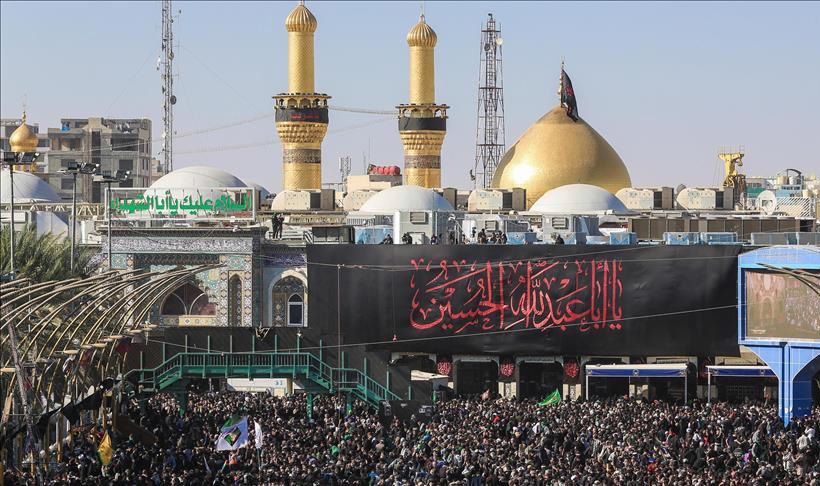


Truth possesses an intrinsic value that cannot be negotiated, even under the threat of death
Irfan Shabir
Some events in history are confined to their time; others transcend time and become permanent moral reference points for humanity. The tragedy of Karbala belongs to the latter category. More than a historical episode, Karbala represents an enduring ethical paradigm in which principles were placed above power, conscience above coercion, and truth above expediency.
At the centre of this moral universe stands Imam Hussain ibn Ali (AS), the grandson of Prophet Muhammad (PBUH), the son of Imam Ali (AS) and Hazrat Fatima al-Zahra (SA). Raised in the household of Prophethood, he embodied knowledge, wisdom, discipline, integrity, and spiritual excellence. His life reflected the Quranic ideals of justice, compassion, and moral responsibility. The Prophet’s celebrated saying, “Hussain is from me, and I am from Hussain”, signifies not merely a familial relationship but a profound continuity between the Prophetic mission and Hussain’s moral struggle.
The significance of Karbala lies not in military calculations but in ethical conviction. Imam Hussain (AS) understood that legitimacy cannot be derived solely from political authority; it must be grounded in justice and moral accountability. His refusal to endorse tyranny was therefore not an act of rebellion for power but an affirmation of a higher principle: that truth possesses an intrinsic value that cannot be negotiated, even under the threat of death.
In this sense, Karbala may be understood as one of history’s most powerful assertions of moral agency. Imam Hussain (AS) demonstrated that human dignity is preserved not by submission to injustice but by resistance to it. His sacrifice transformed apparent defeat into a lasting moral victory, proving that the ethical force of an idea can outlive the might of any empire.
For this reason, Imam Hussain (AS) continues to inspire not only Muslims but all those who seek justice and human dignity. The memory of Karbala serves as a critique of oppression in every age. It reminds societies that power without ethics leads to corruption, while principled resistance, even when materially weak, possesses transformative power.
The annual remembrance of Imam Hussain (AS) is therefore more than an act of mourning. It is an exercise in moral memory. Communities gather not simply to recall a historical tragedy but to renew their commitment to truth, justice, compassion, and responsibility. Karbala remains relevant because the struggle between ethical values and unrestrained power remains a recurring feature of human history.
In Kashmir, the remembrance of Imam Hussain (AS) acquires an additional social significance. The participation of Muslims from different schools of thought in organising sabeels and serving people during Muharram reflects a culture of shared reverence and collective humanity. These acts symbolise values that transcend sectarian boundaries: generosity, service, empathy and respect for the sacred memory of sacrifice.
Such expressions resonate deeply with the idea of KASHMIRIYAT, a civilizational ethos rooted in coexistence, mutual respect, and social harmony. In a world increasingly fractured by polarisation, these moments of unity demonstrate that collective memory can become a source of social cohesion rather than division.
Ultimately, the enduring relevance of Imam Hussain (AS) lies in his ability to speak across centuries. Karbala teaches that numbers, power, or immediate success do not determine moral truth. Rather, it is sustained by conviction, sacrifice, and fidelity to principle. As long as humanity grapples with questions of justice, oppression, freedom, and dignity, the voice of Hussain (AS) will continue to echo through history not merely as a memory of the past, but as a guide for the future.
As Allama Iqbal RA eloquently expressed:
Allah Allah Ba’e Bismillah Pidar
Ma’nea Zibhe Azeem Amad Pisar
Indeed, Imam Hussain (AS) became the embodiment of the Great Sacrifice, and his life remains an eternal beacon for all who seek dignity, righteousness and steadfastness in the face of oppression.
ir***********@***il.com