

Uzair Qadri
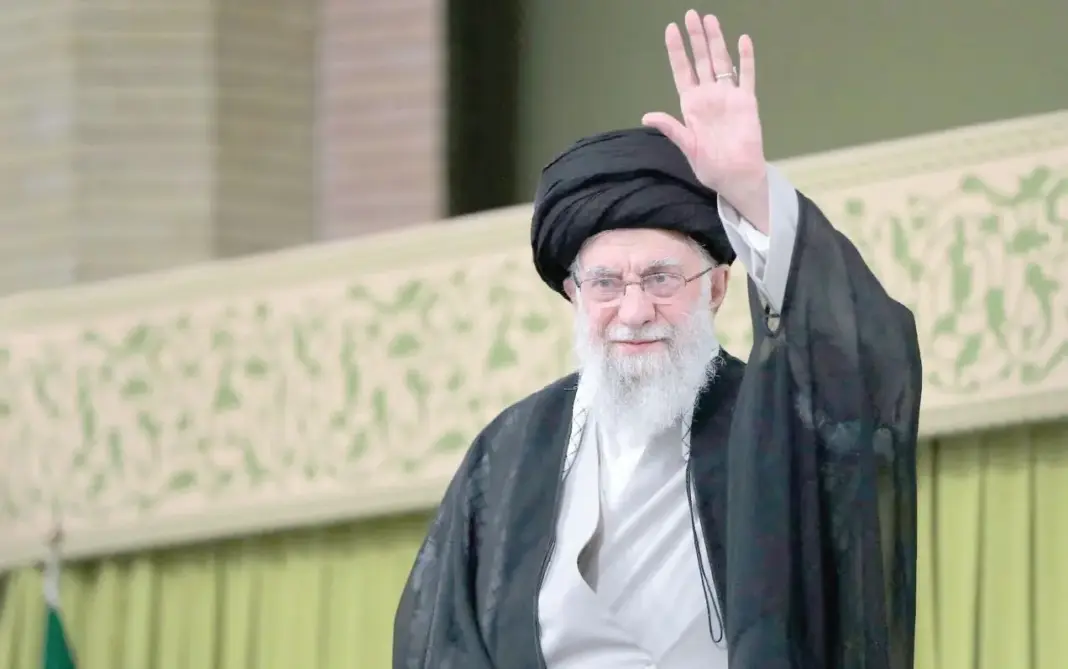
The assassination of Ayatollah Ali Khamenei was not an event that arrived unannounced. By all accounts, the Supreme Leader of the Islamic Republic of Iran had long prepared himself — spiritually, ideologically, and temperamentally — for precisely such an end. For Israel and the United States, the elimination of adversaries through targeted killings is neither an aberration nor an anomaly. It is, as the grim phrase goes, par for the course. Statecraft through assassination is a well-worn instrument in their arsenals, from Baghdad to Beirut, from Damascus to Tehran.
And yet, what those who ordered and executed this act may have fundamentally miscalculated is the difference between killing a man and killing what a man represents. He was not some Pol Pot-esque dictator who thrived in repression or violence. He was an ideology in human form — the living embodiment of a revolution that, four and a half decades after its eruption, still commands allegiance across a wide and diverse Muslim world. Among the approximately 230 million Shia Muslims globally, his authority remains unquestioned in vast swathes. Even among the roughly one billion Sunni Muslims, enormous sections hold the ideals of the Iranian Revolution — its anti-imperialism, its assertion of Islamic sovereignty, its defiance of Western hegemony and its resilience — as deeply resonant. Discounting the detractors, the dissenters, and those alienated by the kernel of his ideological DNA, and Khamenei still commanded the fierce, unshakeable loyalty of somewhere between 100 and 120 million diehard followers, men and women prepared to sacrifice everything for the cause he embodied.
His critics in hyperventilating Western newsrooms and their satellite imitators reduced him to a caricature: a moral policeman, an enforcer of hijab, an ultimate personification of conservatism and a tyrant who silenced dissent. There is no point denying that conservatism and its occasional excesses were part of the texture of how Iran unfolded after 1979. But that is to mistake the bark on a tree for the forest itself. The Iranian Revolution was not, at its heart, about dress codes. It was a civilisational upheaval — a sustained, molten rejection of everything that Reza Shah Pahlavi and his father represented: the prostration before Washington and London, the humiliation of Persian dignity, the reduction of a proud and ancient civilisation to a client state propped up by CIA coups and oil company boardrooms.
That revolution — swift, largely bloodless in its opening chapters, single-minded in purpose, astonishing in its consensuality — continues to astonish serious scholars of political history. It was not installed by foreign tanks. It was not engineered by a colonial power seeking a friendly regime. It rose from the streets, the mosques, the bazaars, and the universities of a people who had decided, collectively and irrevocably, that enough was enough. This remains its moral authority, and no assassination can extinguish it.
Iran is not a monolith, and those who would reduce it to a map of nuclear sites and chanting crowds understand very little of it. It is a civilisation of extraordinary layering — a land where every city carries its own soul. Its cities are a world unto themselves.
Shiraz breathes poetry. It is the city of Hafez and Saadi, where the ghazal was perfected over centuries, where Sufi mysticism and Persian lyricism fused into something the world has never quite replicated. Even today, Shirazi culture is suffused with a gentle, wine-scented romanticism — ironic, inward, philosophical. To strike at Iran without understanding Shiraz is to strike at Shakespeare’s England without knowing that it produced King Lear.
Tehran, by contrast, is urgency-rendered-urban. Iran’s capital has transformed from a modest Qajar-era city into a sprawling megalopolis of over fifteen million people. Its northern suburbs climb into the Elburz mountains; its southern quarters pulse with industry and working-class energy. It is paradoxical in a way, home to the most cosmopolitan youth culture in the region, alongside one of the oldest bureaucracies. Its freeways and flyovers, its underground metro, its glass towers in Elahiyeh — all are testament to a society that has relentlessly modernised even under the pressure of the illogically severe sanctions.
Tabriz carries a different weight. West Azerbaijan province’s great city, ancient capital of the Safavid empire before Isfahan claimed that honour, Tabriz has always been at the crossroads of trade, of rebellion, and of ideas. It was from Tabriz that the Constitutional Revolution of 1906 drew much of its fire. Its bazaar, a UNESCO World Heritage Site, is among the world’s oldest and largest covered markets. The Tabrizis are proud, industrious, and politically awake. They are not passive recipients of any ideology; they are its negotiators.
Mashhad is piety made permanent in stone on the eastern border of the country. Home to the shrine of Imam Ali ibn Musa al-Ridha, the eighth Imam of Twelver Shia Islam, Mashhad receives more pilgrims annually than Mecca, according to some estimates. The city’s spiritual gravity is immense. For Shia Muslims from Iran, Iraq, Pakistan, India, Lebanon and beyond, Mashhad is not a destination — it is a homecoming. It is impossible to comprehend the texture of Iranian religious sentiment without standing in the courtyard of the Imam Ridha shrine at dawn.
Isfahan remains Iran’s architectural crown jewel. The Naqsh-e Jahan Square, one of the largest public squares on Earth, is flanked by the Shah Mosque, the Sheikh Lotfollah Mosque, the Ali Qapu palace, and the Grand Bazaar. Persian Islamic architecture reaches its highest point of expression here: the turquoise domes, the intricate tilework, the geometry of the muqarnas, etc., stand indelibly relevant. Isfahan was once said, with justice, to be half the world. Even under sanctions and isolation, its artisans still produce the finest carpets, miniatures, and metalwork in the Islamic world.
Urmia, in the far northwest by the great salt lake that shares its name, has always held itself at a slight remove from the centre. It is a city of minorities — Azerbaijanis, Armenians, Assyrians, Kurds — and its character reflects this layering. The lake itself, now tragically shrinking due to drought and water mismanagement, has been a source of ecological grief that crosses all political lines. Urmia’s aloofness is not indifference; it is the quiet self-possession of a border people who have survived every empire that ever passed through.
Zabol, in the southeastern province of Sistan-Baluchestan, is Iran’s frontier edge — windswept, sun-baked, and strategically important. The region is rich in natural gas, and its proximity to Afghanistan and Pakistan makes it a corridor of both commerce and smuggling, of development aspirations and persistent underdevelopment. The 120-day winds that batter the Sistan basin are legendary; so is the resilience of its people. Iran’s future industrial map will need to reckon seriously with the East. Zabol was named the most polluted city in the world by the World Health Organisation in 2016.
Natanz and Fordow are, of course, the names that trigger the most anxiety in Western capitals and Israeli political circles. Natanz, with its vast uranium enrichment facilities embedded deep in the central Iranian plateau, and Fordow, burrowed into a mountain near Qom, represent decades of indigenous Iranian scientific development. The technicians and engineers who built and operate these facilities are not religious zealots. They are graduates of some of the finest universities in the Islamic world, trained in nuclear physics, materials science, and precision engineering. Iran’s nuclear programme is, whatever one thinks of it, a monument to technological self-reliance. Killing a Supreme Leader does not erase the knowledge deposited in thousands of Iranian minds.
Then there are the ports. Chabahar, on the Gulf of Oman, is Iran’s window onto the Indian Ocean — the one major Iranian port that the United States has periodically exempted from its sanctions regime precisely because India’s strategic investment there serves American interests in bypassing Pakistan. India has poured significant capital into Chabahar, some 14,000 crore of Indian investment; it is Iran’s link to Central Asia, to Afghanistan’s landlocked markets, and to a vision of connectivity that predates the current geopolitical turbulence. Bandar Abbas, meanwhile, is the throat of the Strait of Hormuz. Roughly a fifth of the world’s oil transits through waters that Iran can, at will, contest. The geography of Iranian power is not an abstraction.
Israel, in its post-assassination calculations, appears to be wagering on the fragmentation of Iran — betting that Kurds, Druzes, Zoroastrians, and other micro-minorities, long subject to central pressure, will now rise and pull the republic apart. This betrays a profound misreading of Iranian political sociology. The minorities of Iran are not awaiting a liberator from Tel Aviv. They have their own grievances, yes, but they are also Iranians — with deep roots in Persian civilisation, no desire for external manipulation, and considerable wariness of the same Western actors who dismembered Iraq, Libya and Syria. Israel’s regional project has been built on the exploitation of weakness. Iran’s structural complexity is not a weakness.
In Shiite imagery, martyrdom is not a footnote. It is actually the most cardinal principle of Shia Islam. The arc from Karbala — where Imam Hussein was slain in 680 CE — runs unbroken through fourteen centuries of Shia consciousness, animating every Ashura procession, every lamentation, every political act of resistance. Martyrdom does not diminish a figure in Shiite collective understanding; it apotheosises him. Khamenei, who by all available evidence understood the precariousness of his existence and made no move to flee or capitulate, has now entered that tradition. He becomes Rehbar-e Shaheed — the martyred guide. His image will hang in homes from South Beirut to Lucknow to Karachi to Lagos for generations. Israel, in its tactical cleverness, may have accomplished strategically what no amount of Iranian propaganda could: the canonisation of Ali Khamenei.
As for the fantasy of turning Iran into another Gaza, Iraq, Afghanistan or a pliant Gulf emirate, it will remain a sordid dream for any external power, whether it be the United States or Israel. Iran is the second most populous country in the Middle East and North Africa (MENA), after Egypt. Its population of roughly 90 million is young, educated, and technologically capable. Its military doctrine is built not on the symmetrical confrontation of two armies meeting on a battlefield, but on the asymmetric principle of projecting pain at disproportionate cost to the aggressor. Hezbollah in Lebanon, the Houthis in Yemen, the Popular Mobilisation Forces in Iraq, etc., are just an expression of the larger shape of Iranian operations. They are ideological affiliates who share a strategic worldview and operate with considerable autonomy.
The concept of leadership in Iran has, over decades, been layered and delocalised. Khamenei, in his self-effacing nature, himself spent years constructing a system that does not depend on a single individual — a distributed architecture of clerical authority, Revolutionary Guard command structures, and popular legitimacy. There is no leadership vacuum waiting to be exploited. There is instead a system with deep reserves — spiritual, military, scientific, and demographic.
Iran remembers. It has a very, very long memory. It is a civilisational fact. A people who have not forgotten Karbala in fourteen centuries will not forget this in fourteen years. The account is open, and the ledger will be settled in time.
mo*************@***il.com