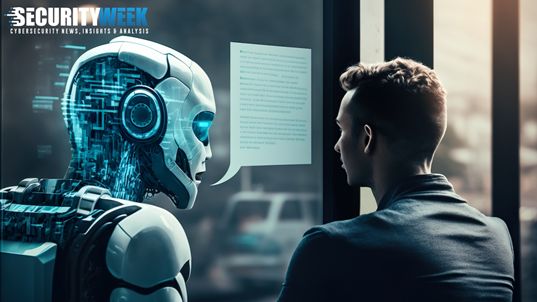


The question is no longer whether AI will shape the future — it already is
Shreya
“Do you really call yourself human? And if so, why?”
That is the question I find myself asking more often these days.
Recently, while scrolling through Instagram, I came across a post that read: “I need AI to do my laundry and dishes so I can focus on creative writing and art.” I paused. Because in my world, the opposite seems true. I am doing my laundry and dishes, and AI is helping with my creative writing.
That reversal unsettled me.
For centuries, technological progress promised liberation from mechanical labour so that humans could devote themselves to imagination, philosophy, innovation, and art. But today, the very spaces that once defined human uniqueness, writing, composing, designing, and thinking, are increasingly assisted, and sometimes generated, by machines.
And I feel that shift within myself.
The Quiet Erosion of Creative Confidence
There was a time when I wrestled deeply with ideas. Now, when confronted with a difficult question, my instinct is to consult a machine. When I write, I sometimes wonder: Is this entirely mine? Or is it co-authored by algorithms?
This realisation is uncomfortable.
The relationship between creativity and AI dependence feels inversely proportional. The more immediate the answer, the less patience I have for uncertainty. The more polished the output, the less tolerance I have for messy drafts.
But creativity was always born in messiness.
I am not anti-AI. I use it for assignments, research, daily queries, and sometimes even for life decisions. AI feels accessible, fast, and non-judgmental. It offers support without ego. But somewhere along the way, that support risks becoming dependence.
And that leads to a difficult question: Am I becoming more capable or more replaceable?
Who Benefits, and Who Is Left Behind?
AI, in its current form, benefits those with access to urban professionals, connected students, startups, governments, and corporations. But technological revolutions rarely distribute gains equally.
Who might be left behind?
Rural communities with limited digital literacy.
Workers in repetitive jobs vulnerable to automation.
Artists whose creative labour is replicated without consent or credit.
Linguistic communities underrepresented in AI datasets.
If AI evolves without inclusive design, it may deepen inequality instead of reducing it. A fair AI-powered India would require more than innovation. It would require intelligent AI tools available in every major Indian language, robust data protection laws, public AI education, algorithmic transparency in governance, and human oversight in life-altering decisions.
Technology must not become a new class divider.
India 2047: An AI-First Nation?
India envisions becoming an AI-first nation by 2047. If that future unfolds responsibly, everyday life could transform dramatically.
Farmers might receive AI-driven climate forecasts in local languages.
Government hospitals could use AI diagnostics for early disease detection.
Schools might provide personalised AI tutors tailored to each child’s pace.
Public services could become more transparent and less corruption-prone.
Renewable energy grids might be optimised by intelligent systems.
In my own daily routine, AI could organise schedules, translate across languages instantly, monitor health patterns, and assist in research.
But I would want AI to assist — not dominate.
Education and Work: The Shifting Ground
Our education system often teaches adjustment rather than interrogation. We learn to adapt to technology, but not always to question it.
An AI-driven future demands new literacies: understanding algorithms, identifying bias, practising ethical reasoning, and strengthening critical thinking. Emotional intelligence and empathy may become just as important as technical proficiency.
Work will inevitably change. Repetitive roles may decline. Creativity, interdisciplinary thinking, leadership, and human-centred skills may rise in value. The safest skill may not be technical expertise alone, but the ability to collaborate with AI while preserving human judgment.
The danger is not simply job loss. It is the erosion of distinctly human strengths.
Climate, Energy, and Invisible Costs
AI has immense potential in addressing climate change, predicting extreme weather, optimising energy systems, monitoring deforestation, and improving water management.
But AI itself consumes enormous energy. Data centres require electricity, often sourced from fossil fuels.
A sustainable AI future must be powered by renewable infrastructure. Otherwise, we risk solving one crisis while intensifying another.
Privacy, Trust, and Algorithmic Authority
Every time we interact with AI, we leave data behind. Where does it go? Who owns it? How is it used?
In rapidly digitising societies, privacy frameworks often lag behind innovation. If I could propose one rule for AI governance, it would be this: no AI system should make irreversible decisions about a person’s life without human accountability. Whether in loan approvals, hiring processes, academic filtering, or legal assessments, humans must remain responsible. Efficiency should never override ethics.
Relationships, Identity, and Emotional Outsourcing
AI does not only reshape work; it reshapes relationships. Algorithms already influence who we date, what news we consume, what opinions are reinforced, and how we present ourselves. AI companionship tools may reduce loneliness. But they may also reduce the effort we invest in human connection.
If we begin outsourcing emotional labour, what remains sacred about relationships?
Will I Work for AI, or Will AI Work for Me?
This is my most personal anxiety. Sometimes AI makes me feel empowered. Other times, it makes me feel inadequate. When machines generate essays or artwork within seconds, I question my pace. But perhaps the problem is not AI’s speed, we tend to measure ourselves against it.
Maybe being human today means choosing depth over speed, originality over optimisation, reflection over automation.
The crisis may not be technological. It may be psychological.
What Must Change Now?
If we want AI to support humanity rather than quietly replace aspects of it, we must act intentionally:
Teach AI literacy at the school level.
Reskill vulnerable workers.
Invest in ethical AI research.
Build inclusive systems for marginalised communities.
Strengthen privacy laws and transparency standards.
Encourage creativity without constant automation.
Most importantly, we must consciously design our relationship with AI. Because if we do not, it will unconsciously design us.
So, Are We Still Human?
I do not have a definitive answer.
I live in contradiction, grateful for AI’s assistance, unsettled by my dependence. Empowered by its knowledge, cautious of its influence. But perhaps being human today is not about rejecting technology. Perhaps it is about remaining aware of how it shapes us. If we can still question, still feel discomfort, still resist complete surrender, perhaps that tension itself is proof of humanity. The question is no longer whether AI will shape the future.
It already is.
The real question is whether, in shaping that future, we will protect what makes us human or slowly automate ourselves away.
sh**********@***il.com