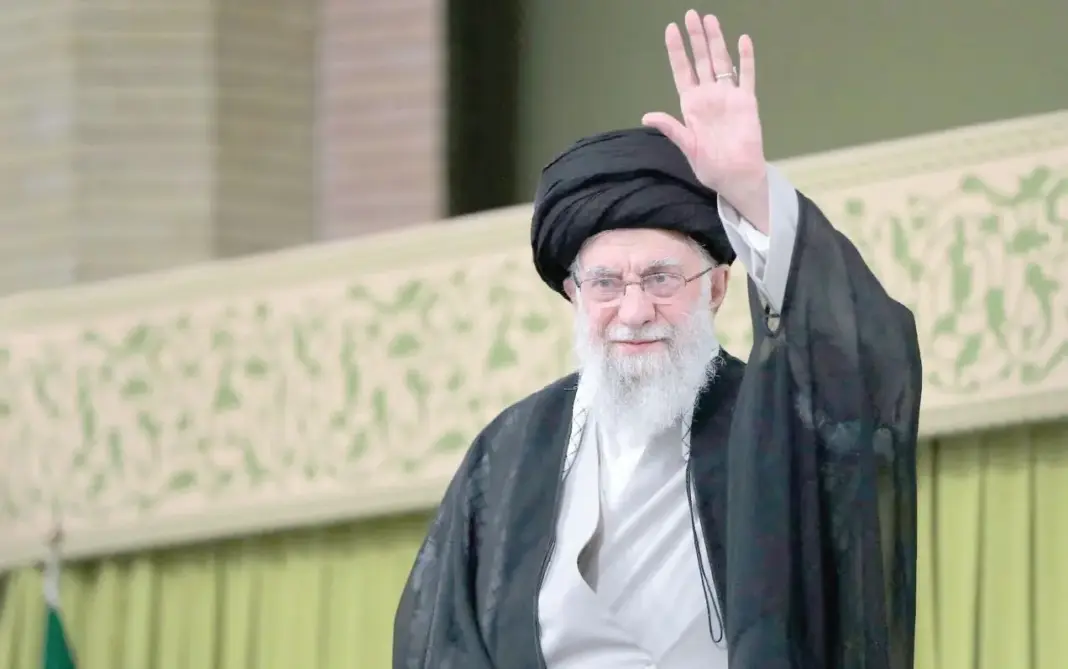


For over three decades he led Iran with faith as his compass. His passing closes a defining chapter in Islamic political thought.
Hassina Bano Yazdi
The martyrdom of Ayatollah Sayyid Ali Khamenei marks a profound and historic moment for Iran and many across the Muslim world who regard him as a scholar-statesman rooted deeply in faith. For more than three decades, he stood at the helm of the Islamic Republic of Iran, exercising a leadership role that was simultaneously political, spiritual, and intellectual. His life, shaped by scholarship and struggle, leaves behind a legacy that will be examined for years to come by historians, theologians and political thinkers alike.
Born in 1939 in the sacred city of Mashhad, Ayatollah Khamenei was nurtured in an environment that was deeply rooted in Islamic learning. His early education in the seminaries of Mashhad and Qom immersed him in Islamic jurisprudence (fiqh), theology (kalam) and Qur’anic exegesis (tafsir). This rigorous scholarly training was not merely preparatory; it became the foundation of his worldview and leadership philosophy. His association with Ayatollah Ruhollah Khomeini further shaped his understanding of governance as a moral trust intertwined with religious responsibilities. The years preceding the 1979 Islamic Revolution were marked by significant activism and hardship. Ayatollah Khamenei endured imprisonment and surveillance due to his opposition activities. In 1981, he survived an assassination attempt, which resulted in a permanent injury to his right arm. For many of his followers, these experiences symbolised perseverance under trial and reinforced their moral authority. Within Islamic ethical discourse, endurance on the path of conviction carries profound spiritual weight, and his life narrative reflects that ideal.
When he assumed the role of Supreme Leader in 1989, following the passing of Ayatollah Khomeini, Iran was navigating the aftermath of the revolution and war. Ayatollah Khamenei’s leadership emphasised institutional continuity, national sovereignty, and adherence to Islamic principles in public life. His speeches frequently articulated themes of justice (‘adl), independence (istiqlal), and resistance to domination, concepts that resonated strongly within both Iranian society and segments of the wider Muslim world.
A defining feature of his discourse was the invocation of the legacy of Imam Husayn ibn Ali (RA) and the stand at Karbala, Iraq. For Ayatollah Khamenei, Karbala was not merely a historical event but an enduring ethical paradigm. It represents moral steadfastness, principled leadership, and readiness to sacrifice for the truth. This symbolic framework shaped how he framed the challenges and responsibilities throughout his tenure. Beyond national leadership, Ayatollah Khamenei has consistently addressed the broader Muslim ummah. He advocated for unity between Sunni and Shia communities, cautioning against sectarian fragmentation and external manipulations. Conferences promoting Islamic solidarity, alongside his numerous international messages, reflect a vision of the ummah as a single moral community bound by shared faith and collective destiny.
He also emphasised that intellectual and scientific advancement are essential components of Islamic revival. Under his guidance, the discourse surrounding technological progress, youth empowerment, and educational development gained prominence. He argued that the strength of Muslim societies depended not only on spiritual devotion, but also on intellectual vitality and self-reliance. In this regard, he sought to bridge classical Islamic values with the demands of a rapidly evolving, modern world.
Culturally, Ayatollah Khamenei has maintained a visible engagement with literature and poetry, underscoring the importance of preserving identity amid globalisation. His integration of scholarship, culture, and governance reflects a comprehensive vision in which faith and public life are inseparable.
As news of his martyrdom reverberates, followers enter a solemn period of mourning and reflection. This transition will undoubtedly shape Iran’s future trajectory. Irrespective of political developments, Ayatollah Ali Khamenei’s life remains a subject of enduring scholarly interest. His long stewardship of the Islamic Republic, emphasis on unity and dignity for the Muslim ummah, and framing of leadership as moral guardianship constitute a significant chapter in contemporary Islamic thought. In remembering him, many will reflect on a leader who viewed authority as a trust and consistently articulated a vision of resilience grounded in faith. His legacy, rooted in scholarship, perseverance, and service, continues to influence discussions on religion, governance, and the role of moral leadership in the modern Muslim world.
The writer is a PhD scholar at the University of Kashmir
ba**************@***il.com