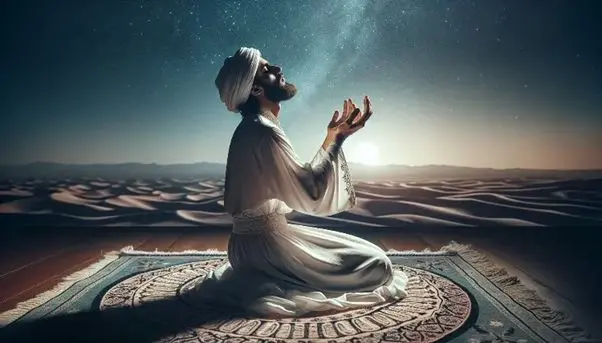


Sufism in Kashmir was never merely an abstract symbol of spirituality. It was a historically embedded social force that structured relationships, mediated religious change, and articulated a vision of ethical conduct.
Shaista Amin
In the longue durée of Islam in South Asia, Sufism occupies a distinctive and consequential position—not merely as a mystical orientation, but as a historically embedded social and ethical tradition that shaped religious practice, cultural exchange, and everyday life. Contemporary discourse often reduces Sufism to an abstract symbol of tolerance or spirituality. Yet, in the Indian context, it must be understood as a dynamic historical force that mediated relationships between faith, power, and community.
Emerging within early Islam as a movement of inner reform, Sufism (tasawwuf) emphasised moral discipline, ethical conduct, and the cultivation of an intimate relationship between the believer and God. While many scholars trace its spiritual genealogy to the life and example of Prophet Muhammad (pbuh), Sufism developed more fully in response to the rapid expansion of the Islamic polity, foregrounding asceticism, humility, and inward devotion as correctives to material and political excess. Its formative centres lay in Persia and Central Asia, from where Sufi networks and orders gradually spread across the wider Islamic world.
In the Indian subcontinent, early contacts with Islam occurred through Arab mercantile networks along the western coast from the seventh century CE. However, Sufism gained sustained institutional presence between the tenth and eleventh centuries, particularly under the Delhi Sultanate, when Sufi orders established khanqahs. These institutions functioned not only as spaces of spiritual instruction but also as centres of social welfare, mediation, and learning, thereby embedding Sufism within the social fabric of emerging Indo-Islamic polities.
The term “Sufi” is commonly associated with al-tasawwuf, denoting the pursuit of inner or esoteric knowledge. Alternative etymologies trace it to suf (wool), referencing the coarse garments worn by early ascetics as symbols of renunciation. As the mystical dimension of Islam, tasawwuf focuses on spiritual purification and the realisation of fana (annihilation of the ego) and baqa (subsistence in God). Ethical living, humility, and compassion constitute the core of this path—hence its frequent characterisation as the “heart” of Islam.
Between 1200 and 1500 CE, South Asia witnessed the proliferation of diverse religious and devotional movements that reshaped its social and cultural landscape. Within this broader transformation, Kashmir emerged as a particularly fertile ground for mystical thought. Although Islam acquired political authority in the valley in 1320 CE (720 A.H.), Sufism had already reached a mature phase of doctrinal and institutional development in the wider Islamic world. Its systematic propagation in Kashmir intensified in the late fourteenth century, coinciding with political transition and social reorganisation.
Kashmir’s receptivity to Sufism was shaped by its pre-Islamic spiritual traditions. The region possessed a rich heritage of Hindu, Buddhist, and Naga ascetic and contemplative practices that emphasised meditation, renunciation, and ethical restraint. Rather than displacing these traditions, Sufism interacted with them, generating a distinctive spiritual culture marked by moral discipline and shared devotional vocabularies. As M. A. Stein observed in his introduction to the Rajatarangini, Islam in Kashmir advanced not primarily through conquest but through gradual processes of conversion and social adaptation.
Geography further facilitated this transformation. Kashmir’s location along routes connecting Central Asia and Persia enabled the steady movement of Sufi saints, scholars, and traders into the valley. By the twelfth century, Sanskrit chronicles continued to describe Kashmir as a landscape saturated with sacred sites; by the fifteenth century, however, Islam had become the majority faith. This shift was neither abrupt nor uniformly coercive. As chroniclers such as Srivara suggest, religious change unfolded over generations, shaped by patterns of social mobility, political patronage, and evolving economic conditions.
Scholars such as Muhammad Ashraf Wani note that although Muslim migration into Kashmir slowed during the eleventh century amid anxieties associated with the campaigns of Mahmud of Ghazni, it resumed in subsequent centuries. The establishment of the Muslim Sultanate in 1339 CE provided institutional support to Islamic learning and administration, while patterns of political collaboration between Hindu elites and Muslim officials created an environment conducive to religious exchange.
Among the earliest Sufi figures associated with Kashmir was Sayyid Abdur Rahman, popularly known as Bulbul Shah, linked to the Suhrawardi order and active during the reign of Raja Suhadeva. His presence was followed by other Central Asian figures, including Sayyid Jalal-ud-Din of Bukhara and Sayyid Taj-ud-Din. The most influential among them was Mir Sayyid Ali Hamdani of the Kubrawiya order, whose intellectual and institutional initiatives significantly shaped the articulation of Islam in Kashmir.
Hamdani’s legacy contributed to the emergence of the indigenous Rishi order, a uniquely Kashmiri synthesis of Islamic mysticism and local ascetic traditions. Institutionalised in the mid-fifteenth century by Sheikh Noor-ud-Din Wali (R.A.), also revered as Alamdar-e-Kashmir, the Rishi movement emphasised simplicity, self-discipline, and ethical rectitude. Influenced by the mystic poet Lal Ded, Sheikh Noor-ud-Din articulated a spiritual vision grounded in everyday moral conduct rather than doctrinal exclusivism. His shrine at Charar-e-Sharief remains an enduring centre of devotion.
Traditions even associate figures such as Mansur al-Hallaj with Kashmir; the French scholar Louis Massignon speculated on the possibility of his visit in the ninth century, underscoring the region’s longstanding connections with wider Islamic mystical networks.
Sufism in Kashmir, therefore, should not be reduced to a romanticised trope of syncretism. It constituted a historically grounded social tradition that shaped ethical norms, mediated religious transformation, and structured forms of coexistence. Its endurance lies less in abstract ideals than in lived practice—in the disciplined, everyday ethics articulated in verses attributed to Sheikh Noor-ud-Din Wali:
Bathe out of sight,
Meditate in solitude,
Be steadfast in action—do not forget;
For heedlessness leads to regret.
The writer is a research scholar in the Department of History at the University of Kashmir
sh*************@***il.com