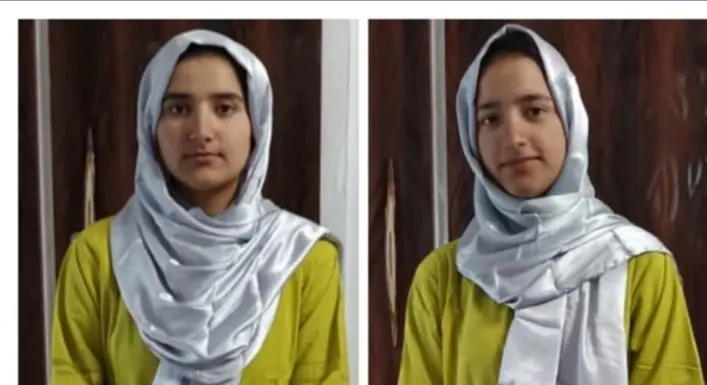


Born weak and questioned by relatives, Aayina and Irtiqa grew up playing with pebbles and grass—and recently scored 97% and 96%, proving their grandfather’s wisdom right
Bashir Ahmad Dar
In the year 2008, a pair of twin daughters was born to my elder brother. Both girls were extremely weak. They were barely able to utter their first cry at the time of birth. Alarmed at their fragile appearance and seemingly poor health, my brother took them to the paediatrician multiple times to ensure that everything was well with them. We were uncertain about their survival, so we didn’t name them for the first few days.
Though twins, the girls were born with striking differences—so distinct that they could be recognised from a distance. One had fair skin and thin, poorly developed golden hair; she was named Aayina. The other, comparatively weaker at birth, surprisingly had dense, well-developed hair on her scalp and soon began to show remarkable improvement in her health. She was named Irtiqa.
As is common in Kashmir, many relatives came to express their concerns over the birth of twin daughters, as they regarded it as a double burden on our shoulders, though such a thought never crossed our minds. Some even approached my brother and suggested that he give one of the daughters to them for adoption. Their words, however, stemmed more from pity than from genuine sympathy or willingness to help.
In truth, our family was known for raising daughters with love and affection. We rejoiced at their birth; it was only their fragile health that troubled us. On one such occasion, a couple from among our relatives came to visit my father under the pretext of checking on his well-being. During the visit, they began expressing their concerns about the girls. My father listened to them with patience and, at the end, calmly replied that if God had blessed his son with twin daughters, He had surely preplanned for their survival and sustenance. No one should trouble themselves with unnecessary and absurd thoughts, he said. He questioned the couple, “Why should twin daughters be seen as a double burden and not as a double blessing and a double joy?”
With time, the girls grew—both physically and mentally—and a few days ago, when the JKBOSE Class 10 results were announced, their results too were declared. Though matriculation is no longer considered a milestone and is often seen merely as a document useful for obtaining a date-of-birth certificate—having lost much of the charm it commanded a few decades ago—it still mattered deeply to us this year.
Not because our two daughters appeared in the results, but because this moment represented the outcome of years of struggle, labour, and sacrifice. The very girls who, till Class 6, used to mash grass blades and dock leaves and offer them to guests during their innocent play were now waiting to hear their results.
Many things about the girls crossed my mind—their brick-laying games using matchboxes, baking those imaginary bricks in the sun for days; their kurma prepared from pebbles, the soup reddened with powdered brick pieces. Every memory flashed before my eyes, one after another.
At 10 a.m., the results were declared, but due to a server outage and a technical glitch in the JKBOSE website, we were finally able to check them at 10:45 am. The entire family – uncles, aunts and cousins – had gathered in the kitchen. Tea was served to everyone, and cups sat steaming, but nobody took a sip. That 45-minute wait felt like an eternity. Every minute stretched into an hour.
Finally, when my cousin saw the results, a ripple of joy swept through the kitchen. The room that was filled with an unbearable tense air a minute ago was now alive and laughing in joy. Everyone rose to sweetly hug the daughters. Both had secured more than 95 per cent in aggregate. Ayina had topped in the village with an impressive 97 per cent while the more hardworking Irtiqa was just a per cent behind her.
While everyone around me was thrilled, elated, and blissful, my mind drifted back to the words of my father, who once asked the couple, “Why do people see twin daughters as a double burden? Why not consider them a double blessing and an opportunity for double joy?”
Today, those words rang truer than ever. Daughters are indeed blessings. They truly deserve celebration, honour, and respect.
The writer is a teacher
da**************@***il.com