

The new VB-G RAM G bill shifts costs to states, centralises control, and weakens the job guarantee. The result may be fewer workdays, not more, for India’s rural poor.
Masroora Jan
Sabzar Ahmad Bhat, a resident of the hamlet of Mohripora in the Kokernag constituency of Jammu and Kashmir, holds a Master’s degree in Physical Education. Faced with unemployment and life’s relentless challenges, he struggled to find organised work to secure a livelihood.
For him, the Mahatma Gandhi National Rural Employment Guarantee Act (MGNREGA) proved more than a blessing. Drawing on his intellect and education, he built a life around this social security scheme. Under his initiative, the village underwent a remarkable transformation: check dams were built, rural roads connected isolated hamlets to main markets, and watershed management projects improved agricultural yields. His work did not just help people survive—it helped them thrive. He became a captain of environmental stewardship, and his education paid off spectacularly.
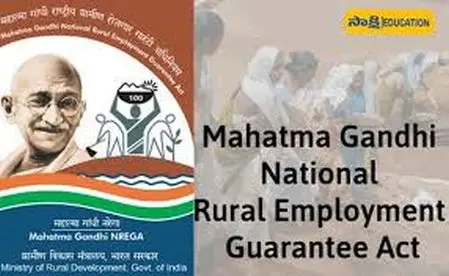
India’s rural poor have little interest in embracing a new vocabulary of development, nor will they welcome any renaming spree of a scheme that has become a lifeline. When Parliament enacted MGNREGA in 2005, it fundamentally altered the relationship between the Indian state and its rural poor. The right to work became a legal entitlement. The Act established a rights-based intervention deeply rooted in decentralisation, transparency, and social accountability. Now, the proposed Viksit Bharat Guarantee for Rozgar and Ajeevika Mission (Gram J) Bill, 2025, seeks to repeal and replace this landmark legislation.
MGNREGA was born of democratic clarity. It converted employment into a statutory, enforceable right. It served as the largest shock absorber during economic crises—for instance, generating over 389 crore person-days of work in 2020–21 during the COVID-19 pandemic. While never perfect, its beauty lay in its moral clarity: if the state could not provide work, it was obliged to compensate the worker.
The right to work is a relatively modern concept, first recognised in the French Constitution of 1793. In India, it remained a Directive Principle of State Policy until it was formalised through MGNREGA in 2005. The scheme was seen as a multifaceted strategy—an income transfer mechanism, an infrastructure developer, and a stimulator of rural production and consumption markets.
The current renaming spree is an assault on the spirit of this philosophical programme. Our socio-economic blueprint is rooted in village empowerment, echoing Mahatma Gandhi’s vision of Ramrajya—a divine rule where prince and pauper have equal rights, and sovereignty rests on moral authority.
MGNREGA is built on the revolutionary idea of livelihood security. The ruling dispensation now seeks not to amend, but to repeal it. The scheme was designed as a fundamental guarantee—a central-government-funded, demand-driven employment programme providing 100 days of work. It was never meant to be a favour or a discretionary welfare scheme that could be expanded or withdrawn at the convenience of the government in power. It was meant to be a right, pure and simple, giving workers a legal claim against the state. Work was demand-driven, and it was incumbent upon the government to respond. Failure to provide work triggered compensation.
Now, the Union Government intends to change the law and its nomenclature. The problems, however, run deeper than what appears on the surface. While the new bill increases guaranteed workdays from 100 to 125, this masks a more profound shift—one that weakens the guarantee itself, centralises control, and quietly transfers financial risk from the Union to the states, thereby undermining the federal structure.
The original name carries historical and moral weight. The new title signals an ideological turn, transforming the programme from a legally enforceable right into a government initiative. The deliberate use of Hindi terms like Rozgar and Ajeevika aligns with a certain nationalist imagery, replacing the rights-based language of the original Act.
A more significant shift lies in funding. Under MGNREGA, the Union Government covered almost the entire cost of unskilled wages, most material expenses, and a large share of administrative costs. The proposed bill flips this logic: for most states, funding would shift to a 60:40 split, with states bearing 40% of the cost. Given the chronic issue of delayed fund releases from the Centre—as of December 3, 2025, pending dues exceed ₹9,400 crore, including unpaid wages and material costs—forcing states to contribute 40% would incentivise them to limit employment, not expand it. This strikes at the very core of fiscal federalism.
While the Union Government retains control over key decisions like allocations, rules, and coverage, states would be required to pay unemployment allowances and compensate for delayed wages—even when delays are caused by the Centre’s failure to release funds.
Critics warn that using measures like the Multi-Dimensional Poverty Index to determine allocations could punish states like Kerala, Tamil Nadu, and Karnataka, which already perform well and invest heavily in health, education, and welfare. At the same time, poorer states may receive higher notional allocations but still struggle to meet the mandatory 40% contribution. In both scenarios, the result would be fewer days of work.
These concerns are not abstract. The new bill also allows states to suspend work for up to 60 days during peak agricultural seasons, citing the need to ensure farm labour availability—despite a lack of data supporting claims of widespread labour shortages caused by MGNREGA. Furthermore, the bill’s tech-based controls risk excluding genuine workers, as seen in past implementations.
Here in Jammu and Kashmir, MGNREGA has enabled remarkable achievements. It has fostered skill development, created durable assets, and empowered women. Stories like that of Sushma Rani from Udhampur, who turned solar drying into a thriving business, or women’s self-help groups under the National Rural Livelihoods Mission, building local markets and achieving financial independence, are testaments to its impact. The scheme created a virtuous cycle: better infrastructure attracted private investment, which in turn generated more employment. Its impact transcended economics—preserving traditional skills, strengthening community bonds, maintaining cultural continuity by encouraging people to stay in villages, and promoting environmental conservation.
To replace MGNREGA with a Rozgar and Ajeevika Mission risks reducing a rights-based framework to mere dependency, transforming a guaranteed entitlement into a discretionary welfare handout, and pitting it against private employment. If MGNREGA is preserved, it will continue to build the India of tomorrow.
The writer has an MA in Political Science from Jawaharlal Nehru University
ja*********@***il.com